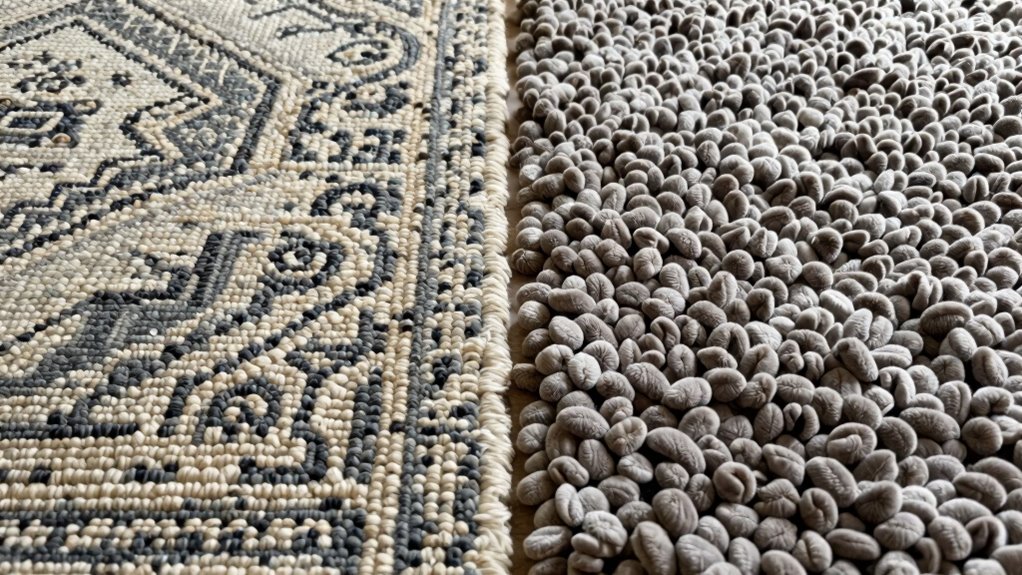

When comparing hand-knotted and tufted rugs, you’ll find that “handmade” can mean quite different things. Hand-knotted rugs involve skilled artisans carefully tying each knot, creating detailed patterns with cultural symbolism that last for generations. Tufted rugs are made faster with machine-assisted techniques, often using synthetic dyes and simpler designs. If you want to understand how craftsmanship affects quality and value, explore the details behind each method and what makes them unique.

Get your wardrobe favorites delivered free — and shop member deals
- Fast, free delivery on millions of items
- Access to Prime Big Deal Days deals on October 6–7
- Prime Video, Amazon Music and more included
Key Takeaways
- Hand-knotted rugs are meticulously crafted by tying individual knots, reflecting traditional artisan craftsmanship, while tufted rugs are machine-assisted and quicker to produce.
- The term “handmade” for hand-knotted rugs signifies detailed, labor-intensive work, unlike tufted rugs, which are often partially machine-made.
- Hand-knotted rugs use natural dyes and complex patterns with cultural significance, whereas tufted rugs typically feature synthetic dyes and simpler designs.
- The craftsmanship and cultural motifs in hand-knotted rugs contribute to their higher value and collectible status compared to tufted rugs.
- Materials in hand-knotted rugs are often premium, enhancing durability and longevity, while tufted rugs prioritize affordability and quick production.
When choosing between hand-knotted and tufted rugs, understanding their differences can help you make an informed decision. Both types are often labeled as “handmade,” but that term covers a wide range of craftsmanship and quality. Hand-knotted rugs are created by meticulously tying individual knots onto the foundation, a process that can take weeks or even months. This labor-intensive technique allows artisans to incorporate intricate patterns and detailed designs, often reflecting cultural symbolism passed down through generations. These cultural motifs aren’t just decorative; they tell stories and hold meaning rooted in the region’s history and traditions. Additionally, the dyeing techniques used in hand-knotted rugs are usually traditional, involving natural dyes derived from plants, minerals, or insects. These dyes age beautifully over time, giving each rug a unique character and depth of color. The artistic craftsmanship involved in creating these rugs often makes them highly valued and collectible.
Hand-knotted rugs feature intricate designs and cultural motifs crafted with traditional, natural dyes that age beautifully over time.
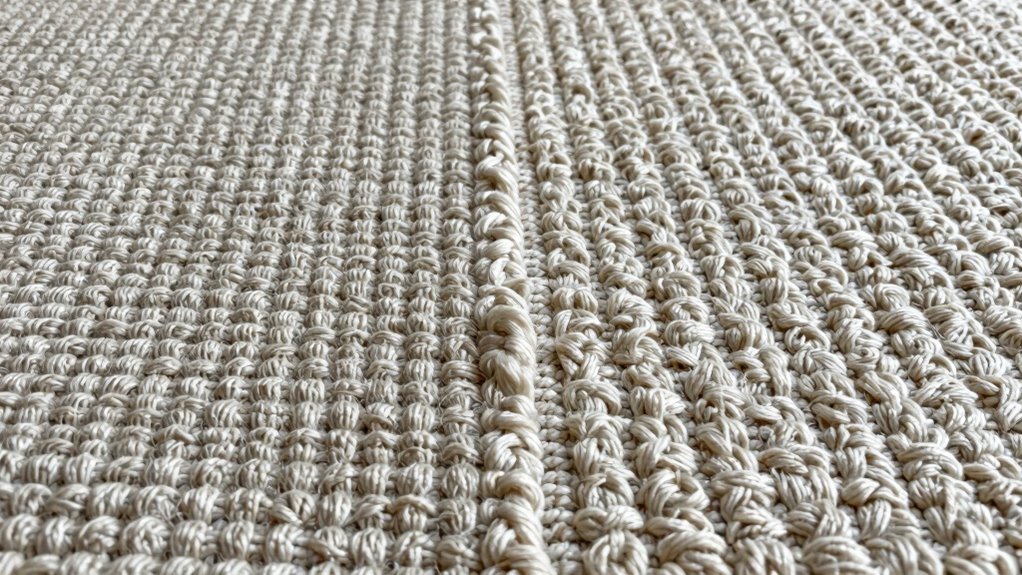
In contrast, tufted rugs are made using a different approach. They’re produced more quickly and with less manual effort. A backing material is embedded with loops of yarn, which are then cut to create a plush pile. The process involves a tufting gun, making it more akin to machine work, though skilled artisans often oversee the process. Because of this, tufted rugs tend to be less detailed and often feature simpler patterns. Their dyeing techniques usually involve synthetic dyes, which are more consistent and cost-effective but might lack the subtle variations and aging qualities of natural dyes. While tufted rugs can mimic traditional motifs, they generally don’t carry the same cultural symbolism embedded in hand-knotted designs. Still, they often serve well in modern settings, offering durability and affordability. Additionally, the manufacturing process of tufted rugs makes them more accessible for quick production and mass-market consumption. It’s important to note that the materials used can significantly influence the rug’s overall quality and lifespan.
As an affiliate, we earn on qualifying purchases.
Frequently Asked Questions
How Long Does Each Rug Type Typically Last?
A hand-knotted rug typically lasts 30-50 years or more, thanks to its durability comparison and intricate craftsmanship. Tufted rugs usually last around 5-15 years, mainly due to less dense knotting and different materials. Material longevity plays a big role, with natural fibers like wool offering longer life. If you want a lasting investment, hand-knotted rugs are the way to go.
Are Handmade Rugs More Environmentally Friendly?
Like tending a garden, choosing a handmade rug can nurture the environment. Handmade rugs often use eco-conscious materials and sustainable manufacturing practices, making them more environmentally friendly. You actively support artisans who prioritize natural fibers and traditional methods, reducing chemical use and waste. By opting for a handmade rug, you’re helping preserve ecosystems and promote ethical production, giving your space beauty while respecting the planet’s delicate balance.
Which Rug Type Is Easier to Clean and Maintain?
Tufted rugs are easier to clean and maintain because their shorter fibers resist dirt and stains better, making vacuuming simpler. If you’re concerned about pet-friendly materials or allergy considerations, tufted rugs often use synthetic fibers that are easier to clean and less likely to trap allergens. Hand-knotted rugs, with their dense, intricate fibers, require more delicate care and regular professional cleaning, making tufted rugs more practical for everyday upkeep.
Can Tufted Rugs Be Considered Truly Handmade?
Did you know 80% of tufted rugs are produced with machine-made techniques? Tufted rugs can’t be considered truly handmade because they’re typically made using machines, blending synthetic fibers with artisan craftsmanship. While some tufted rugs involve manual elements, most rely on automated processes, making them more synthetic than natural. If you want authentic handmade quality, hand-knotting or hand-tufting with natural fibers is the way to go.
What Are the Cost Differences Between Hand-Knotted and Tufted Rugs?
Hand-knotted rugs are typically more expensive than tufted rugs due to their intricate craftsmanship, longer production time, and material durability. You’ll pay a premium for the detailed, durable designs that last decades. Tufted rugs, however, are more budget-friendly, offering good design versatility and quicker production. If you want a durable, unique piece and don’t mind the cost, hand-knotted rugs are worth the investment; for versatility on a budget, tufted rugs work well.
Conclusion
When it comes to choosing between hand-knotted and tufted rugs, remember that “handmade” is more than just a label—it’s a craft. Think of hand-knotted rugs as intricate tapestries woven with patience and skill, while tufted rugs are like quick sketches that still hold charm. Ultimately, your choice depends on your priorities—artistry or affordability. Whichever you pick, know you’re adding a piece of artistry to your home that’s as unique as you are.
Fall Picks
fall essentials
As an affiliate, we earn on qualifying purchases.