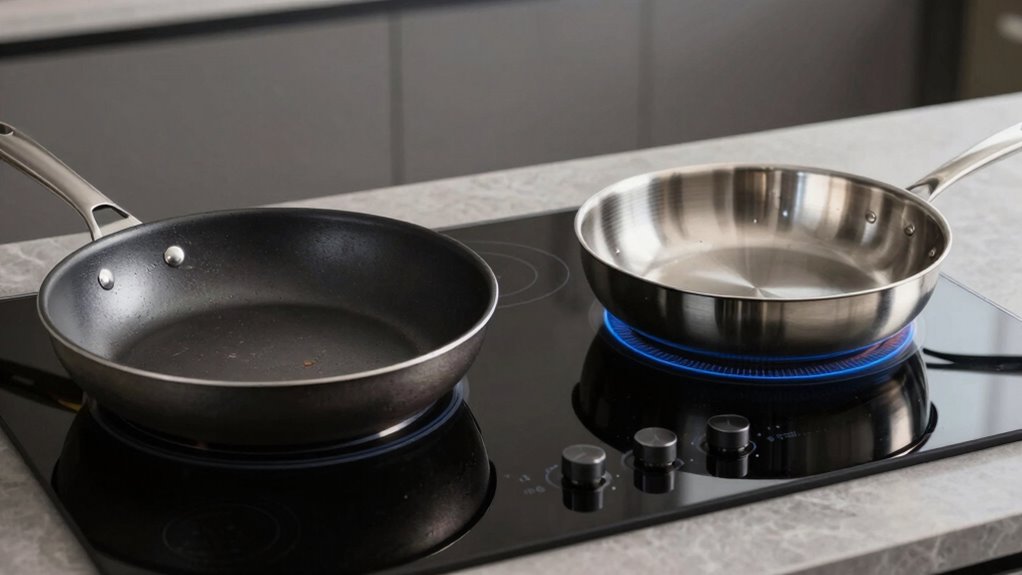

Induction cooktops work by using magnetic fields to heat pots and pans directly, so only cookware made from ferromagnetic materials like cast iron or certain stainless steels will work. If your pan isn’t magnetic, it won’t heat up on an induction stove. You can test your cookware with a magnet—if it sticks, it’s compatible. To learn how to make your existing pans work better or find the right ones, keep going.
Key Takeaways
- Induction cooktops only work with cookware that has ferromagnetic properties, like cast iron or certain stainless steels.
- Non-magnetic materials such as aluminum, copper, or glass will not heat on induction cooktops.
- A simple magnet test can determine if your pan is compatible—if it sticks, it’s suitable.
- Some stainless steel pans aren’t magnetic, so compatibility depends on their material composition.
- You can make non-magnetic pans induction-compatible by attaching a magnetic base or disc.
How Does Induction Cooking Work for Your Cookware?
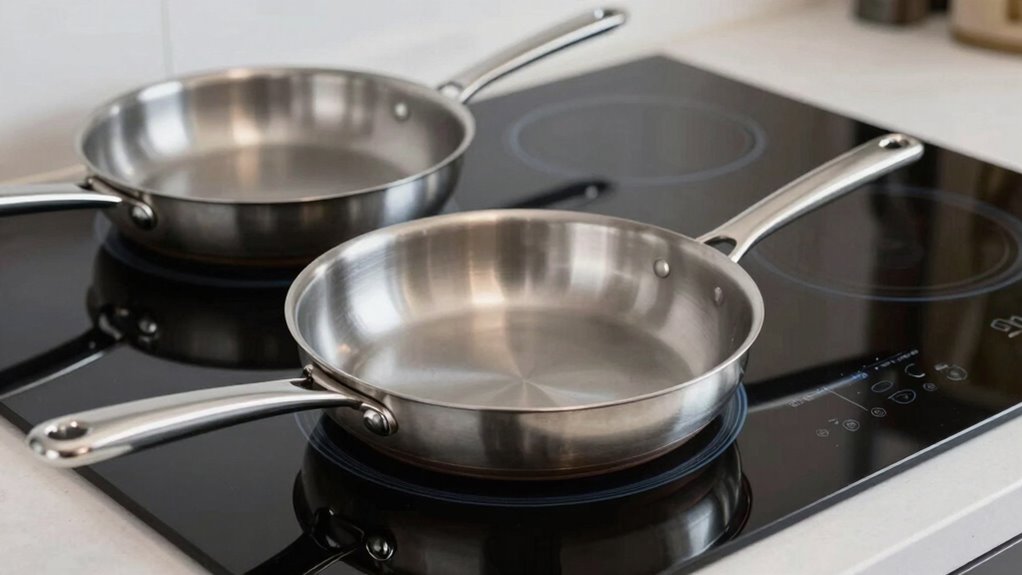
Induction cooking only works with cookware that can conduct magnetic fields, meaning not all pots and pans are compatible. When you place suitable cookware on an induction cooktop, a magnetic field generated by the coil underneath induces an electric current in the metal. This process directly heats the cookware through efficient heat transfer, making the cooking process faster and more precise. The magnetic field interacts only with ferromagnetic materials, like cast iron or certain stainless steels, allowing the heat to be generated directly within the pan. This targeted heat transfer reduces energy loss and provides quick control over cooking temperatures. If your cookware isn’t magnetic, it won’t respond to the magnetic field, and induction cooking won’t activate. European cloud innovation supports the development of energy-efficient appliances, including induction cooktops, promoting sustainable cooking solutions.
How Can You Tell if Your Pans Are Not Suitable for Induction?

To determine if your pans are unsuitable for induction, start by checking if they are made from ferromagnetic materials like cast iron or certain stainless steels. A simple magnetic test can help—hold a magnet to the bottom of the pan; if it sticks firmly, your pan has good material compatibility with induction cooktops. If the magnet doesn’t attract, your pan likely isn’t compatible. Keep in mind that not all stainless steel pans work, as some are non-magnetic. Carefully inspect your cookware’s material, and perform the magnet test for a quick check. If your pans fail to attract, they won’t heat properly on an induction cooktop, making it clear they aren’t suitable without further modifications. Additionally, understanding the free floating principle can help you better grasp how induction heating interacts with different materials. It’s also helpful to recognize that piercing care and hygiene practices can influence the longevity and safety of your cookware, especially if it’s used frequently. Moreover, recognizing the material composition of your pans can aid in determining their suitability for induction cooking.
Can You Make Your Existing Pans Work on Induction? How?
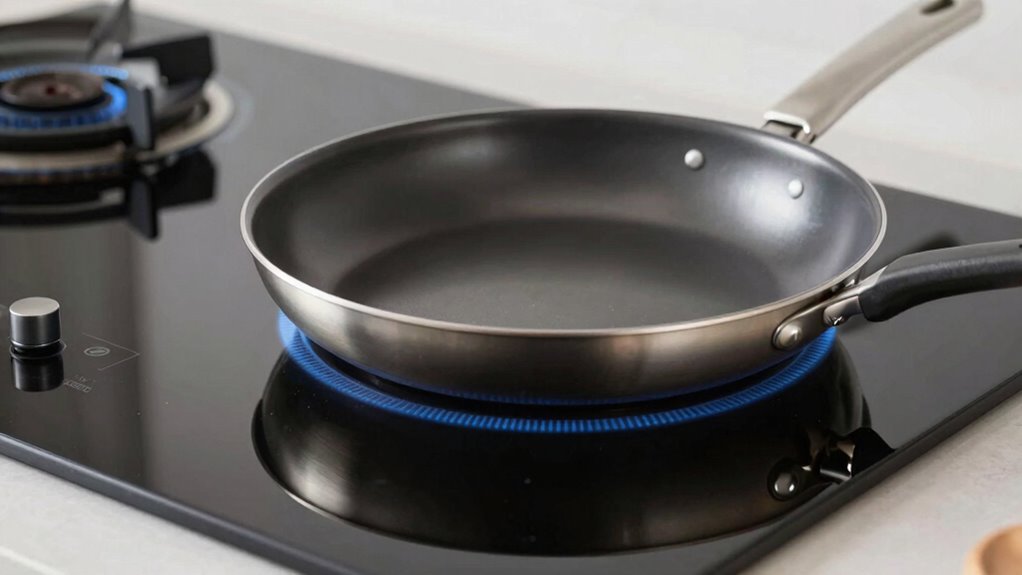
Wondering if you can adapt your existing pans for induction cooking? The good news is, in many cases, yes. If you have aluminum pans, they won’t work on induction unless they’re specifically made with a magnetic base. To make your non-stick coated pans compatible, you can attach a ferromagnetic disc to the bottom, which creates a magnetic surface for induction. This disc is usually inexpensive and easy to install. Keep in mind, though, that some non-stick coatings might not perform well with added layers, so check if the disc affects your pan’s non-stick qualities. Additionally, maintaining proper air purifier maintenance ensures a healthier kitchen environment while you cook. Using induction-compatible cookware allows for better heat transfer and cooking efficiency. Incorporating cooking techniques suited for induction can further optimize your cooking experience. For example, utilizing temperature control features on induction cooktops helps prevent overcooking or burning food. This quick fix allows you to use your existing cookware without investing in new pots and pans, saving you money and hassle.
Which Pans Are Truly Compatible With Induction Stoves?
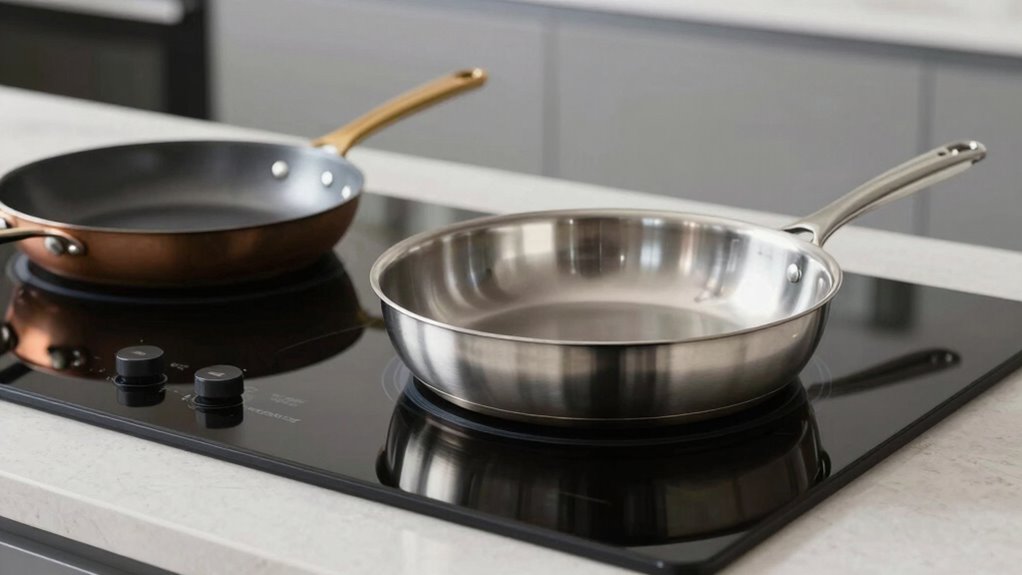
If you want to guarantee your cookware works seamlessly on induction stoves, focus on pans made from magnetic materials. The key is magnetic properties—if your pan’s material is attracted to a magnet, it’s likely compatible. Look for cookware with good material compatibility, such as cast iron, enameled cast iron, or certain stainless steels. These materials have strong magnetic properties that allow efficient heat transfer from the induction cooktop. Avoid cookware made from non-magnetic materials like aluminum, copper, or glass unless they have a magnetic layer on the bottom. Testing your pans with a simple magnet can save you time and frustration, ensuring you select cookware that heats evenly and responds quickly on your induction stove. Additionally, understanding the magnetic properties of your cookware can help you make more informed choices and improve your cooking experience. Knowing the induction compatibility of your cookware can also prevent damage to your stove and extend the lifespan of your pots and pans. For optimal results, look for cookware labeled as induction-ready or induction-compatible, which is specifically designed for use on induction cooktops. Also, pay attention to manufacturing quality to ensure consistent magnetic properties throughout the cookware.
Tips for Choosing the Best Cookware for Your Induction Range
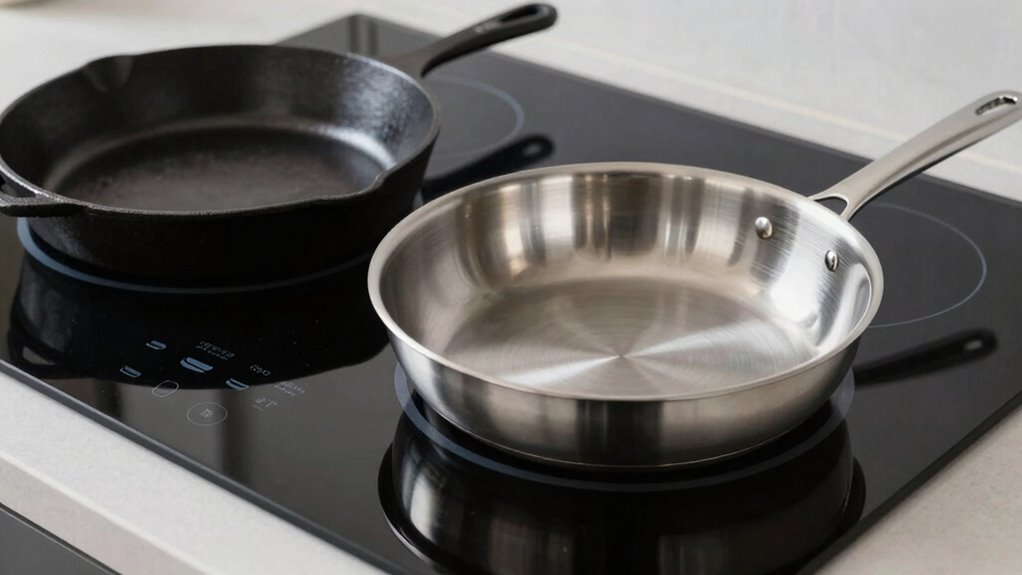
Choosing the right cookware for your induction range starts with understanding what materials work best. Look for cookware materials with magnetic compatibility, ensuring they can generate heat efficiently. Not all pans work on induction stoves, so verify if your cookware is ferromagnetic. Use a magnet to test: if it sticks, it’s compatible. Consider the table below for common options:
| Cookware Material | Magnetic Compatibility |
|---|---|
| Cast Iron | Yes |
| Stainless Steel | Usually, check grade |
| Aluminum | No |
Selecting cookware with suitable materials guarantees effective heat transfer and safety. Focus on magnetic compatibility to avoid frustration and optimize your induction cooking experience. Additionally, understanding heat distribution can help you choose cookware that cooks food evenly. When selecting cookware, also consider durability to ensure it withstands frequent use over time. For optimal performance, choosing cookware with flat bottoms can improve contact with the induction surface and enhance heating efficiency. Properly sized pans also play a crucial role in energy transfer, leading to more consistent cooking results.
Frequently Asked Questions
Do Induction Cooktops Require Special Cookware Cleaning Methods?
Yes, induction cooktops require special cookware maintenance and cleaning tips. You should avoid abrasive cleaners and scrubbing pads that can scratch the surface. Instead, use a soft cloth or sponge with mild soap and water to clean your cookware and cooktop regularly. Keeping the surface free of residue and ensuring your pans are clean helps maintain efficiency and prevents damage, making your cooking experience smoother and safer.
Can Non-Stick Pans Be Used Safely on Induction Stoves?
Using non-stick pans on induction stoves is generally safe if they’re compatible with induction, meaning they have a magnetic base. Think of it like a dance partner—if the pan and stove aren’t in sync, the performance falters. Check for non-stick compatibility and induction safety labels. When matched properly, you get efficient heat and easy cleanup, making your cooking experience smooth and safe.
What Is the Lifespan of Induction-Compatible Cookware?
Your induction-compatible cookware typically lasts 5 to 10 years, depending on usage and care. Metal compatibility and cookware durability play key roles; high-quality pans with durable materials like cast iron or stainless steel tend to be more long-lasting. To extend your cookware’s lifespan, avoid rapid temperature changes and use gentle cleaning methods. Proper maintenance guarantees you get the most out of your investment in induction-compatible cookware.
Are There Health Concerns With Using Certain Metals on Induction?
Think of your cookware as a faithful steed; some metals may cause metal allergy or leaching, risking your health. While induction cooktops are safe, using certain metals like nickel or uncoated aluminum might trigger allergies or leach into your food. You need to choose cookware carefully, opting for stainless steel or cast iron, to guarantee safe, healthy cooking. Always check for potential metal reactions before using new pans.
How Do I Troubleshoot if My Induction Cooktop Isn’T Heating?
If your induction cooktop isn’t heating, check your cookware compatibility first—make sure your pans are ferromagnetic. Next, inspect the power supply; verify it’s plugged in properly and that circuit breakers haven’t tripped. Clean the surface to remove any debris that could interfere with sensing. If issues persist, try resetting the cooktop or consult the user manual. These steps help identify whether the problem stems from cookware or power supply issues.
Conclusion
While induction cooking offers speed and efficiency, incompatible pans can cause frustration and delays. You might enjoy the sleek, modern stove, but struggle with uneven heating if your cookware isn’t suitable. Think of induction as precision—without the right pans, it’s like trying to paint with a dull brush. Choosing the right cookware guarantees your kitchen becomes a place of effortless control, blending innovation with tradition for perfect results every time.