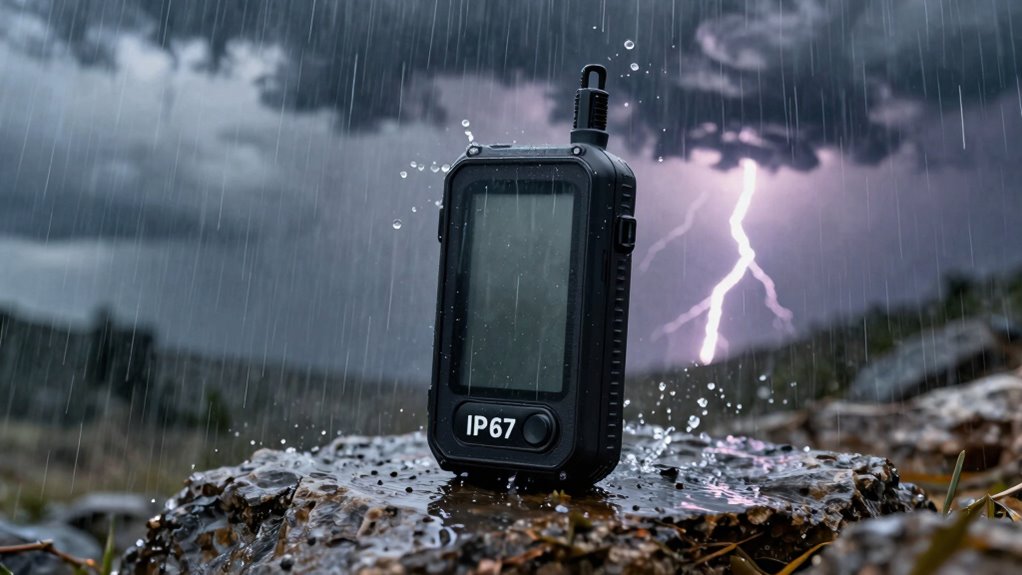

If you’re concerned about storms, understanding IP65 and IP67 ratings helps you choose the right outdoor gear. IP65 offers protection against dust and low-pressure water jets, making it suitable for light rain and splashes. IP67 goes further, allowing devices to be submerged in water up to 1 meter deep, so it can handle more serious rain, puddles, or accidental drops. Continue exploring to see how these ratings keep your gear functioning in challenging weather.

Get your wardrobe favorites delivered free with Prime
- Fast, free delivery on millions of items
- Prime Video, Amazon Music and more included
- Member-only deals all year
Key Takeaways
- IP65 protects devices from dust and low-pressure water jets, making them suitable for light rain and storm splashes.
- IP67 ensures device waterproofing against full submersion up to 1 meter, ideal for heavy rain and minor flooding.
- Both ratings help users select gear that can withstand varying storm conditions and outdoor water exposure.
- IP67 offers higher durability, making devices more suitable for unpredictable weather during storms.
- Understanding IP ratings prevents device failure and ensures reliable performance in outdoor storm environments.

When choosing outdoor tech gear, understanding its IP rating is essential because it indicates how well the device is protected against dust and water. This knowledge helps you select gear that can withstand the elements, especially in unpredictable weather conditions. IP ratings, like IP65 and IP67, serve as a quick way to assess a device’s waterproof design and durability standards, giving you confidence that your gear won’t fail when you need it most.
An IP65 rating means the device is protected against dust ingress and low-pressure water jets from any direction. This level of protection is suitable for most outdoor activities where you might encounter splashes, light rain, or dust storms. With an IP65 rating, your device can handle sudden showers or watering during outdoor chores without risking damage. Its waterproof design ensures it remains functional even when exposed to elements that could otherwise compromise less protected electronics. The durability standards embedded in an IP65 rating give you peace of mind, knowing that the device is built to endure typical outdoor challenges while maintaining performance.
Moving up to an IP67 rating, the protection level increases significantly. Devices with this rating are not only dust-tight but can also be submerged in water up to one meter deep for a limited time—usually 30 minutes. This means if you accidentally drop your device in a puddle, a stream, or a shallow pool, it’s likely to survive unscathed. The waterproof design at this level is more robust, making it ideal for activities like boating, kayaking, or hiking in rainy conditions. It’s a clear indicator that the device adheres to higher durability standards, ensuring you can rely on it even in flooding or heavy downpours. Additionally, dust protection is an important aspect covered in IP ratings, which is vital for maintaining device functionality in harsh outdoor environments. Recognizing these standards can help you optimize your outdoor gear to match your specific needs.
Understanding the testing procedures involved in assigning these ratings can further help you determine how the device will perform in real-world situations. In essence, understanding the differences between IP65 and IP67 helps you match your outdoor tech gear to your specific needs. Whether you’re braving a light drizzle or full submersion, these ratings guide you toward products designed to withstand those conditions. The waterproof design and durability standards behind each rating are testaments to the manufacturer’s commitment to creating gear that endures the challenges of outdoor environments. By paying attention to these ratings, you’re ensuring your device remains protected, functional, and ready to perform, no matter how harsh the weather gets.
As an affiliate, we earn on qualifying purchases.
Frequently Asked Questions
How Do IP Ratings Compare to Other Waterproof Standards?
IP ratings are specific waterproof testing standards that clearly classify a device’s resistance to water, unlike other waterproof standards which may be less precise. You’ll find rating classifications like IP65 and IP67, indicating how well a device withstands dust and water. These ratings help you compare waterproof capabilities easily, so you know whether a product can handle rain, splashes, or submersion, providing confidence in its durability during storms or wet conditions.
Can Devices With IP65 Withstand Heavy Rain for Extended Periods?
Like a knight shielded by armor, an IP65 device can handle heavy rain for extended periods, thanks to its rain resistance. You can trust its durability in stormy conditions without worry about water seeping in. While not fully waterproof, it’s designed to resist water jets and splashes, making it suitable for outdoor adventures. Just avoid submerging it completely, and your device stays protected through the storm.
Are IP67 Devices Suitable for Underwater Photography?
Yes, IP67 devices can be suitable for underwater photography, especially in shallow waters. They’re designed to withstand immersion up to a meter for 30 minutes, providing good waterproof protection. However, to achieve excellent underwater clarity, you might want to use additional waterproof accessories like cases or housings. Always check your device’s specific ratings and manufacturer instructions to guarantee it’s fully protected during your underwater adventures.
Do IP Ratings Affect Device Warranty Coverage?
IP ratings can influence your warranty coverage, but they don’t automatically guarantee it. Think of your device’s warranty as a safety net—damage exclusions and damage assessments can still come into play. If water or dust ingress caused by an IP65/IP67-rated device leads to damage, manufacturers might deny warranty claims, citing exclusions. Always review your warranty terms carefully, as even rugged ratings don’t cover all types of damage.
How Do Cleaning and Maintenance Impact IP Ratings?
Cleaning protocols and maintenance frequency directly influence your device’s IP rating. Regularly cleaning your device guarantees that dust, dirt, and debris don’t compromise seals or openings, maintaining its water and dust resistance. If you neglect routine maintenance, seals can degrade, reducing the IP rating over time. To keep your device protected, follow recommended cleaning protocols and schedule maintenance frequently, especially after exposure to harsh environments or storms.
Conclusion
So, next time you’re caught in a storm or heading outdoors, remember that IP ratings like IP65 and IP67 aren’t just numbers—they’re your shield against the elements. It’s almost serendipitous how these ratings align with real-world weather, isn’t it? By choosing gear with the right IP rating, you’re not just prepared; you’re lucky to have tech that can handle whatever nature throws your way. Stay protected, and keep exploring with confidence.
Halloween Picks
halloween
As an affiliate, we earn on qualifying purchases.