
The lifecycle of a T‑shirt starts with choosing sustainable fibers like organic cotton or recycled materials, which reduce environmental impact. Ethical manufacturing ensures fair wages and safe conditions, giving you peace of mind. As you wear and care for it, you extend its life by following proper maintenance. When worn out, recycling or repurposing helps close the loop. To see how each step affects the world—and your wardrobe—keep exploring what happens from fiber to final thread.
Key Takeaways
- The lifecycle begins with selecting sustainable fibers like organic cotton, recycled polyester, or hemp.
- Manufacturing involves ethical practices ensuring fair wages and safe working conditions.
- Proper care and maintenance extend the T-shirt’s lifespan, reducing early wear and waste.
- When worn out, T-shirts can be recycled or repurposed through brand take-back programs or DIY methods.
- Consumer choices and responsible disposal help close the sustainability loop and minimize environmental impact.
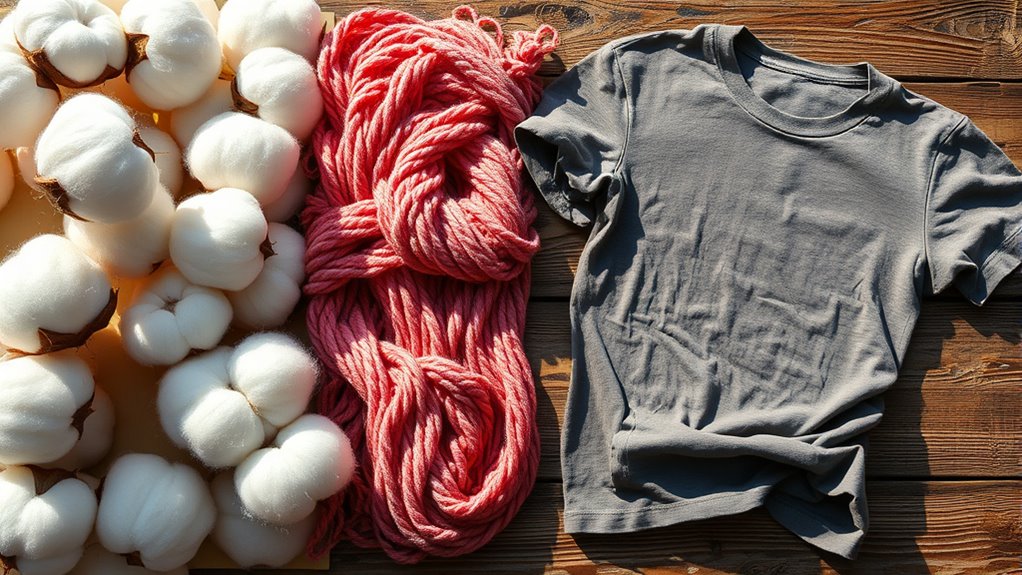
Have you ever wondered what happens from the moment you buy a T-shirt to when it eventually wears out? The journey begins the moment you select one, often influenced by its design, fabric, and brand. Behind the scenes, the process involves careful choices about sustainable materials and ethical manufacturing practices. These decisions shape the environment and the workers involved, making your purchase more meaningful. When companies opt for sustainable materials like organic cotton, recycled polyester, or hemp, they reduce environmental impact by conserving water, minimizing pesticide use, and lowering carbon emissions. Ethical manufacturing ensures that workers are paid fair wages, work in safe conditions, and aren’t exploited, giving you peace of mind that your T-shirt was made responsibly. This transparency is vital as more consumers demand accountability from brands, pushing the industry toward more sustainable and ethical practices.
Once you’ve made your purchase, the lifecycle of the T-shirt continues through wear and maintenance. As you wear it, the fabric begins to face everyday stresses—friction, washing, and exposure to sunlight—that gradually weaken its fibers. Proper care can extend its life, so following washing instructions, avoiding harsh detergents, and air-drying can keep it looking good longer. When the T-shirt finally shows signs of wear—faded color, small tears, or thinning fabric—it’s not just the end of its usefulness, but also an opportunity to consider its next chapter. Recycling or repurposing the fabric helps divert waste from landfills and reduces the need for new raw materials. Some brands even offer take-back programs, encouraging you to return your worn-out T-shirt for recycling or repurposing, closing the sustainable loop. Additionally, choosing brands that prioritize ethical manufacturing practices can further support fair labor and environmental standards. Understanding the importance of sustainable materials can help you make more eco-friendly choices when purchasing your next T-shirt.
At the end of its life, a T-shirt can be transformed into something new, like insulation, cleaning rags, or new textiles, depending on the process. This cycle emphasizes the importance of thinking about how your clothing’s materials can be reused. The journey from fiber to final thread isn’t just about manufacturing and wearing; it’s about making conscious choices that support sustainability and fair labor practices. Your role as a consumer influences brands to prioritize ethical manufacturing and eco-friendly materials, creating a more responsible fashion industry. Understanding this lifecycle helps you appreciate the full story behind your T-shirt, encouraging mindful consumption and a commitment to sustainability. Every step of the way, from fiber selection to recycling, matters—so next time you buy or wear a T-shirt, remember the impact behind every thread.
Frequently Asked Questions
How Do Different Fabric Types Affect T-Shirt Durability?
Different fabric types substantially impact your T-shirt’s durability. Fabrics with higher fabric strength, like cotton or polyester blends, offer better wear resistance, so your shirt lasts longer. On the other hand, delicate fabrics such as rayon or lightweight linen may weaken faster with frequent washing and use. Choosing a fabric with good wear resistance ensures your T-shirt stays in shape and retains its quality over time, saving you money and frustration.
What Environmental Impacts Are Associated With T-Shirt Manufacturing?
You’re opening a can of worms when considering the environmental impacts of t-shirt manufacturing. Textile pollution and excessive water usage are major concerns, harming ecosystems and depleting essential resources. Every step, from fiber production to dyeing, can leave a heavy footprint. By choosing eco-friendly fabrics and supporting sustainable brands, you can help reduce these impacts and turn the tide on environmental damage.
How Can Consumers Identify Sustainable T-Shirt Brands?
To spot sustainable t-shirt brands, look for those with reputable certifications like GOTS or Fair Trade, which guarantee ethical sourcing and environmentally friendly practices. Check brand websites for transparency about their supply chains and materials. You can also research their commitments to reducing waste and pollution. When you choose brands prioritizing sustainable certifications and ethical sourcing, you support better environmental and social impacts in the fashion industry.
What Are the Best Practices for Caring for Vintage T-Shirts?
Think of vintage washing as your secret weapon. To preserve your vintage T-shirts, wash them inside out on a gentle cycle with cold water, avoiding harsh detergents. Use preservation techniques like air drying instead of dryers, and store them away from direct sunlight. These practices help maintain their fabric, color, and print, ensuring your vintage T-shirts stay vibrant and intact for years to come, much like a treasured relic from a bygone era.
How Do T-Shirt Recycling Programs Work Globally?
You can participate in global t-shirt recycling programs that support the circular economy by sending your old shirts to specialized facilities. These programs often use recycling innovations to break down textiles into fibers, which are then reused to produce new garments or other products. Your involvement helps reduce waste, conserves resources, and promotes sustainability, making a positive environmental impact worldwide.
Conclusion
Now that you’ve seen the journey, your T-shirt is like a tiny universe spun from Earth’s own story. From delicate fibers to a canvas of memories, each thread weaves a tale of nature’s gift and human touch. When you wear it, imagine yourself wrapped in a living story, a dance of life and craft. Cherish it, because every T-shirt is a small miracle, a woven chapter in the grand fabric of our world.