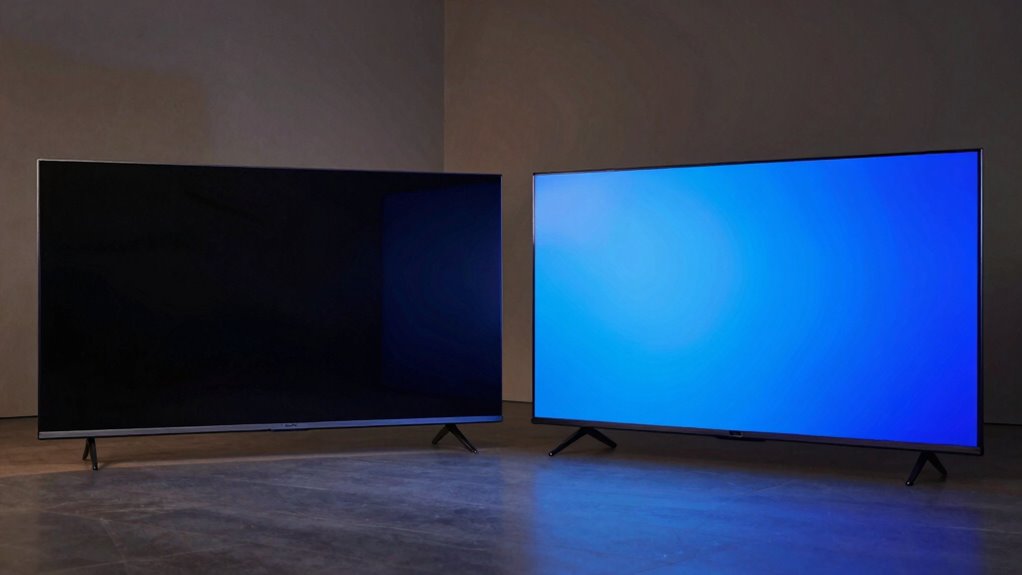

If you want vibrant colors, wider viewing angles, and impressive contrast, OLED is the way to go. Its perfect blacks and quick response times are great for movies, gaming, and immersive experiences. Mini-LED offers higher brightness for bright rooms and longer durability with less risk of burn-in. To understand how these differences affect your everyday use and which suits your needs best, there’s more to uncover below.
Key Takeaways
- OLED offers superior color vibrancy, contrast, and black levels due to self-emitting pixels that turn off completely for deep blacks.
- Mini-LED provides higher peak brightness ideal for bright rooms but may have less vibrant colors and slight uniformity issues.
- OLED displays have wider viewing angles and better color accuracy across the screen compared to Mini-LED.
- Mini-LED is less prone to burn-in, making it more durable for static images and long-term use.
- Response times and refresh rates are faster on OLED, enhancing smoothness for gaming and fast-motion content.

LG 65-Inch Class OLED evo AI 4K C5 Series Smart TV w/Dolby Atmos, Dolby Vision, HDR10, AI Super Upscaling 4K, Filmmaker Mode, Wow Orchestra, Alexa Built-in (OLED65C5PUA, 2025)
- OLED Technology: 12 years of award-winning OLED tech
- Brightness Booster: Enhances pixel brightness for vivid images
- Bright Room Ready: Glare-free viewing in bright environments
As an affiliate, we earn on qualifying purchases.
As an affiliate, we earn on qualifying purchases.
What Are the Main Differences in Display Quality Between OLED and Mini-LED?
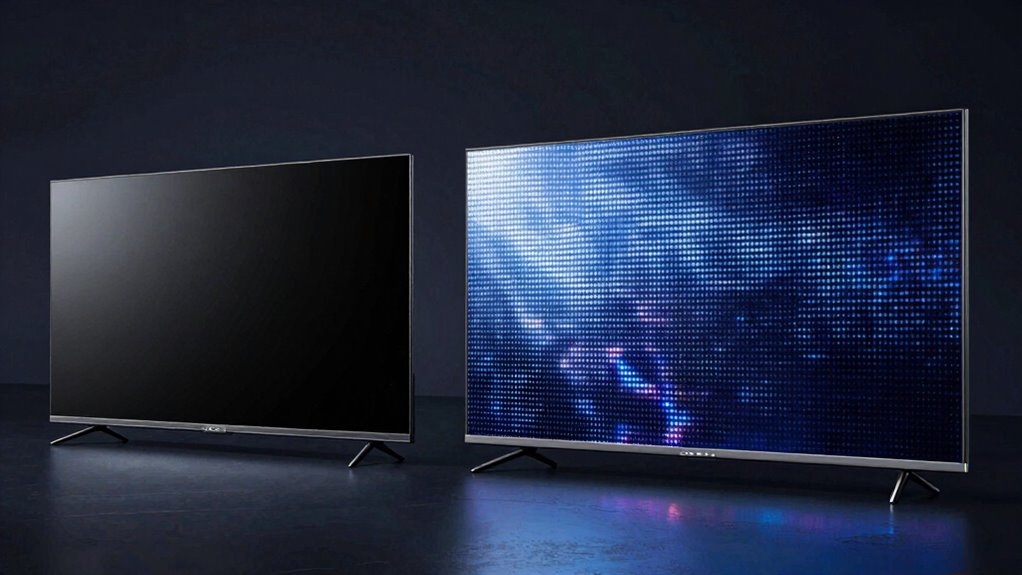
The main differences in display quality between OLED and Mini-LED come down to their underlying technology and how they produce images. OLED screens emit light directly from each pixel, resulting in exceptional color vibrancy and rich, accurate hues. This technology allows for deeper, more intense colors that truly pop on the screen. Additionally, OLED displays offer superior viewing angles, meaning your picture remains consistent and vivid whether you’re viewing from the side or head-on. Mini-LED technology, on the other hand, relies on many small backlights behind an LCD panel, which can sometimes limit color vibrancy and cause slight color shifts at wider angles. Overall, OLED provides more vivid colors and better viewing angles, making it ideal for immersive viewing experiences. Color accuracy is also generally higher with OLED screens due to their ability to turn individual pixels on or off independently.
Which Technology Offers Better Brightness, Contrast, and Black Levels?
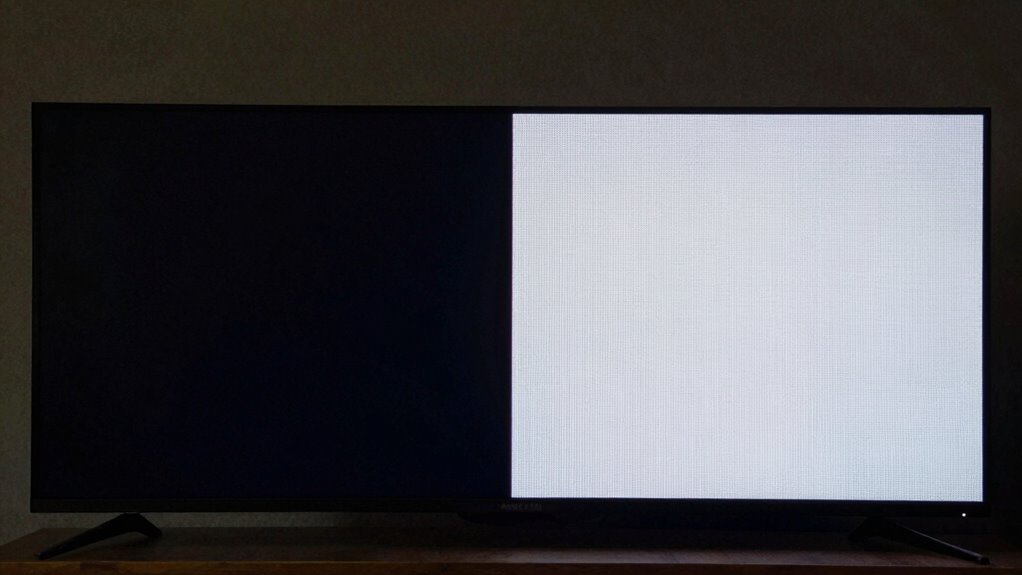
When it comes to brightness, contrast, and black levels, OLED technology generally outperforms Mini-LED. OLED screens can produce perfect blacks because each pixel emits its own light and can turn off completely, creating high contrast. Mini-LEDs, with their thousands of tiny backlights, can achieve higher peak brightness, making them better suited for bright rooms. However, OLEDs tend to have better black levels, giving you more detailed shadows and deeper blacks. Screen longevity is a consideration; OLEDs can suffer from burn-in, which may impact black levels over time. Price differences also matter—OLEDs are usually more expensive upfront but often provide superior contrast and black levels at comparable sizes. Overall, if you prioritize contrast and black depth, OLED has a clear edge. Additionally, the development of European cloud innovation plays a role in supporting the deployment of advanced display technologies through sustainable and energy-efficient solutions. As technology evolves, ongoing improvements in display longevity and energy efficiency may further influence consumer choices. Advances in display technology continue to drive competition and innovation, offering consumers more options tailored to their viewing preferences. Moreover, manufacturing processes are continually being refined to enhance durability and reduce costs, benefiting consumers in the long run. These innovations also contribute to energy efficiency improvements, reducing environmental impact while maintaining high performance.
How Do Color Accuracy and Screen Uniformity Compare?
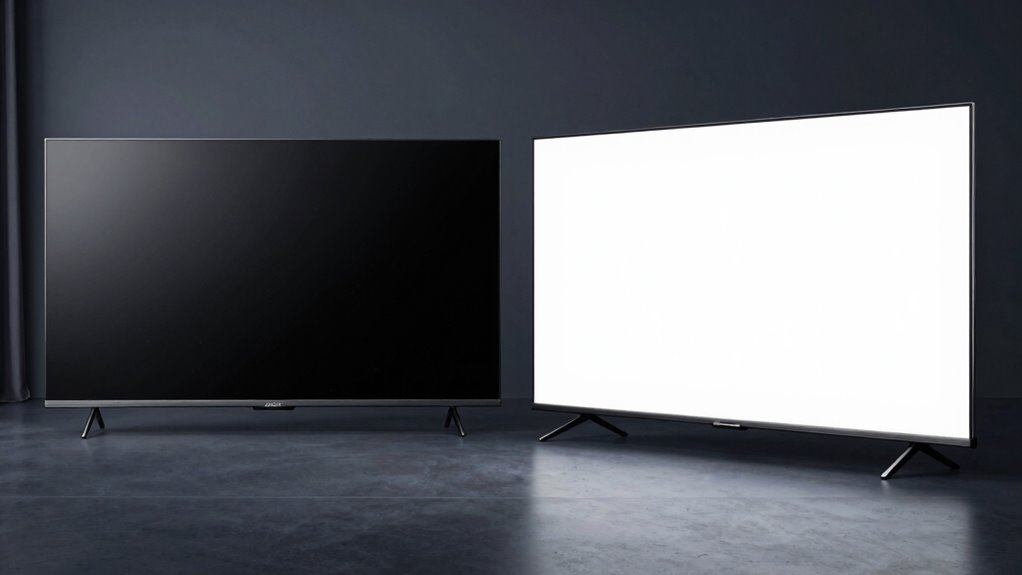
Color accuracy and screen uniformity are crucial factors to contemplate when comparing OLED and Mini-LED displays. OLED screens typically offer superior color consistency across the entire screen, maintaining accurate colors even at wider viewing angles. This results in a more consistent visual experience**, especially when viewing from different positions. On the other hand, Mini-LED displays can sometimes struggle with uniformity, especially with darker scenes, where backlight bleed or clouding might cause slight color shifts. While Mini-LEDs generally have good viewing angles, they may not match OLED’s consistency at extreme angles. Additionally, manufacturing processes can influence uniformity and color performance. Factors like panel technology and quality control also play a role in achieving optimal display performance. It’s also worth noting that longevity concerns such as burn-in are typically less of an issue with Mini-LEDs compared to OLEDs. Moreover, advancements in backlighting technology continue to improve Mini-LEDs’ uniformity and color accuracy**. Overall, if precise color accuracy and uniformity across various viewing positions are essential to you, OLED tends to deliver a more consistent visual experience.
Which Is Better for Gaming and Fast Action Content?
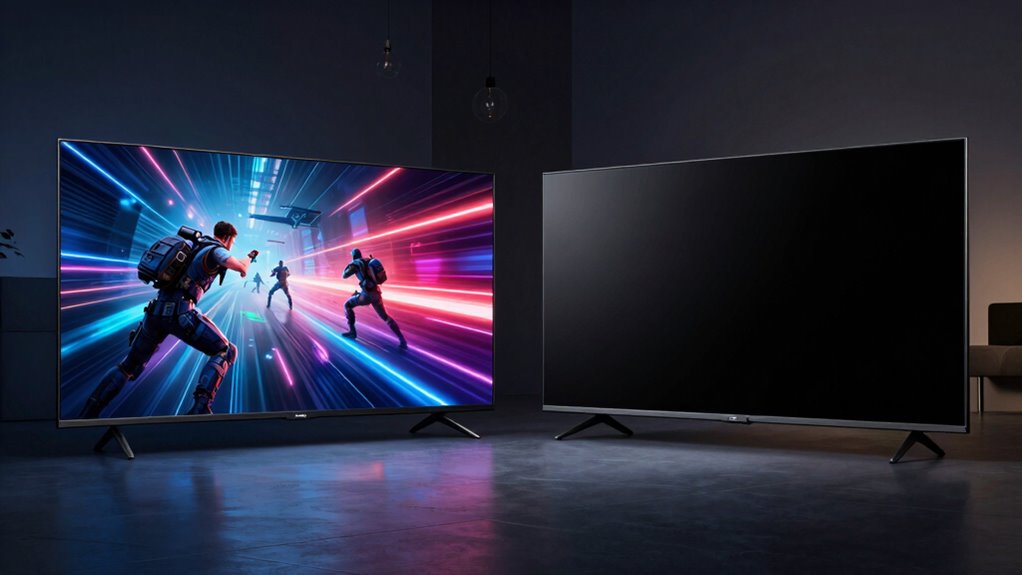
For gaming and fast action content, response time and refresh rate are key factors that influence your experience. Higher refresh rates, such as 120Hz or more, deliver smoother motion, reducing blur and tearing. OLED screens excel here with near-instant response times, ensuring motion handling feels sharp and fluid. Mini-LED displays, while offering good refresh rates, may have slightly slower response times, which can impact fast-paced gameplay. If you prioritize ultra-smooth visuals and minimal latency, an OLED is typically the better choice. It handles rapid movements more effectively, making gameplay feel more natural and immersive. However, some high-end Mini-LED TVs also perform well in this area, so consider the specific model’s refresh rate specs and response time performance before making your decision.
What Are the Long-Term Durability and Burn-In Risks of OLED Versus Mini-LED?
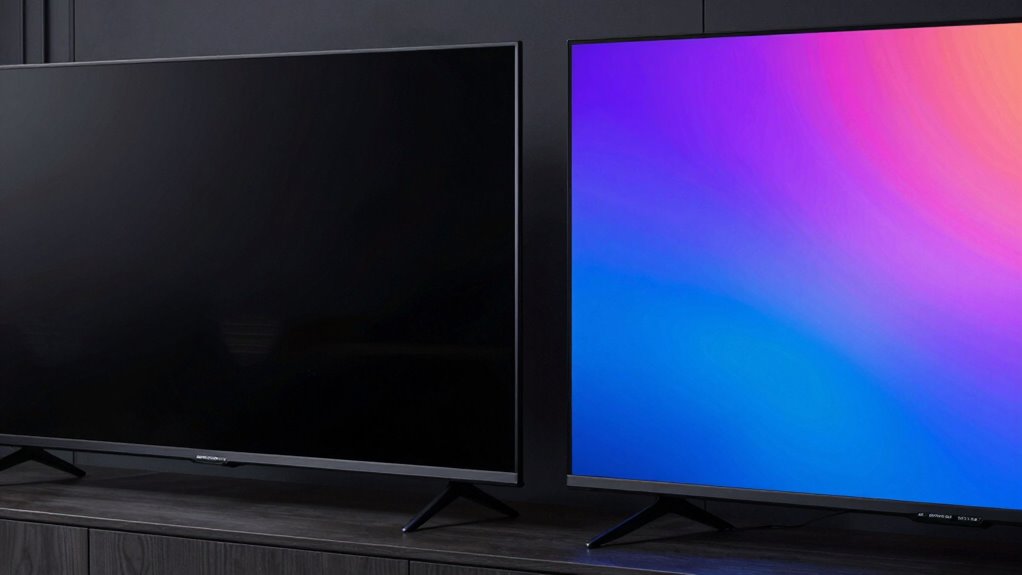
OLED screens are more susceptible to burn-in over time because their organic materials can degrade with prolonged static images, leading to permanent ghosting. This risk can impact the panel lifespan if you frequently display static content like logos or menus. While modern OLEDs include burn-in prevention features, they still require careful use to minimize long-term damage. Proper usage is essential to prolong the lifespan of OLED panels and avoid premature degradation. Mini-LEDs, on the other hand, don’t face the same burn-in risks since their backlighting isn’t affected by static images. Overall, OLEDs may have a shorter panel lifespan if burn-in isn’t managed properly, but with proper burn-in prevention techniques, they can still last many years. Your usage habits play a vital role in how long your display remains pristine and functional over time. Additionally, panel longevity depends on proper calibration and avoiding prolonged static images to ensure maximum lifespan.
Frequently Asked Questions
How Do OLED and Mini-Led Displays Impact Energy Consumption at Home?
You’ll find that OLED displays tend to be more power-efficient when showing darker images, reducing your energy consumption and environmental impact. Mini-LED screens, while brighter and more suitable for well-lit rooms, generally consume more power due to their backlighting system. Choosing an OLED can lower your overall energy use, making it a smarter, eco-friendlier option for your home entertainment setup.
Can Mini-Led TVS Be Made Thinner Than OLED Models?
Mini-LED TVs generally can’t be made thinner than OLED models because their design flexibility is limited by manufacturing complexity. OLEDs are inherently thinner since they don’t require backlighting, allowing for sleeker profiles. Mini-LEDs involve more layers and components, which add to their thickness. So, if you’re aiming for a slim design, OLEDs usually have the edge due to their simpler, more flexible manufacturing process.
How Do Pricing and Affordability Compare Between OLED and Mini-Led Options?
Ever wonder which offers better value? Generally, OLED TVs tend to be pricier than Mini-LED models, but the price comparison varies based on size and features. Mini-LEDs often provide superior brightness and contrast at a lower cost, making them more affordable for many buyers. Affordability factors include brand, screen size, and technology upgrades. So, if budget’s a concern, Mini-LEDs might be the smarter choice, offering great performance without breaking the bank.
What Are the Best Use Cases for Each Technology in Different Room Lighting Conditions?
You’ll get the best experience with OLED TVs in dim ambient lighting, where their deep blacks shine and viewing angles remain wide. For brightly lit rooms, Mini-LEDs excel, offering brighter screens that cut through glare. Use OLEDs in cozy spaces or home theaters, and opt for Mini-LEDs in living rooms with lots of natural light. This way, you maximize picture quality based on your room’s lighting conditions and viewing angle needs.
Are There Any Health or Eye Comfort Differences Between OLED and Mini-Led Screens?
You’ll likely find OLED screens easier on your eyes, as they emit less blue light exposure—studies show OLEDs reduce blue light by up to 30% compared to other displays. This means less eye strain during long viewing sessions. While both technologies are safe, OLED’s lower blue light emission can offer better eye comfort, especially in dim environments. So, if eye health matters, OLED screens may be the better choice for you.
Conclusion
Ultimately, choosing between OLED and Mini-LED comes down to your priorities—whether you crave perfect blacks, vibrant colors, or brighter screens. Both technologies excel in different areas, offering unique benefits and potential drawbacks. Decide what matters most to you—contrast, brightness, durability—and let that guide your choice. With either option, you’ll enjoy stunning visuals, immersive experiences, and a display that elevates your home entertainment. Pick what fits your needs and enjoy the difference.