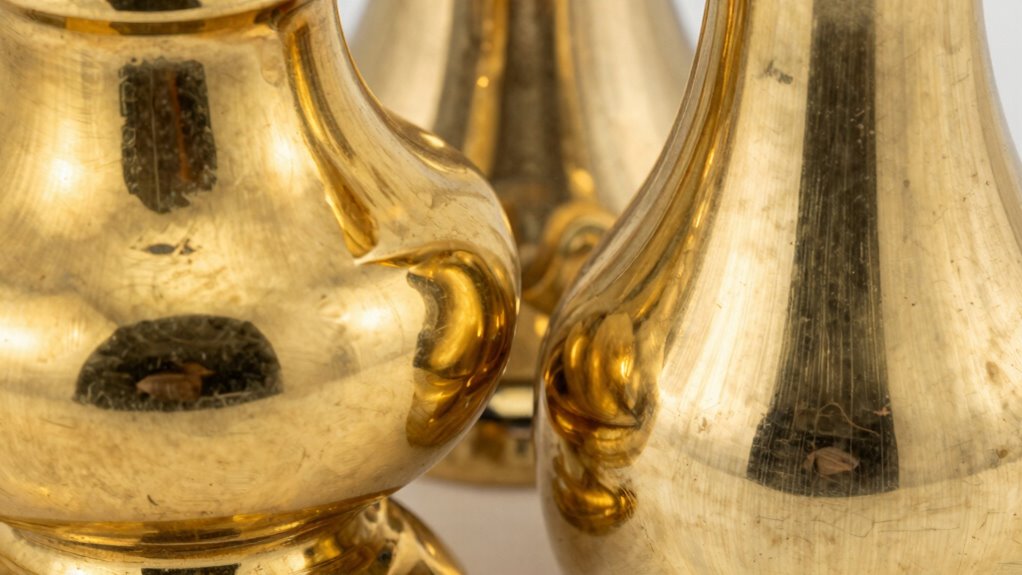

Solid brass decor is made from a single piece of brass alloy, making it highly durable, resistant to tarnishing, and easy to restore. Brass-plated items have a thin layer of brass over a different metal, such as steel or zinc, which makes them cheaper but less long-lasting. Over time, plating can chip or wear, exposing the base metal. To learn more about the difference and the pros and cons of each, keep exploring the details.

Get your wardrobe favorites delivered free with Prime
- Fast, free delivery on millions of items
- Prime Video, Amazon Music and more included
- Member-only deals all year
Key Takeaways
- Solid brass is made from a single piece of brass alloy, while brass-plated decor has a metal base coated with a thin brass layer.
- Manufacturing solid brass involves casting or forging; brass-plated items are created through electroplating.
- Solid brass fixtures are more durable, resistant to tarnishing, and easier to restore compared to brass-plated decor.
- Brass-plated decor tends to wear, chip, or fade over time, exposing the base metal underneath.
- Historically, solid brass signifies quality and longevity, whereas brass-plated decor offers a more affordable, industrial look.
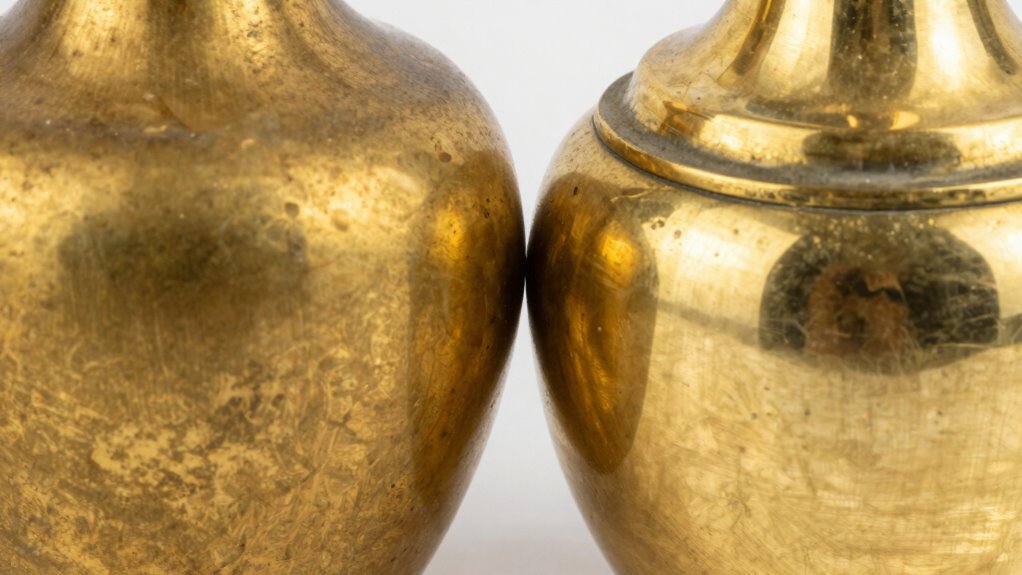
When choosing decorative hardware or fixtures, understanding the difference between solid brass and brass-plated items is essential. These materials have distinct characteristics rooted in their historical usage and manufacturing processes, which directly impact their durability, appearance, and value. Historically, brass has been prized for its beauty and corrosion resistance, dating back centuries to ancient civilizations that used solid brass for decorative and functional objects. Today, the same appreciation continues, but the way these items are made has evolved significantly.
Solid brass fixtures are crafted from a single piece of brass alloy, meaning the entire item is made of the same material. During the manufacturing process, molten brass is poured into molds or shaped through forging, then polished and finished to achieve the desired look. Because the entire piece is brass, it maintains its appearance and integrity over time, even with regular use. This long-standing manufacturing process ensures that solid brass items are highly durable and resistant to tarnishing, making them a preferred choice for those wanting longevity and authenticity. Additionally, solid brass can often be easily restored or polished, which helps maintain its appearance over many years. The ability to restore or polish solid brass items contributes to their reputation for lasting beauty and value.
Solid brass fixtures are made from a single piece of brass, ensuring durability and lasting beauty over time.
In contrast, brass-plated fixtures involve a different manufacturing process. These items start as a base material—often cheaper metals like zinc or steel—before a thin layer of real brass is electroplated onto the surface. This process involves applying an electric current to deposit a layer of brass onto the object, creating the appearance of solid brass at a fraction of the cost. Historically, brass plating gained popularity during industrialization when mass production and cost reduction became priorities. Brass-plated fixtures are often more affordable but tend to have a shorter lifespan, as the plating can wear or chip over time, revealing the underlying material.
When you consider the historical usage, solid brass has long been associated with quality, craftsmanship, and prestige. Its manufacturing process, which involves working directly with brass throughout, results in a product that can be polished or restored easily, maintaining its aesthetic for decades. Brass-plated items, while more budget-friendly and suitable for decorative purposes, often lack the same durability because the thin brass layer can fade or peel. Understanding these differences helps you make informed choices based on your needs, whether you’re prioritizing longevity, authenticity, or affordability in your decor. Additionally, knowing the manufacturing process can guide you toward more durable and authentic selections.
As an affiliate, we earn on qualifying purchases.
Frequently Asked Questions
How Can I Tell if My Brass Decor Is Solid or Plated?
To tell if your brass decor is solid or plated, look closely at the finish authenticity. Solid brass usually feels heavier and has a consistent color throughout, while plated pieces might show signs of wear or thin spots revealing a different metal underneath. For maintenance tips, clean gently with a soft cloth, avoiding harsh chemicals that could damage plated surfaces. Regular care preserves your decor’s shine and authenticity for years.
Is Brass-Plated Decor More Affordable Than Solid Brass?
You might find it a coincidence, but brass-plated decor is generally more affordable than solid brass. The cost comparison shows that plated pieces use less material and are cheaper to produce. However, keep in mind maintenance tips: brass-plated items may tarnish faster and require regular cleaning, while solid brass is more durable. So, if budget is your priority, brass-plated decor offers a cost-effective choice, but consider long-term upkeep too.
What Is the Typical Lifespan of Brass-Plated Items?
Brass-plated items typically last around 5 to 10 years with proper care. To extend their lifespan, you should follow maintenance tips like gentle cleaning with a soft cloth and avoiding harsh chemicals. During antique restoration, focus on preserving the plating’s finish to maintain its appearance. Regular upkeep prevents tarnishing and corrosion, ensuring your brass-plated decor stays attractive for years to come.
Can Solid Brass Develop Tarnish Over Time?
Yes, solid brass can develop tarnish over time, much like a well-loved book gains character. While antique finishes can enhance its charm, brass’s natural patina reflects its history. Unlike brass-plated items, solid brass offers better corrosion resistance, but it still benefits from regular cleaning to maintain its shine. Embracing this aging process adds depth and authenticity, allowing your decor to tell a story of timeless beauty.
Are There Environmental Concerns With Brass Plating?
Brass plating can raise environmental concerns because the process involves chemicals that may harm ecosystems if not properly managed. You should be aware of the environmental impact, especially if the plating is discarded improperly. Recycling challenges also exist, as brass-plated items are harder to recycle than solid brass, potentially leading to more waste. Ensuring responsible disposal and considering eco-friendly plating options can help minimize these environmental issues.
Conclusion
So, now that you know the key differences between solid brass and brass-plated decor, imagine the possibilities—each piece telling its own story. But here’s the twist: which one truly stands the test of time? The choice you make could transform your space or leave it vulnerable to hidden flaws. The decision is yours, but whatever you pick, remember—sometimes, the most intriguing stories are just waiting to unfold. Are you ready to discover what’s next?
Columbus Day / Indigenous Peoples' Day Picks
long weekend sales
As an affiliate, we earn on qualifying purchases.