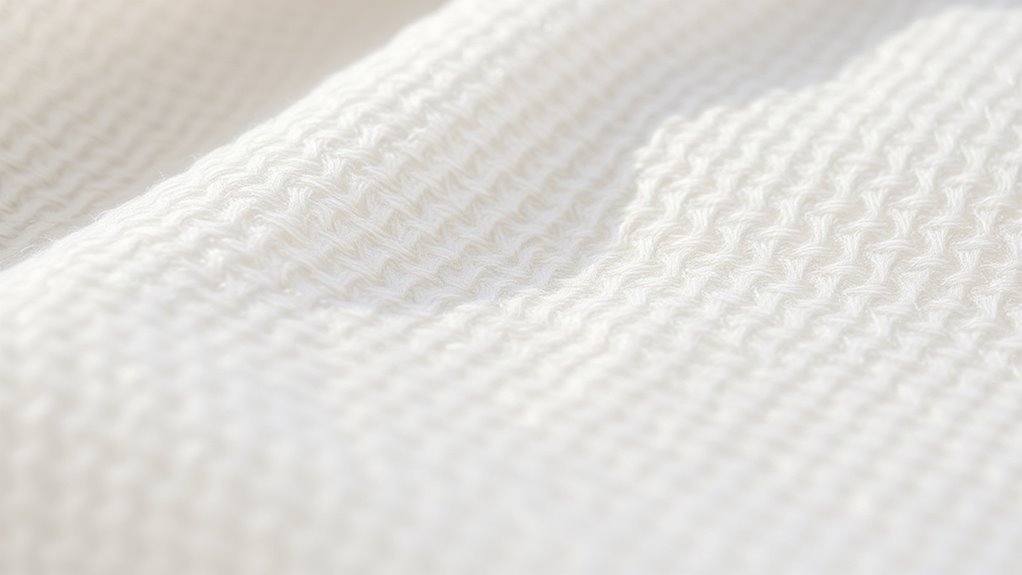

Understanding thread count is just one part of choosing quality fabric. While higher counts can feel plush, they don’t always mean softer or more durable textiles. Factors like fiber type, weave pattern, and finishing techniques play a big role in how fabrics feel and last over time. For example, premium fibers and smooth weaves can feel just as soft even at lower thread counts. Keep exploring these essentials to make smarter fabric choices.
Key Takeaways
- Thread count alone doesn’t determine fabric softness or durability; fiber quality and weave pattern are equally important.
- Higher thread counts may feel plush but can use lower-quality fibers; lower counts with premium fibers can be just as soft.
- Weave type (e.g., percale, sateen) influences the fabric’s texture, drape, and comfort, beyond just thread count.
- Fiber type and finishing techniques significantly affect fabric feel, lifespan, and resistance to wear and stains.
- Balancing thread count with fiber quality, weave, and finishing methods results in better overall fabric performance.

Have you ever wondered what makes one sheet feel softer or more durable than another? It all comes down to more than just the thread count. While many people focus on the number of threads woven into a square inch, fabric softness and weave patterns play equally important roles in determining quality. Thread count alone doesn’t tell the whole story, so understanding how these elements work together helps you choose fabrics that feel luxurious and last longer.
Fabric softness is influenced by the type of fibers used and how they’re woven together. High-quality cotton, like Egyptian or Pima, naturally feels softer because of the longer fibers, which produce a smoother, more refined surface. These fibers can be woven into tight or loose patterns, affecting how soft the fabric feels against your skin. A fabric with a high thread count might seem plush, but if it’s made from inferior fibers or has a dense, rough weave, it won’t feel as comfortable. Conversely, a lower thread count sheet made from premium fibers and a carefully chosen weave pattern can feel just as soft, if not softer, than a higher count sheet.
High-quality fibers like Egyptian cotton create softer, smoother fabrics regardless of thread count.
Weave patterns are key to understanding fabric texture and durability. For example, percale weave creates a crisp, matte finish with a tight, plain weave that’s cool and breathable—perfect for warm climates. Sateen weave, on the other hand, uses a satin-like weave that produces a smooth, lustrous surface, often feeling silkier to the touch. The choice of weave pattern impacts not just the look but also how the fabric drapes and feels against your skin. Some weaves, like twill, add durability and a textured feel, making the fabric more resistant to wear and tear. Additionally, filtration technology in fabrics can influence the overall quality and longevity of the material. Furthermore, fiber treatment processes can enhance the softness, stain resistance, and durability of the fabric, providing additional benefits beyond the basic weave and fiber type. Proper fabric finishing techniques can also improve the hand feel and longevity of the fabric, making it more comfortable and resilient over time. When selecting bedding or any fabric-based product, examining the fiber type alongside the thread count can ensure you find a balance between softness and durability. Pay attention to how the weave pattern affects the texture, as it plays a crucial role in both comfort and wear resistance. A well-chosen combination of these factors results in fabrics that meet your specific comfort and longevity needs.
Frequently Asked Questions
How Does Thread Count Affect Fabric Durability?
Thread count directly impacts fabric durability by influencing weaving strength and fabric longevity. A higher thread count usually means tighter weaving, which makes the fabric stronger and more resistant to wear and tear over time. You’ll notice that higher thread count fabrics tend to last longer and maintain their quality better, especially with proper care. So, when choosing fabrics, consider thread count for a balance of comfort and durability.
Can High Thread Count Fabrics Be Less Breathable?
Like a fine tapestry, high thread count fabrics can sometimes trap heat and moisture, making them less breathable. This challenges breathability myths, which often assume that higher thread counts automatically mean better airflow. Your fabric’s composition matters more—cotton, linen, or blends influence breathability markedly. So, don’t judge solely by thread count; consider material and weave to guarantee comfort, especially if you prefer cool, breathable fabrics.
Is a Higher Thread Count Always Better Quality?
A higher thread count isn’t always better quality. While it can mean more woven strength and a softer feel, it doesn’t guarantee durability or comfort. Sometimes, fabrics with extremely high thread counts compromise breathability and may feel less breathable or stiff. You should balance softness versus durability, considering how the fabric feels and lasts over time, rather than just focusing on the number. Quality depends on the fiber, weave, and how it’s made.
How Does Fiber Type Influence Thread Count Importance?
Think of fiber type like the foundation of a house—stronger fibers, like long-staple cotton, enhance thread count importance. They offer better fiber strength and dye absorption, leading to more durable, vibrant fabrics. Even with a high thread count, if the fibers are weak or poorly dyed, the quality suffers. So, fiber type markedly influences how much thread count truly matters in determining fabric quality.
What Are the Environmental Impacts of High Thread Count Production?
When you consider the environmental impacts of high thread count production, think about sustainable manufacturing practices. Producing high thread count fabrics often requires more resources, which can lead to increased water and energy consumption. Using eco-friendly fibers helps reduce pollution and waste. By choosing brands that prioritize sustainability, you support eco-conscious manufacturing, minimizing your environmental footprint while still enjoying quality textiles.
Conclusion
Now, as you run your fingers over the fabric, imagine a tapestry woven with countless silk threads, each one adding softness and strength. Higher thread count isn’t just about numbers—it’s about the cozy, inviting feel that wraps you in comfort every night. When you understand the true story behind thread count, you can choose sheets that not only look lush but also cradle you like a gentle, reassuring hug, transforming your sleep into pure luxury.