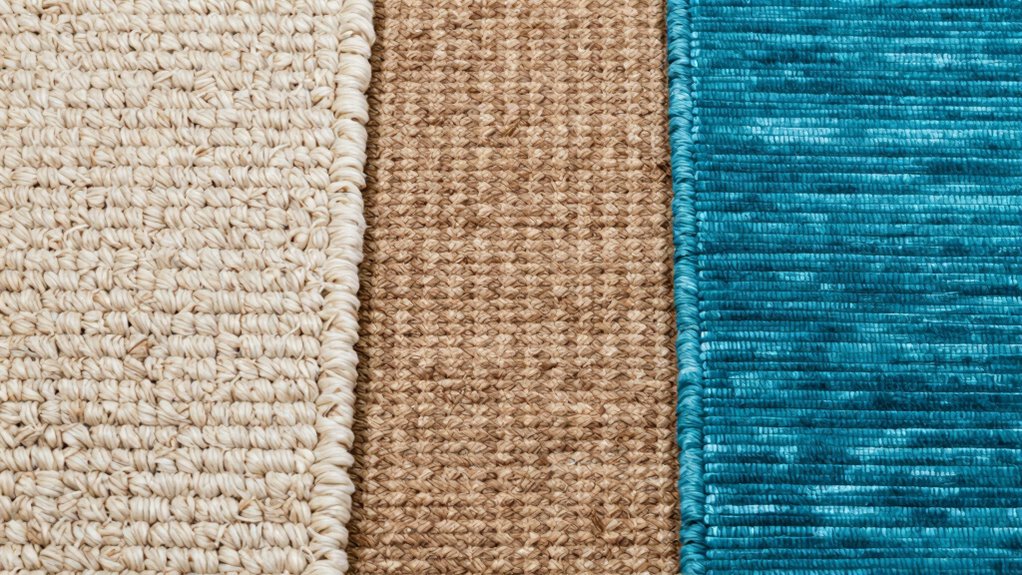

For everyday life, your choice depends on durability, eco-friendliness, and traffic. Wool rugs are durable and maintain their appearance well, making them great for busy homes, especially if ethically sourced. Jute rugs are eco-friendly and perfect for low-traffic or decorative spaces, but they can fray over time. Synthetic rugs are highly resistant to stains and heavy use, ideal for high-traffic areas. Keep exploring to discover which material suits your lifestyle best.
Key Takeaways
- Wool rugs are durable and ideal for high-traffic areas due to their resilience and ability to maintain shape.
- Jute rugs are eco-friendly and best suited for decorative, low-traffic spaces because of their tendency to fray.
- Synthetic rugs are highly resistant to stains, moisture, and wear, making them suitable for busy households with kids and pets.
- Wool and jute are biodegradable and sustainably sourced, whereas synthetics rely on non-renewable resources and are less eco-friendly.
- The choice depends on usage needs: wool for durability, jute for eco-friendliness, and synthetics for stain resistance and heavy use.
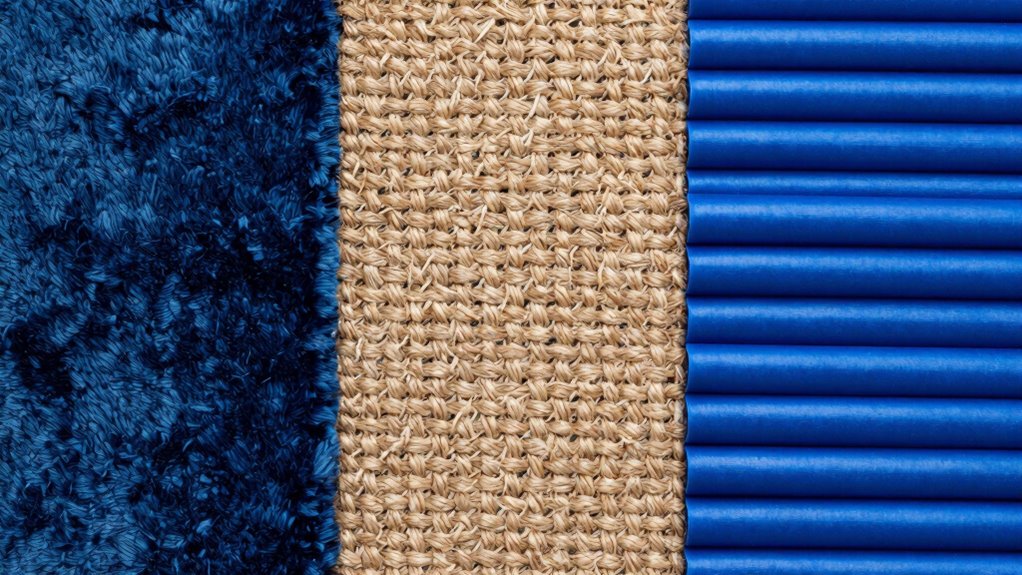
When choosing a rug, understanding the differences between wool, jute, and synthetic materials can help you make an informed decision that suits your style and needs. Each material offers unique qualities, especially when it comes to longevity factors and eco-friendliness comparison. Wool rugs are known for their resilience and durability. They can withstand heavy foot traffic without showing wear quickly, making them ideal for busy households. Wool’s natural elasticity helps it bounce back from footprints and indentations, so your rug stays looking fresh longer. Its durability factors are high, especially if properly maintained. On the eco-friendliness comparison, wool is a renewable resource, especially when sourced ethically. It’s biodegradable and has a smaller environmental footprint compared to synthetic fibers. However, the farming process can have environmental impacts, so choosing wool from sustainable farms is wise. Sustainable sourcing is an important factor to consider when evaluating eco-friendly options.
Jute rugs are a different story. They’re made from natural plant fibers, which makes them quite eco-friendly. Jute is biodegradable and renewable, and its cultivation requires less water and chemicals than some other crops. When considering eco-friendliness comparison, jute scores high because it’s a sustainable crop that doesn’t harm the environment. In terms of durability factors, jute isn’t as robust as wool. It’s more susceptible to wear and tear, especially in high-traffic areas or places prone to moisture. Jute rugs tend to fray or break down more quickly with heavy use, so they’re better suited for low-traffic spaces or decorative purposes rather than everyday heavy use.
Synthetic rugs, often made from nylon, polyester, or polypropylene, excel in durability factors. These materials resist stains, moisture, and wear, making synthetic rugs a practical choice for high-traffic areas or homes with kids and pets. Their resilience means they usually last longer under tough conditions. But when it comes to eco-friendliness comparison, synthetic fibers fall short. They’re derived from petroleum, a non-renewable resource, and are not biodegradable. Producing and disposing of synthetic rugs can contribute to environmental pollution, which makes them less eco-friendly overall. If sustainability is a priority, synthetic rugs might not be your best option.

Rugs USA Melrose Brown/Ivory, 7'6" x 9'6", Handmade, Wool & Cotton, Soft and Cozy, High Traffic, Stain Resistant, Easy Clean, Durable Area Rug for Bedroom, Living Room, Dining Space, Den, Entryway
Natural Materials: Our area rug is crafted from 80% Wool, 20% Cotton and expertly made by hand or…
As an affiliate, we earn on qualifying purchases.
As an affiliate, we earn on qualifying purchases.
Frequently Asked Questions
How Do Rug Materials Affect Indoor Air Quality?
Your rug material impacts indoor air quality mainly through airborne fiber particles and VOC emissions. Wool rugs tend to emit fewer VOCs and trap dust, improving air quality. Jute rugs release more airborne fibers, which can aggravate allergies. Synthetic rugs often emit higher VOCs, potentially causing respiratory issues. Choosing natural materials like wool can help reduce airborne particles and VOCs, creating a healthier indoor environment for you.
Are There Eco-Friendly Options Within Synthetic Rug Materials?
Yes, there are eco-friendly options within synthetic rug materials. You can choose biodegradable synthetics made from plant-based or natural polymers, which break down more easily in the environment. Recycled fiber options, such as those made from plastic bottles or other post-consumer waste, also reduce environmental impact. These choices help you enjoy durable, stylish rugs while minimizing your ecological footprint, making them a smarter, greener option for everyday life.
Which Rug Material Is Best for High-Traffic Areas?
For high-traffic areas, synthetic rugs often shine, offering impressive durability and easy maintenance. They withstand wear better than wool or jute, making them a smart choice. While wool feels plush and jute adds rustic charm, synthetic options balance durability with a smooth texture, ensuring comfort underfoot. Their resilience means your rug stays looking fresh longer, making them ideal for busy spaces where practicality and comfort matter most.
How Do Rug Materials Impact Allergy Sufferers?
If you’re allergy-sensitive, rug materials impact dander accumulation and allergen retention substantially. Wool rugs tend to trap more allergens and dander, which can worsen allergies. Jute rugs are less likely to hold allergens but may still cause irritation for sensitive individuals. Synthetic rugs are often easier to clean and less allergenic, making them a better choice for allergy sufferers. Regular cleaning is essential regardless of material to reduce allergens effectively.
Can Rug Materials Be Safely Cleaned With Household Products?
Cleaning rug materials is like tending a delicate garden—you need the right tools. You can safely clean wool, jute, or synthetic rugs with household products if you choose gentle cleaning methods. Avoid harsh chemicals to protect sensitive skin and reduce chemical sensitivities. Use mild detergents, water, and vacuum regularly. Always test a small area first to prevent damage, ensuring your rug stays fresh without risking irritation or deterioration.

SAFAVIEH Area Rug 6×9 – Cape Cod Collection – Natural Brown, Handmade Braided Flat Weave Jute (CAP252A)
[HANDMADE CRAFTSMANSHIP]: Expertly hand-woven by skilled artisans from braided, plant-based jute fibers for a rich, textured look and…
As an affiliate, we earn on qualifying purchases.
As an affiliate, we earn on qualifying purchases.
Conclusion
When choosing a rug, consider your lifestyle and needs. Wool rugs are durable and soft, perfect for high-traffic areas, while jute offers eco-friendly, natural texture for casual spaces. Synthetic rugs are budget-friendly and easy to clean, making them ideal for busy households. Did you know that synthetic fibers now make up nearly 60% of the global rug market? Whichever material you pick, you’ll find the perfect fit to enhance your everyday life.
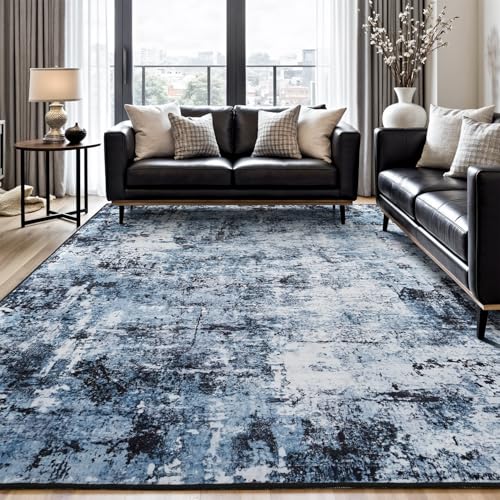
Rugflix 8×10 Area Rugs for Living Room, Washable Large Rug Stain-Resistant Low Pile, Modern Dark Carpet for Dining Room Home Office Kid Room Nursery Bedroom, Navy Blue/Black
Modern Abstract Rug: Evokes the essence of ocean and sea foam, blending neutral tones of navy blue and…
As an affiliate, we earn on qualifying purchases.
As an affiliate, we earn on qualifying purchases.

ANSSO Wool Rugs 8×10 for Living Room,80% Merino Wool and 20% Cotton Soft Tufted Area Rug with Cotton Non-Slip Backing,Large Area Rug for Bedroom Bedroom, Dining and Home Office (Cream White)
Selected Luxurious Merino Wool: Our wool rug are made of high-quality 15-20 micron Merino wool. Compared with ordinary…
As an affiliate, we earn on qualifying purchases.
As an affiliate, we earn on qualifying purchases.