
Fragrance lines are a powerful tool to boost your brand recognition and build customer loyalty. By offering a cohesive collection, you create a signature identity that encourages repeat purchases. Scent layering allows your customers to personalize their experience, making each interaction more meaningful. Stylish, innovative packaging also enhances engagement and reflects your brand’s values. Want to discover how these strategies can transform your brand’s image? Keep exploring to learn more.
Key Takeaways
- Fragrance lines create a cohesive brand identity, enhancing recognition and fostering loyalty through consistent scent experiences.
- Offering customizable scent layering encourages personalized engagement, deepening consumer connection with the brand.
- Developing signature fragrances helps express brand personality and distinguishes products in crowded markets.
- Innovative packaging solutions improve user experience, sustainability, and reinforce brand values and perception.
- Fragrance lines serve as a strategic tool for long-term brand building and emotional customer attachment.
Fragrance lines have become a powerful tool for brands to build recognition and loyalty in a crowded market. By offering a cohesive collection of scents, brands can create a signature identity that resonates with consumers and encourages repeat purchases. One of the most effective strategies within these lines is scent layering, which allows you to mix and match different fragrances to craft a personalized scent experience. When you understand how to combine various notes—such as floral, woody, or citrus—you can develop a signature scent that feels uniquely yours. This approach not only deepens your connection to the brand but also encourages you to explore different combinations, making scent a versatile form of self-expression.
Brands leverage scent layering as a way to enhance customer engagement. They often design complementary fragrances that work well together, inviting you to experiment and discover your own preferred blends. This interactivity transforms the act of wearing perfume from a simple routine into a creative ritual. As you get more involved in layering, you develop a stronger loyalty to the brand because it offers a more intimate, customizable experience. It’s no longer just about purchasing a perfume; it’s about participating in a process that reflects your personality and moods. This personalization makes the fragrance line more memorable and meaningful, fostering long-term brand affinity. Additionally, understanding how to utilize scent notes effectively can help you maximize the impact of each fragrance layer.
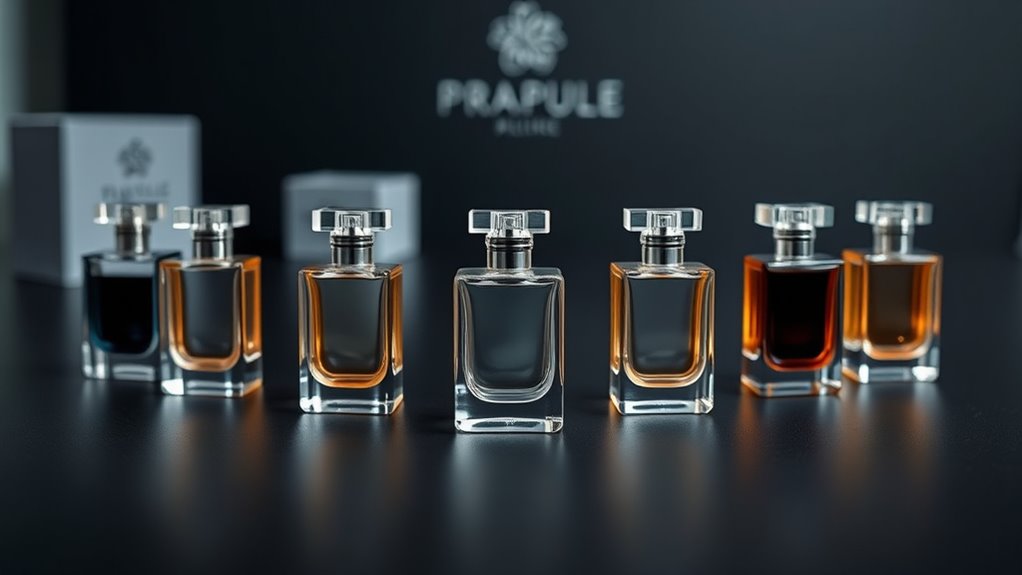
Packaging innovation also plays a pivotal role in elevating fragrance lines as a strategic branding tool. Modern packaging goes beyond aesthetics; it’s about functionality, eco-friendliness, and engaging your senses. You might notice sleek, intuitively designed bottles that make scent application easier or refillable containers that promote sustainability. Some brands incorporate innovative materials or interactive packaging elements—like magnetic caps or layered designs—that catch your eye and create a sense of excitement each time you purchase or use the product. These innovations serve not only to protect the fragrance but also to communicate the brand’s values and commitment to quality. When you see thoughtful packaging, it reinforces your perception of the brand as forward-thinking and attentive to detail.
Frequently Asked Questions
How Do Fragrance Lines Influence Overall Brand Perception?
Fragrance lines considerably influence your overall brand perception by creating sensory branding that leaves a lasting impression. When you associate a specific scent with a brand, it fosters an emotional connection, making your experience memorable and engaging. This connection enhances brand loyalty, as your senses become intertwined with the brand’s identity. As a result, fragrance lines shape how you perceive and relate to a brand, making it feel more personal and authentic.
What Are Common Challenges in Developing a Fragrance Line?
When developing a fragrance line, you often face challenges like ingredient sourcing, which can impact quality and consistency. Additionally, creating effective marketing strategies is essential to stand out in a crowded market. You need to balance unique scents with consumer preferences while ensuring reliable supply chains. By carefully managing sourcing and tailoring marketing efforts, you can overcome these hurdles and successfully launch a compelling fragrance line that resonates with your target audience.
How Do Brands Choose Scents for Their Fragrance Lines?
When choosing scents for your fragrance line, you focus on scent selection that aligns with your branding consistency. You analyze target audience preferences, current market trends, and your brand’s identity to pick notes that resonate. You test samples to guarantee they evoke the right emotions and fit seamlessly into your brand story. Ultimately, you select scents that enhance brand recognition and appeal, creating a cohesive and memorable fragrance collection.
What Is the Typical Timeline for Launching a Fragrance Line?
You typically spend about 12 to 18 months on launching a fragrance line. It starts with scent development, where you refine the fragrance, and then moves into packaging and branding. During this period, you plan and execute marketing campaigns to build anticipation. This timeline allows for testing, adjustments, and effective promotion, ensuring your fragrance makes a strong debut and resonates with your target audience.
How Do Fragrance Lines Impact Customer Loyalty Strategies?
Think of your fragrance line as a handshake that seals customer loyalty. It boosts retention by offering scent personalization and scent layering techniques, making customers feel uniquely understood. When you regularly introduce new scents, it keeps engagement fresh and exciting, turning casual buyers into loyal fans. This evolving olfactory experience creates a bond, ensuring your brand remains top of mind and heart, like a signature scent that’s impossible to forget.
Conclusion
Embracing fragrance lines as a brand strategy isn’t just about scent; it’s about weaving an invisible thread that connects your audience to your identity. Like a signature that lingers long after the first impression, a well-crafted fragrance collection elevates your brand’s presence. So, consider this: what if your signature scent could become the silent ambassador of your brand’s story, whispering its essence into every moment your audience experiences you?