
TL;DR

Get your wardrobe favorites delivered free with Prime
- Fast, free delivery on millions of items
- Prime Video, Amazon Music and more included
- Member-only deals all year
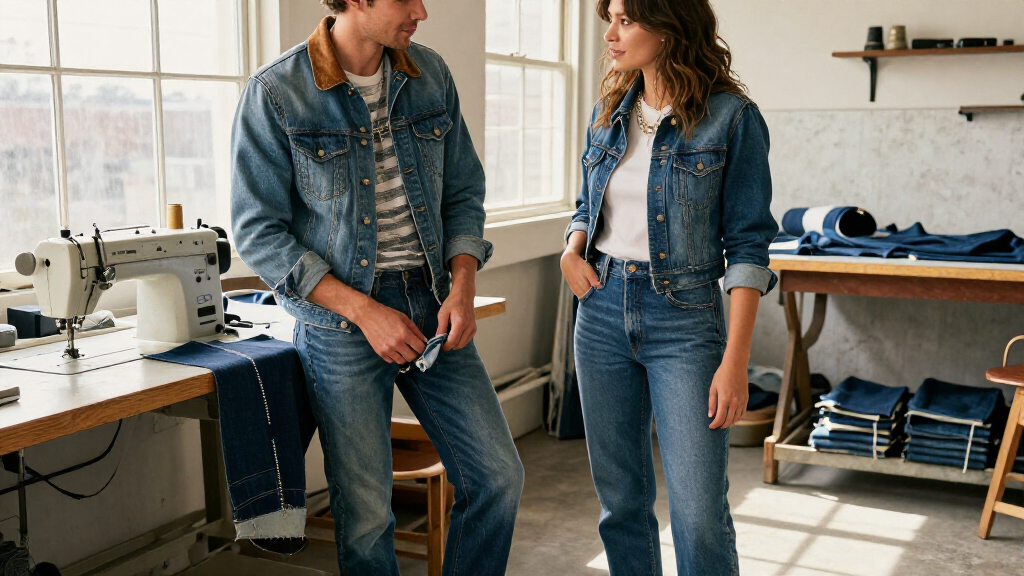
Imogene + Willie and Wrangler are preparing the third and final release of a denim collaboration made entirely in the United States. The collection drew on Wrangler’s archives, deadstock White Oak denim and both brands’ existing domestic manufacturing partners.
Imogene + Willie and Wrangler are set to release the third and final installment of their denim collaboration on Nov. 7, bringing a three-part collection made entirely in the United States to a close. The project combined Wrangler archive-inspired designs with domestic mills and manufacturing partners, and included deadstock denim from the shuttered White Oak plant in Greensboro, North Carolina, according to WWD’s report.
The final drop is described as featuring deadstock denim styles in western cuts, including a rigid western snap shirt. The source does not provide a complete product list, prices, quantities or retail availability details. It reports that fabric availability helped determine how much the teams could produce.
The collection was produced entirely in the U.S. using the brands’ existing domestic relationships, including Mount Vernon Mills in Trion, Georgia, as well as garment and laundry facilities in Los Angeles. Wrangler supplied deadstock fabrics from White Oak, the former Greensboro denim plant that has since closed. The report characterizes the fabric as sought-after, but does not give its quantity or specify which final-drop pieces use it.
Jackie Berkley, Imogene + Willie’s head of people and culture, said the teams studied original Wrangler garments and considered their patterns, construction, washes, stitching and finishing. She said they sought to preserve the originals’ character while making considered fit adjustments, and coordinated production with manufacturers as they worked with limited quantities of original fabric and newly developed materials.
Domestic Partners Behind the Collection
The collaboration highlights how a U.S.-made clothing project depends on more than the label on a garment: it requires working mills, sewing and laundry facilities, available materials and established ties between brands and manufacturers. In this case, Wrangler’s archive and fabric resources met Imogene + Willie’s relationships with domestic suppliers, giving both companies a way to make a collection in the United States.
Berkley argued that ongoing orders matter to the businesses that keep those capabilities in place. “For domestic mills and manufacturers to survive, they need consistent business and brands willing to invest in their capabilities,” she told WWD. That is her assessment of the wider stakes; the report does not provide production costs, supplier revenue, job figures or other measures of the collaboration’s economic effect.
The project also connects heritage design to present-day production. Wrangler’s history and reach gave the collaboration access to archival garments and a broader audience, while Imogene + Willie brought its experience working with American mills and makers. For readers, the practical point is that a domestic-made collection can rely on a network of specialist partners, not a single factory—and that deadstock fabric can shape both design choices and production volume.
Popular right now

Bose QuietComfort Wireless Noise-Cancelling Headphones, Cypress Green

KitchenAid Artisan 5-Qt Tilt-Head Stand Mixer – Almond Cream (KSM150PS)

Samsung 55-Inch The Frame QLED 4K TV (2026) Bundle
As an affiliate, we earn on qualifying purchases.
From Wrangler Archives to Production
Imogene + Willie was founded in 2009, and Berkley told WWD that denim has remained central to the brand. She described Wrangler as a long-standing influence, saying vintage Wrangler pieces have inspired the Nashville company’s designs. For this collaboration, Wrangler gave Imogene + Willie access to its archives and room to interpret earlier pieces through its own design perspective.
The teams examined original garments and revisited patterns that had not been produced in years, according to Berkley. They aimed to retain details that made the pieces recognizably Wrangler while considering fit and wearability. Production involved a mix of limited original fabrics and newly developed materials; the report says fabric availability partly set the scale of what could be made.
Berkley also pointed to Imogene + Willie’s Cotton Project, which brings farmers, mills and makers within a 400-mile radius of the company’s Nashville headquarters together to produce T-shirts and jeans. She said the Wrangler partnership carried that domestic-production work to a wider audience. The report says the collaboration is wrapping up with this final installment; it does not establish that the brands have announced another joint project.
““We wanted ours to have a real reason for existing.””
— Jackie Berkley, Imogene + Willie’s head of people and culture
Release Details Still Unreported
The source gives Nov. 7 as the scheduled date of the final release but does not specify the year, launch time, sales channels or whether the date has since changed. It also does not list prices, production quantities, inventory by style or the locations where the collection will be available.
Although the report says the collection was produced entirely in the U.S., it does not provide a style-by-style account of where each item was cut, sewn, washed or finished. It identifies Mount Vernon Mills and garment and laundry facilities in Los Angeles as partners, but does not name every supplier. The precise amount and distribution of White Oak deadstock used in the collection are also not reported.
The source describes the third drop as the last of the collaboration. It does not say whether either company plans to continue producing these designs, work together again or expand domestic manufacturing through other collections.
Final Drop Closes the Project
The next scheduled milestone is the Nov. 7 release of the collection’s third and final drop. The announced styles include western-cut deadstock denim pieces and a rigid western snap shirt. Readers looking for the release should check the brands’ own product and announcement channels for current availability, since the source does not supply purchase links or confirm that stock will remain after launch.
After the release, the main unanswered question is whether the partnership will lead to further domestic production or another collaboration. Berkley said the teams hope the project encourages continued investment in American manufacturing, but that is an expression of intent, not an announced next step. No future collection or supplier commitment is confirmed in the source material.
Key Questions
When is the final Imogene + Willie and Wrangler release?
The third and final drop is scheduled for Nov. 7. The source does not state the year or provide a launch time, so check the brands’ current announcements for updated timing.
What is expected in the final drop?
The reported lineup includes deadstock denim in western cuts, including a rigid western snap shirt. The source does not give a complete list of styles or confirm prices and quantities.
Where was the collaboration made?
The collection was produced entirely in the United States, according to the report. Named partners include Mount Vernon Mills in Trion, Georgia, and garment and laundry facilities in Los Angeles; the source does not list every production location or supplier.
What is White Oak denim?
In the report, White Oak refers to the shuttered denim plant in Greensboro, North Carolina, whose deadstock fabric Wrangler supplied for the collaboration. The amount used and the styles made with it are not specified.
Have the brands confirmed another collaboration?
No. Berkley said the teams hope the project encourages further investment in U.S. clothing production, but the source reports no confirmed follow-up collection or continuing partnership.
Source: wwd.com