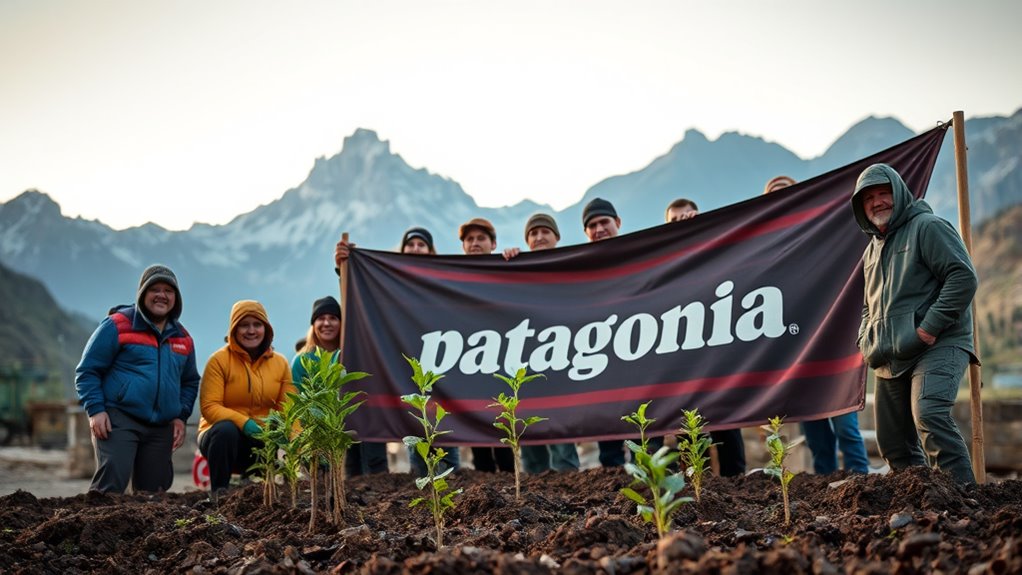

Patagonia’s activist business model centers on integrating environmental and social responsibility into every part of its operations. You see this in its transparent supply chain, sustainable sourcing, and campaigns that challenge industry norms, like encouraging repair and reuse. The company demonstrates that activism and profitability can go hand in hand. By aligning its purpose with strategic business practices, Patagonia inspires consumers and advocates for meaningful change. Keep exploring to understand how this model continues to evolve and influence the industry.
Key Takeaways
- Patagonia integrates activism into its core operations, marketing, and culture to promote environmental and social causes.
- The company prioritizes sustainable sourcing, transparent supply chains, and product longevity to reduce environmental impact.
- Patagonia uses bold campaigns like “Don’t Buy This Jacket” to challenge consumerism and encourage repair and reuse.
- It donates a significant portion of profits to environmental initiatives and advocates for policy change through activism campaigns.
- Patagonia demonstrates that a profitable business can be a powerful force for environmental and social activism.

Patagonia has built its brand around more than just selling outdoor gear; it actively champions environmental and social causes, making activism a core part of its business model. From the outset, you notice that the company views corporate responsibility as essential, not optional. Every product you buy from Patagonia is a reflection of their commitment to environmental advocacy. They don’t just aim to sell apparel—they aim to inspire change and demonstrate that business can be a force for good. This approach sets Patagonia apart in a crowded marketplace, where many brands focus solely on profits. Here, activism isn’t an afterthought; it’s integrated into their core operations, marketing, and culture.
Patagonia’s brand is rooted in activism, environmental stewardship, and inspiring change beyond just selling outdoor gear.
You’ll see that Patagonia demonstrates its dedication through transparent supply chains, sustainable sourcing, and fair labor practices. They actively seek to minimize environmental impact at every stage, from using recycled materials to reducing water and energy consumption. Their environmental responsibility extends beyond internal operations—Patagonia regularly advocates for broader change, engaging in campaigns that influence policy and raise awareness about critical issues like climate change and conservation. This active stance on environmental advocacy means they put their money where their mouth is, often donating a significant percentage of profits to environmental causes or engaging in activism campaigns. When you buy from Patagonia, you’re supporting a company that’s committed to protecting the planet, not just profiting from it.
Patagonia’s activism also involves challenging industry norms and encouraging consumers to think differently about consumption. They promote repair and reuse through initiatives like Worn Wear, which encourages customers to extend the life of their gear rather than replace it. By doing so, they foster a culture of sustainability that appeals to environmentally conscious consumers like you. The company’s activism is authentic—you see it in their bold campaigns, like their famous “Don’t Buy This Jacket” ad, which urges customers to reduce unnecessary consumption. Such actions push the industry to rethink its practices, emphasizing quality and longevity over quick turnover. Incorporating sustainable sourcing further demonstrates their commitment to reducing environmental impact across supply chains. Additionally, their efforts to influence the overall global environmental impact show a broader dedication to sustainability beyond their own operations.
You’ll appreciate that Patagonia’s approach to corporate responsibility isn’t just about doing good; it’s a strategic business model that demonstrates that environmental advocacy can be profitable and impactful. Their efforts prove that activism can coexist with a successful enterprise, inspiring you as a consumer to support brands that prioritize purpose over profit. In the end, Patagonia’s activism shapes a brand identity rooted in integrity, transparency, and a genuine desire to make the world a better place. Additionally, their focus on transparent supply chains helps build consumer trust and demonstrates accountability in their environmental commitments.
Frequently Asked Questions
How Does Patagonia Measure the Success of Its Activism Efforts?
You might wonder how Patagonia measures the success of its activism efforts. They track brand loyalty by observing customer support and repeat purchases, showing how their values resonate. Media coverage also plays a role, as increased attention indicates impactful campaigns. When activism aligns with their mission, Patagonia sees stronger customer engagement and positive brand perception, proving that their efforts foster loyalty and generate meaningful media buzz.
What Challenges Does Patagonia Face in Balancing Activism and Profitability?
Balancing activism and profitability is a tightrope walk, like walking a high wire. You face challenges in maintaining your corporate reputation while staying true to your values. Your supply chain may complicate things, as sourcing ethically can increase costs and limit flexibility. To succeed, you must navigate these tensions carefully, ensuring your activism enhances, rather than endangers, your brand’s financial health and public trust.
How Do Customers Respond to Patagonia’S Activist Initiatives?
You see that Patagonia’s activist initiatives generally strengthen your perception of the brand, making you feel more connected and loyal. Many customers appreciate their commitment to environmental causes, which boosts brand loyalty. However, some might view these actions as controversial or risky, potentially affecting their perception negatively. Overall, most consumers respond positively, valuing Patagonia’s authenticity and dedication, which encourages ongoing support and advocacy for the brand’s mission.
Does Patagonia Collaborate With Other Organizations for Activism Campaigns?
You’ll find that Patagonia actively collaborates with other organizations for activism campaigns through corporate partnerships and community engagement. These collaborations strengthen their efforts, allowing you to see a unified front in addressing environmental issues. By partnering with like-minded groups, Patagonia amplifies its message and mobilizes more people. This approach demonstrates their commitment to collective change, making their activism more effective and impactful for you and the wider community.
How Sustainable Are Patagonia’S Activist Practices Long-Term?
While it’s tempting to see Patagonia’s activist practices as a lasting commitment, you’ll want to ponder how they align with broader goals of corporate social responsibility and reducing environmental impact. Their initiatives are thoughtfully designed to foster long-term sustainability, yet the true test lies in consistent, evolving efforts. If they maintain their transparency and adapt to new challenges, then their activism can be sustainably impactful over time.
Conclusion
You might think prioritizing activism limits profits, but Patagonia proves otherwise. Imagine a mountain, representing the brand’s values, with roots reaching deep into sustainable practices and activism. This solid foundation attracts loyal customers who support your mission, boosting sales and reputation. By aligning your business with meaningful causes, you create a powerful cycle: purpose fuels profit, and profit sustains purpose. So, embracing activism isn’t a risk—it’s a smart way to grow sustainably and stand out.