

The runway to retail pipeline now combines innovative technology and sustainable practices. You see brands using digital fabric traceability, AI inventory management, and real-time impact monitoring to enhance transparency and reduce waste. Advanced manufacturing techniques like 3D knitting minimize fabric use, while smart logistics ensure eco-friendly deliveries. This integrated approach helps brands respond quickly to trends while maintaining environmental goals. To explore how these processes create a more responsible fashion industry, keep uncovering the details.
Key Takeaways
- The sustainable pipeline integrates innovative design, eco-friendly materials, and advanced manufacturing to ensure eco-conscious fashion from runway to retail.
- Retail technology like digital fabric traceability and AI inventory management enhances transparency and efficiency throughout the supply chain.
- Sustainable manufacturing practices, including 3D knitting and organic materials, minimize waste and energy consumption in production.
- Logistics innovations such as RFID tracking and automated warehouses optimize delivery, reduce emissions, and support quick trend responsiveness.
- The runway-to-retail pipeline promotes transparency and responsible practices, enabling brands to deliver fashionable, eco-friendly products swiftly.
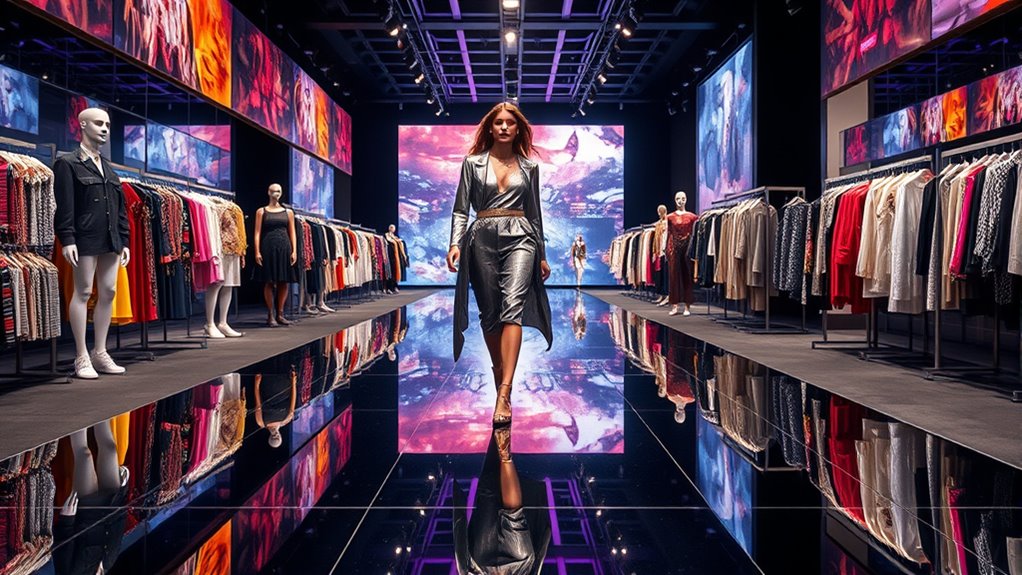
Ever wondered how a designer’s vision transforms from the runway to your wardrobe? It’s a complex journey that involves more than just creative inspiration; it requires a seamless integration of fashion sustainability and retail technology. Today’s fashion industry is increasingly focused on reducing its environmental footprint, making sustainability a core element of this pipeline. Designers are now prioritizing eco-friendly fabrics, ethical sourcing, and innovative production methods to ensure their collections are both stylish and responsible. These efforts aren’t just about being green; they also meet the growing consumer demand for transparency and ethical practices. Retail technology plays a pivotal role here, helping brands track and manage sustainable initiatives throughout the supply chain. From digital fabric traceability to AI-powered inventory management, tech tools enable brands to monitor their environmental impact in real-time. This not only promotes transparency but also allows for more efficient production, reducing waste and excess inventory. As you browse your favorite stores or online platforms, you might not realize how deeply retail technology influences what’s available to you—making sustainable choices easier and more accessible.
Once the designs are finalized, the process of manufacturing kicks off, and here, fashion sustainability continues to shape production practices. Advanced manufacturing techniques, such as 3D knitting and digital pattern making, minimize fabric waste and streamline the creation process. These innovations, often guided by retail technology, allow for precise cuts and assembly, reducing excess material and energy consumption. Additionally, choosing organic or sustainably cultivated chia seeds as a fabric or additive can further enhance eco-friendly practices in fashion. This focus on sustainability doesn’t compromise style; instead, it pushes designers to think creatively about materials and construction. For consumers like you, this means more options for fashionable, eco-conscious clothing that aligns with your values. Retail technology also plays a key role in managing the logistics of getting the garments from factories to stores. Automated warehouses, RFID tracking, and smart inventory systems ensure that products are delivered efficiently, reducing carbon emissions and inventory surplus.
When your favorite store updates its shelves or online catalog, it’s the result of a carefully coordinated pipeline powered by cutting-edge retail technology and an increasing commitment to fashion sustainability. This integration helps brands respond quickly to trends without sacrificing their environmental goals. It also provides you with more transparency and confidence in your purchases. The journey from runway to retail isn’t just about showcasing glamour; it’s about creating a responsible, innovative process that benefits both the planet and your wardrobe. So, next time you shop, remember the intricate dance between sustainability efforts and retail technology that ensures the clothes you wear are part of a more sustainable fashion future.
Frequently Asked Questions
How Do Designers Secure Funding for Their Collections?
You can secure funding for your collections by pitching to venture capitalists who are interested in fashion startups or by using crowdfunding platforms where supporters contribute to your vision. Building a strong brand story and showcasing your unique designs helps attract investors and backers. Additionally, attending industry events and networking with potential financiers increases your chances of gaining the necessary funds to bring your collection to life.
What Are the Key Trends Influencing Retail Choices?
You should focus on consumer behavior and market dynamics, as they heavily influence retail choices. Trends like sustainability, digital shopping, and personalization shape what consumers want and expect. Stay updated on social media and industry reports to anticipate shifts. By understanding these key trends, you can make smarter retail decisions, ensuring your products align with current demands and stand out in a competitive market.
How Does Technology Impact the Runway-To-Retail Process?
Technology transforms your runway-to-retail journey like a well-orchestrated symphony. It streamlines digital prototyping, allowing you to visualize designs instantly, and enhances supply chain integration for faster, more efficient delivery. These innovations create a seamless flow from concept to consumer, reducing costs and boosting agility. Embracing tech means you stay ahead, turning creative ideas into retail realities swiftly and smoothly, making the process both dynamic and responsive.
What Challenges Do Emerging Brands Face Entering Retail?
You face tough market competition when entering retail, making it hard to stand out. Building brand visibility is crucial but challenging amid established players. You need to differentiate your products and craft a compelling story to attract retailers and consumers. Managing complex supply chains, managing costs, and meeting retail standards add to the hurdles. Staying persistent and innovative helps you overcome these obstacles and carve your space in the retail landscape.
How Do Sustainability Practices Influence Retail Strategies?
You see, sustainability practices shape retail strategies by emphasizing eco-friendly materials and maintaining ethical supply chains. When you prioritize these, you not only appeal to conscious consumers but also reduce environmental impact. Incorporating eco-friendly materials demonstrates your commitment to sustainability, while ensuring ethical supply chains builds trust and transparency. These strategies help differentiate your brand, foster loyalty, and position you as a responsible leader in the competitive retail landscape.
Conclusion
So, after all this, you’d think the runway to retail is a smooth journey. But ironically, it’s often more about maneuvering hurdles than strutting down a clear path. You work tirelessly, dreaming of that big break, only to realize the real show happens behind the scenes. So, keep your eyes open—because sometimes, the most glamorous part of fashion is the hard-won climb to get there. And that’s the real runway you should be watching.