
Signature materials like tweed, canvas, and nylon stand out because of their durability, versatility, and ability to express your personal style. Tweed offers a timeless, textured look with long-lasting wear, while canvas provides rugged strength that develops a unique patina over time. Nylon adds a modern touch with its lightweight strength and weather resistance. If you keep exploring, you’ll discover how each material’s features can enhance your style and performance even further.
Key Takeaways
- Tweed, canvas, and nylon are signature materials valued for their durability, versatility, and distinctive aesthetic qualities.
- Tweed offers textured, woven patterns with excellent insulation and long-lasting appeal.
- Canvas is a rugged, plain-woven fabric that develops a unique patina over time, enhancing its vintage look.
- Nylon is a lightweight, strong synthetic material resistant to water, stretching, and chemicals, ideal for activewear and outdoor gear.
- These materials are chosen for their performance, resilience, and ability to express individual style confidently.
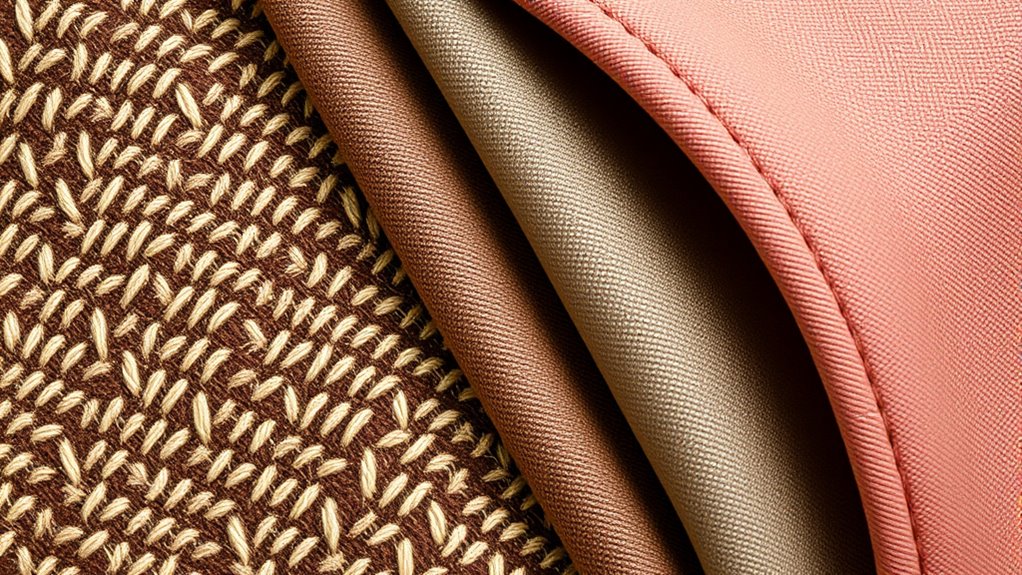
Have you ever wondered what makes certain materials stand out as truly signature? It’s often a combination of their unique qualities, versatility, and how they resonate with your personal style. When it comes to signature materials like tweed, canvas, and nylon, each offers distinct characteristics that set them apart, making them favorites in fashion and design. These materials aren’t just about appearance—they’re about reliability, performance, and the ability to hold up over time.
Take tweed, for example. Known for its textured, woven look, tweed has a rich history and a classic appeal that never goes out of style. But beyond its aesthetic variations—ranging from herringbone to houndstooth—tweed’s durability is tested through rigorous durability tests. This means it can withstand the daily wear and tear of regular use without losing its charm or structural integrity. Its thick, tightly woven fibers provide insulation and resilience, making it ideal for outerwear and tailored garments. When you opt for tweed, you’re choosing a material that promises longevity, even after years of use, while still offering a variety of aesthetic variations to match your personal taste.
Tweed’s textured weave and durability ensure timeless style and long-lasting wear.
Canvas, on the other hand, is celebrated for its ruggedness and versatility. It’s a sturdy, plain-woven fabric that’s been a staple in everything from workwear to high fashion. Its strength comes from the tight weaving process, which makes it highly resistant to tears and abrasions. In terms of durability tests, canvas consistently proves its resilience, whether in backpacks, shoes, or jackets. Its ability to age gracefully—developing a unique patina over time—adds to its appeal. The aesthetic variations in canvas range from smooth and polished to distressed and vintage-inspired, allowing you to choose a look that reflects your personality while knowing it can endure whatever you throw at it. Additionally, durability testing plays a crucial role in confirming the material’s long-term performance and reliability.
Nylon, a synthetic material, offers a different kind of signature appeal. Lightweight yet incredibly strong, nylon is resistant to water, stretching, and most chemicals. It’s a go-to for performance gear and activewear, thanks to its durability tests that emphasize these properties. Nylon’s aesthetic variations include sleek, shiny finishes or matte textures, making it adaptable to both functional and fashionable designs. Its resilience makes it suitable for outdoor adventures or everyday use, and its ability to retain shape means it’s a dependable choice for accessories, bags, or apparel.
In the end, each of these signature materials stands out because of how they perform under durability tests and the range of aesthetic variations they offer. Whether you prefer the timeless appeal of tweed, the rugged versatility of canvas, or the modern resilience of nylon, you’re choosing a material that’s built to last and designed to express your style confidently.
Frequently Asked Questions
How Do I Clean and Maintain Tweed, Canvas, and Nylon Materials?
To clean and maintain tweed, canvas, and nylon, follow proper cleaning techniques for each. Use gentle brushes or vacuum for tweed to avoid damage, while spot cleaning with mild soap works well for canvas. Nylon is best cleaned with a damp cloth and mild detergent. Regarding durability comparisons, nylon is highly resistant to moisture, canvas offers good strength, and tweed requires more care. Regular maintenance keeps each material looking its best and prolongs its lifespan.
Are These Materials Environmentally Sustainable?
You might think these materials are eco-friendly, but their sustainability varies. Tweed often uses wool, which can be ethically sourced, yet demands significant water and energy. Canvas can be eco-friendly if made from organic cotton, but conventional versions harm the environment. Nylon, a synthetic fiber, isn’t sustainable unless produced with recycled materials. Look for eco-friendly alternatives and prioritize brands with ethical sourcing to reduce environmental impact and make better choices.
Which Materials Are Most Water-Resistant?
Nylon is the most water-resistant among these materials, offering excellent water resistance comparison and quick drying properties. Canvas provides moderate water resistance but absorbs some moisture, making it less durable in wet conditions. Tweed isn’t water-resistant and can absorb water, reducing its durability when exposed to moisture. If you need a bag that withstands water and maintains durability, nylon is your best choice, especially for outdoor or wet environments.
How Do the Weights of These Materials Compare?
Think of tweed as a sturdy woolen blanket, canvas as a thick, rugged tarp, and nylon as a lightweight, ripstop fabric. Tweed is the heaviest, offering durable style, while nylon is the lightest, perfect for versatile, active looks. Canvas falls in between, balancing material durability with style versatility. Their weights influence how they feel and perform, making each suitable for different needs and fashion statements.
Can These Materials Be Recycled or Repurposed?
You can recycle some of these materials, but options vary. Nylon is often recyclable through specialized programs, while canvas and tweed are more challenging but can be repurposed creatively. Consider upcycling tweed into accessories or using canvas for bags or art projects. Look into local recycling options or creative repurposing ideas to give these materials a second life, reducing waste and extending their usefulness.
Conclusion
Now that you know about signature materials like tweed, canvas, and nylon, you’ll appreciate their unique qualities even more. Did you know that nylon, introduced in 1938, revolutionized outdoor gear with its durability and water resistance? Whether you prefer the classic look of tweed or the practicality of canvas, these materials make your accessories stand out. Next time you choose a bag or jacket, consider how these signature fabrics can elevate your style and functionality.