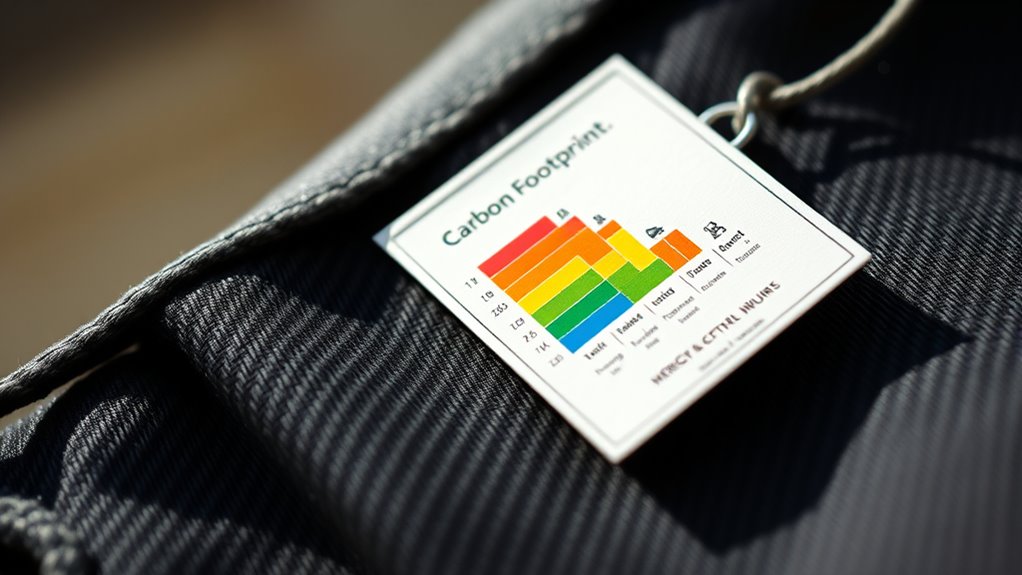

To understand carbon labels on fashion items, look for the number they display; a lower number usually means a smaller environmental impact. Check for additional certifications or explanations that reveal sourcing and reduction efforts. These labels highlight how sustainably a product was made and help you gauge a brand’s eco-commitment. By paying attention to these details, you can make smarter, more eco-friendly choices. Keep going to discover how these labels can guide your sustainable shopping decisions.
Key Takeaways
- Lower carbon numbers indicate a smaller environmental footprint and stronger commitment to sustainability.
- Check for certifications or detailed explanations to understand sourcing and reduction efforts.
- Compare labels to see which brands prioritize renewable materials and energy-efficient practices.
- Understand that carbon labels reflect both material sourcing and manufacturing, including transportation impacts.
- Use labels as a guide to support brands dedicated to transparency and environmentally friendly practices.
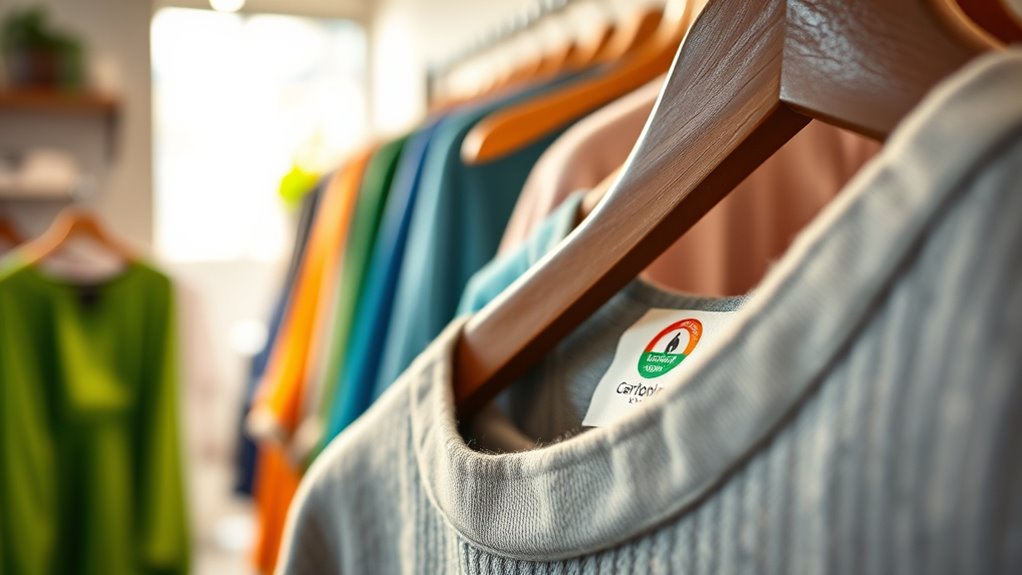
Have you ever wondered how your favorite fashion brands measure their environmental impact? When you see a carbon label on a piece of clothing, it’s more than just a number; it’s a window into how that item was made and its effect on the planet. These labels are designed to provide transparency, helping you make more eco-conscious choices. To truly understand what they tell you, you need to know how brands approach sustainable material sourcing and carbon footprint reduction.
Understanding how fashion brands measure environmental impact helps you make eco-conscious choices.
Sustainable material sourcing is a key factor in lowering a fashion brand’s carbon footprint. It involves selecting raw materials that are renewable, recycled, or produced with minimal environmental harm. For example, brands might use organic cotton, recycled polyester, or plant-based dyes instead of conventional, resource-intensive options. When a label displays a lower carbon number, it often indicates that the company prioritized sustainable sourcing practices. This means they avoided materials that require excessive water, pesticides, or energy, all of which contribute to higher greenhouse gas emissions. By choosing brands that emphasize sustainable sourcing, you support efforts that reduce the overall environmental impact of fashion.
Carbon footprint reduction is the other critical aspect reflected on these labels. It encompasses all the steps a brand takes to cut down greenhouse gases emitted during production, transport, and even disposal. A lower carbon footprint on a label suggests that the company has implemented measures like energy-efficient manufacturing, renewable energy use, or optimized logistics to cut emissions. Some brands also invest in carbon offset programs to neutralize their remaining emissions, which might be noted on the label as well. When you see a smaller number, it indicates a concerted effort to minimize environmental damage at every stage of the product’s lifecycle.
Understanding how labels communicate these efforts empowers you to make smarter choices. A lower carbon label doesn’t just mean a smaller environmental impact; it also often suggests the brand’s commitment to transparency and sustainability. Look for additional certifications or explanations on the label that specify sustainable material sourcing or carbon reduction strategies. This way, you’re not just buying a fashion item—you’re supporting practices that prioritize the planet’s health.
In essence, reading a carbon label involves more than glancing at a number. It’s about recognizing the underlying efforts behind sustainable material sourcing and carbon footprint reduction. These labels serve as a guide, helping you align your shopping habits with your values. By paying attention to what’s on the label, you can make choices that encourage brands to adopt more environmentally friendly practices, ultimately contributing to a more sustainable fashion industry.
Frequently Asked Questions
How Accurate Are Fashion Carbon Labels Across Different Brands?
You might find that fashion carbon labels vary in accuracy across brands because of differences in label transparency and brand consistency. Some brands provide detailed, verified data, making their labels more reliable, while others may lack transparency, leading to less precise information. To gauge accuracy, look for brands committed to transparency and consistent reporting standards, which help you trust the label’s reflection of a product’s true environmental impact.
Can Consumers Trust the Carbon Footprint Data on Labels?
You might be skeptical about trusting carbon footprint data on labels, but transparency can build confidence. When brands openly share their methods, data, and sources, it helps you make informed choices. While some labels may lack clarity, those with clear, verifiable information foster trust. So, you should look for transparency and scrutinize the details, because genuine transparency alleviates consumer skepticism and ensures you’re getting accurate, reliable insights into a brand’s environmental impact.
Do Carbon Labels Include the Entire Supply Chain’s Emissions?
You should know that carbon labels often don’t include the entire supply chain’s emissions due to supply chain complexity. Many brands focus on specific stages, like production or manufacturing, but may not fully account for transportation or raw material sourcing. For you, label transparency varies; some brands provide detailed info, while others may not. It’s important to look for thorough data to truly understand a product’s carbon footprint.
How Often Are Fashion Carbon Labels Updated or Verified?
Think of carbon labels as a snapshot in time of a brand’s environmental impact. They’re typically updated and verified annually to guarantee data transparency and accuracy. Label verification involves third-party audits, making sure the emissions figures are trustworthy. Staying current is vital, so you can confidently compare brands and make sustainable choices. Regular updates serve as a beacon, guiding you through the complex landscape of fashion’s carbon footprint.
Are There Standardized Guidelines for Creating Fashion Carbon Labels?
You’ll find that there aren’t universally accepted industry standards for creating fashion carbon labels yet. However, some organizations promote industry standardization, offering guidelines for transparent and consistent labeling. Label certification often involves third-party verification to guarantee accuracy, helping you trust the eco claims made. While standards are evolving, always check whether a label’s certification aligns with recognized industry efforts to ensure you’re making informed, eco-friendly choices in fashion.
Conclusion
By paying attention to fashion carbon labels, you can make more eco-friendly choices and reduce your environmental impact. Did you know that the fashion industry accounts for about 10% of global carbon emissions? That’s equivalent to all international flights and shipping combined! So, next time you shop, use those labels as your guide. Small changes in what you buy can lead to a big difference for the planet’s future.