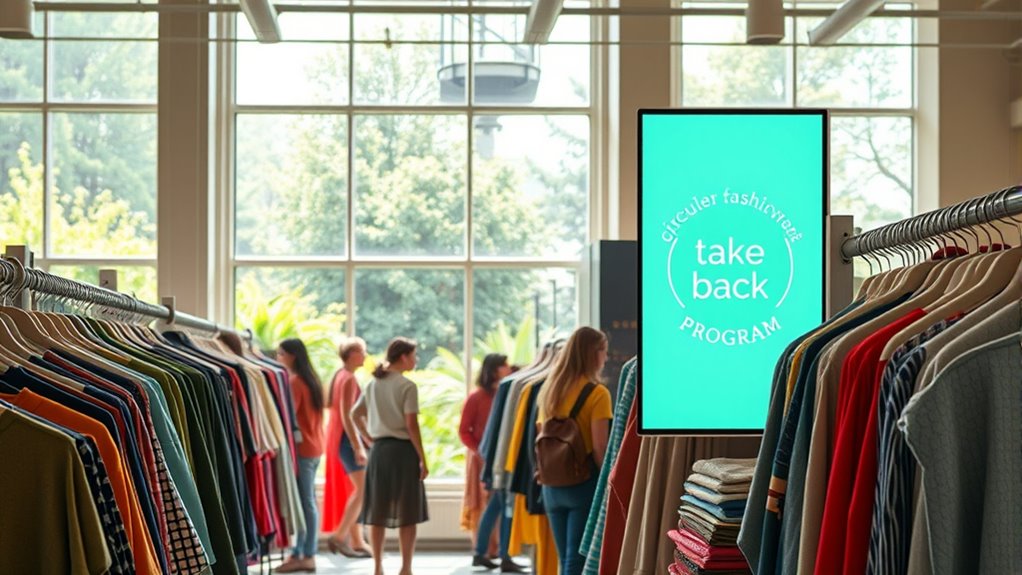

Take-back programs in circular fashion involve you returning used garments to brands, who then sort them for reuse, resale, or recycling into new materials. This process helps extend clothing’s life, reduces waste, and supports sustainability. Brands often incentivize participation with discounts or loyalty points, making it easy to contribute. By engaging in these programs, you support eco-friendly practices and a circular economy. Keep exploring how these innovative systems are transforming the fashion industry.

Get your wardrobe favorites delivered free — and shop member deals
- Fast, free delivery on millions of items
- Access to Prime Big Deal Days deals on October 6–7
- Prime Video, Amazon Music and more included
Key Takeaways
- Take-back programs collect used garments from consumers to promote reuse, recycling, and waste reduction in fashion.
- Reusable clothes are donated or resold; non-reusable items are recycled into fibers for new textiles.
- Brands emphasize transparent sourcing and recycling processes to build consumer trust and support sustainability goals.
- Eco-friendly materials like organic cotton and recycled polyester are prioritized for easier recycling and environmental benefits.
- Consumer participation through incentives helps close the loop, fostering a circular economy in the fashion industry.
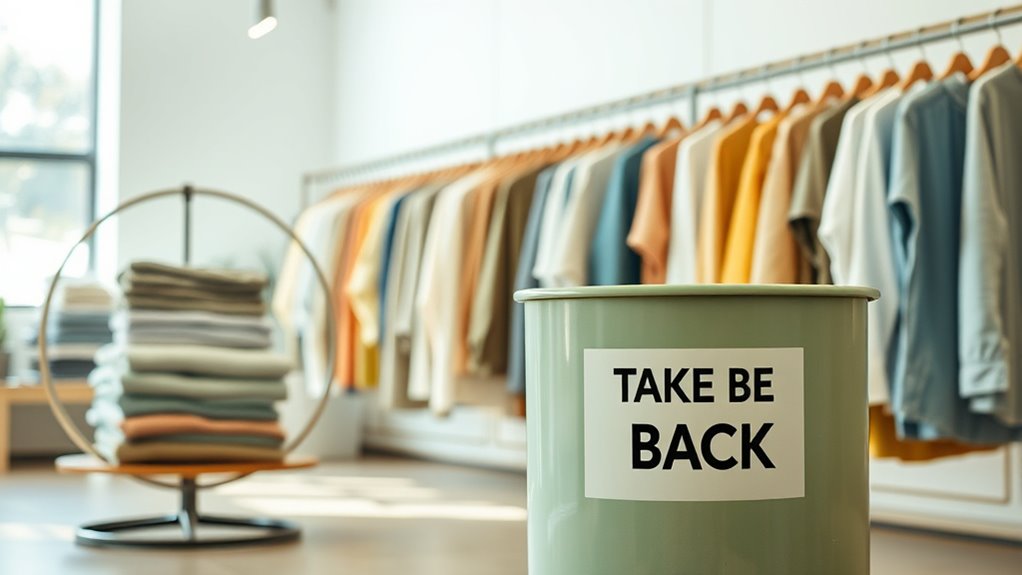
Have you ever wondered how the fashion industry can become more sustainable? The answer lies in adopting circular fashion practices, especially take-back programs that encourage reuse and recycling. These programs are designed to close the loop by collecting used garments from consumers and transforming them into new products. To make these initiatives truly effective, brands focus on sustainable sourcing and eco-friendly materials. By prioritizing sustainable sourcing, companies guarantee that the raw materials used in their products are obtained responsibly, minimizing environmental impact and supporting ethical practices. Eco-friendly materials, like organic cotton, recycled polyester, and Tencel, play a fundamental role because they reduce reliance on virgin resources and lower carbon emissions. When you participate in a take-back program, you’re actively contributing to this sustainable cycle, helping extend the life of garments and reduce waste.
Take-back programs work best when brands make it easy for you to return your old items. Many companies offer incentives like discounts or loyalty points to motivate participation. Once you return your clothes, they are sorted and evaluated for their condition. Items that are still wearable are often donated or resold, giving them a second life. Those that can’t be reused are broken down into fibers and recycled into new fabrics. This process depends heavily on eco-friendly materials because they are easier to recycle and tend to degrade less over time. For example, garments made from recycled polyester can be reborn into new textiles with minimal environmental impact, unlike traditional materials that may release harmful chemicals during processing. Additionally, high projector specifications such as resolution and contrast ratio can influence how effectively visual details are preserved during the recycling process. Incorporating recycling technology and advanced methods further enhances the efficiency of transforming old garments into new textiles.
Another key aspect is transparency. Brands committed to circular fashion openly share their sourcing practices and recycling processes. This transparency helps you make informed choices and trust that your participation genuinely contributes to sustainability. When companies prioritize eco-friendly materials and sustainable sourcing, they reduce the need for virgin raw materials, which helps conserve natural resources and cut down on pollution. Your role in this system is essential—you can choose brands that implement responsible take-back programs, buy garments made from eco-friendly materials, and ensure your wardrobe contributes to a more circular economy. Incorporating sustainable sourcing and transparent practices further strengthens the impact of these initiatives, encouraging a broader shift towards environmentally responsible fashion.
Frequently Asked Questions
How Do Take-Back Programs Impact Clothing Resale Value?
Take-back programs can boost your clothing’s resale value by encouraging sustainable practices, which appeals to eco-conscious buyers. When you participate, it often enhances your brand reputation, making your items more desirable in the resale market. As a result, your clothes may sell faster and at higher prices. Overall, these programs create a positive cycle that benefits both your resale opportunities and the brand’s image, encouraging ongoing participation.
What Materials Are Most Suitable for Recycling in Circular Fashion?
Did you know that over 60% of textiles are recyclable? When choosing materials for circular fashion, focus on fibers with high durability and chemical recyclability, like polyester and nylon. These materials maintain their integrity after multiple cycles and can be broken down efficiently. By selecting such fibers, you help create sustainable products that reduce waste and promote a closed-loop system, making fashion more eco-friendly and resilient.
How Do Brands Ensure Ethical Treatment During Take-Back Processes?
When brands handle take-back programs, they prioritize ethical labor and fair treatment by partnering with suppliers who follow strict labor standards. You can guarantee this by auditing facilities regularly and providing training on workers’ rights. Transparent communication about these practices builds trust, and you should also implement clear policies that promote safe working conditions. Ultimately, maintaining ethical treatment throughout the process reflects a brand’s commitment to responsible fashion.
Can Take-Back Programs Be Scaled Globally Effectively?
You wonder if take-back programs can scale globally, facing supply chain challenges and cultural acceptance. To succeed, you need to streamline logistics, adapt strategies to diverse markets, and foster cultural acceptance. Building resilient supply chains and engaging communities help overcome obstacles. When you address these factors, take-back programs can grow worldwide, creating a sustainable cycle that benefits both brands and consumers, making circular fashion a global reality.
What Are the Costs Involved for Consumers Participating in Take-Back Programs?
When you participate in take-back programs, you should consider the cost implications, like shipping fees or time invested. While some programs offer consumer incentives, such as discounts or store credits, others may not. These incentives aim to encourage your participation, but there can still be hidden costs. Ultimately, weighing the environmental benefits against these costs helps you decide if taking part aligns with your values and budget.
Conclusion
By participating in take-back programs, you help close the loop, reduce waste, and promote sustainability. You extend the life of your clothes, support a circular economy, and lessen your environmental impact. You make conscious choices, embrace reuse, and take responsibility. You become part of the solution, fostering change. You champion a future where fashion isn’t disposable, but durable. You take action, inspire others, and help build a cleaner, greener world—because every step counts.
Fall Picks
fall essentials
As an affiliate, we earn on qualifying purchases.