
Heat pump dryers save energy by recycling heat within their closed-loop system, reducing the need for continuous external warmth and lowering carbon emissions. They operate efficiently at lower temperatures, preventing over-drying and protecting fabrics, which saves power over time. However, their efficiency drops if the installation space is cramped, or if the home is very humid or poorly insulated. To discover how to maximize their benefits and avoid common pitfalls, keep exploring the details.
Key Takeaways
- Heat pump dryers recycle heat, reducing energy consumption compared to traditional dryers.
- They operate at lower temperatures, conserving power but may take longer to dry clothes.
- Proper installation and climate conditions are essential for optimal energy savings.
- In humid or poorly insulated environments, moisture management efficiency can decrease.
- Higher upfront costs may offset long-term energy savings if usage is infrequent.
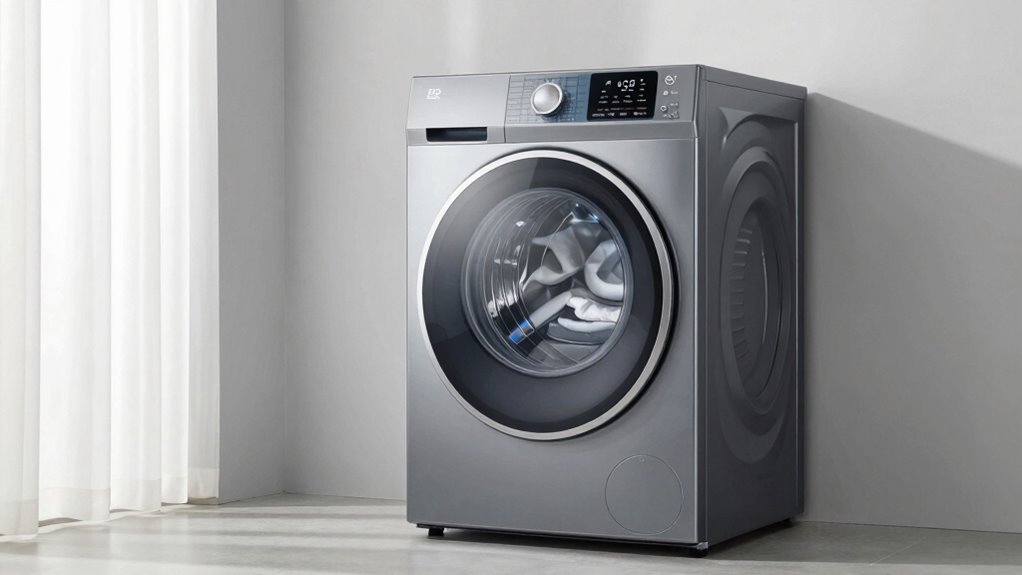
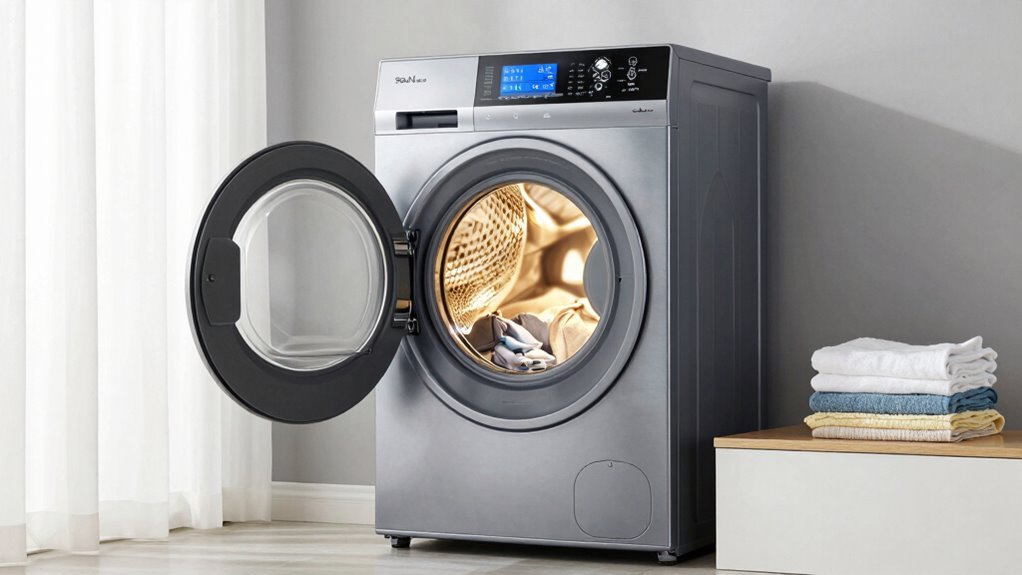
Have you ever wondered if there’s a more energy-efficient way to dry your clothes? If you’re tired of skyrocketing electricity bills from traditional dryers, a heat pump dryer might be worth considering. These appliances are designed to maximize energy efficiency by recycling heat and reducing waste, making them a sustainable choice for your laundry routine. Unlike conventional dryers that blow hot air through your clothes and then vent it outside, heat pump dryers use a closed-loop system. They extract moisture from your clothes, condense it, and reuse the heat to dry the next load. This moisture control process not only saves energy but also prevents over-drying, which can damage fabrics and waste power.
Heat pump dryers recycle heat for efficient, gentle, and eco-friendly laundry drying.
With a heat pump dryer, you benefit from enhanced moisture control. The system detects when clothes are dry and adjusts its operation accordingly, preventing unnecessary energy consumption. This precise moisture sensing ensures your clothes are dried thoroughly without excess heat, which is better for your garments and your energy bills. Over time, this can lead to significant savings, especially if you do laundry frequently. Plus, because heat pump dryers operate at lower temperatures, they’re gentler on delicate fabrics, extending the lifespan of your clothes while still maintaining efficient drying cycles. Additionally, since they utilize less heat, they tend to produce less carbon footprint, making them an environmentally friendly choice. Furthermore, their quieter operation can make them more suitable for use in shared or quiet spaces.
However, it’s crucial to understand when heat pump dryers might not be the best choice for you. While they excel in energy efficiency and moisture control, they tend to have longer drying times compared to traditional vented models. If you’re in a hurry or need to dry large loads quickly, these dryers might feel less convenient. Additionally, heat pump dryers often come with higher upfront costs, which could be a deterrent if you’re on a tight budget. Although they save money over time through lower energy use, the initial investment can be substantial. It’s also important to consider installation space and the potential need for proper humidity control in your home environment.
Another consideration is the climate and installation space. Since heat pump dryers rely on a condensation process instead of venting outside, they can be installed in places without external vents, like apartments or rooms without proper ventilation. But if your home is extremely humid or poorly insulated, moisture might accumulate, making moisture control more challenging and potentially reducing the dryer’s efficiency. Understanding climate suitability and proper installation can help you maximize the benefits of a heat pump dryer. As the demand for sustainable appliances grows, understanding these factors can help you make an informed decision about integrating energy-efficient appliances into your home.
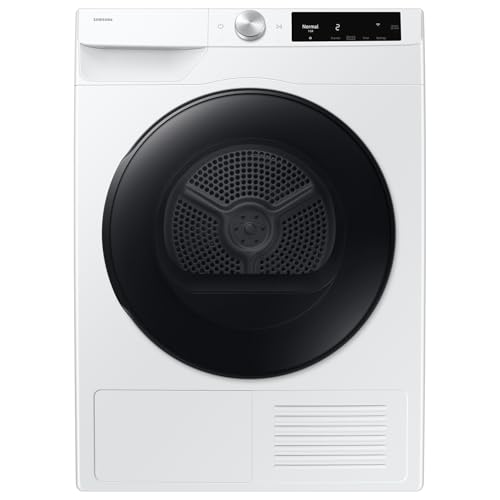
Samsung 4.0 cu. ft. Compact Ventless Heat Pump Dryer with AI Smart Dial, Wi-Fi Connected, Smart Dry Technology, Space Saving Design, White, DV25FG62B0BEA2
- Ventless Heat Pump Technology: Energy-efficient, gentle drying
- Space-Saving Design: Compact, easy to install
- Energy Star Certified: Reduces energy consumption
As an affiliate, we earn on qualifying purchases.
As an affiliate, we earn on qualifying purchases.
Frequently Asked Questions
Do Heat Pump Dryers Work Effectively in High Humidity Climates?
Heat pump dryers can work effectively in high humidity climates, but humidity impact might reduce their efficiency. High moisture levels in the air can make it harder for the dryer to remove excess water, leading to longer drying times. Climate adaptation strategies, like ensuring proper ventilation and using the dryer in a well-ventilated space, help maintain performance. Overall, they still save energy but may need some adjustments in humid environments.
How Long Is the Typical Lifespan of a Heat Pump Dryer?
A heat pump dryer typically lasts around 10 to 15 years, offering good energy savings and cost efficiency over its lifespan. You can maximize its longevity by regularly cleaning filters and maintaining the system. Proper care guarantees you get the most out of its energy-efficient design, helping you save money on utility bills while reducing environmental impact. Keep up with maintenance to enjoy reliable performance for years to come.
Are Heat Pump Dryers Suitable for Large Families?
Yes, heat pump dryers are suitable for large families because of their energy efficiency and gentle drying process. They can handle bigger loads without consuming much energy, making them cost-effective over time. However, keep in mind that they might take longer to dry larger loads, which could be a drawback if you need quick results. Overall, their efficiency benefits often outweigh the longer drying times for big families.
Can Heat Pump Dryers Be Installed Outdoors?
You can’t just put a heat pump dryer outdoors and hope for the best; it’s like leaving your umbrella in the rain. Outdoor installation isn’t ideal due to weather considerations, as exposure to moisture, extreme temperatures, or direct sunlight can damage the unit. If you want to install outdoors, make sure it’s in a sheltered, climate-controlled area to prevent weather-related issues and keep your dryer running smoothly.
What Maintenance Is Required for Optimal Performance?
To keep your heat pump dryer running efficiently, you should regularly run energy-efficient cycles and clean the filter after each use. This helps optimize airflow and prevents lint buildup, which can reduce performance. Additionally, check the venting system periodically for blockages. Proper maintenance guarantees your dryer uses less energy, prolongs its lifespan, and keeps your clothes drying effectively. Consistent upkeep is key to maintaining peak performance.
Conclusion
In the end, heat pump dryers can save you up to 50% on energy bills, making them a smart choice for eco-conscious households. Imagine reducing your energy use enough to power your entire home for a month with just a single load of laundry—it’s like giving your wallet and the planet a breather. While they’re not perfect for every situation, understanding when they work best helps you make smarter, greener choices every laundry day.