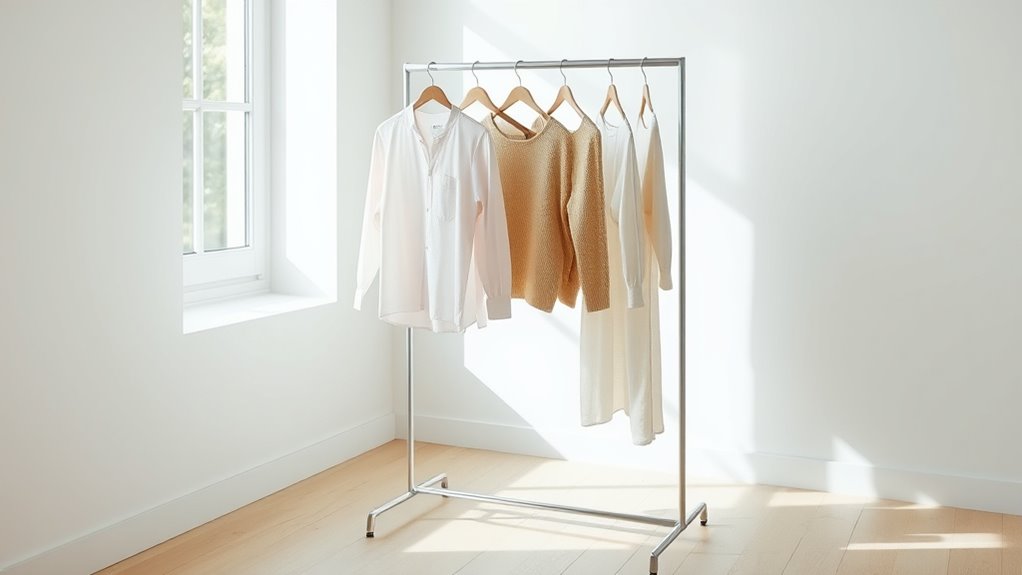

To dry clothes indoors without clutter, choose space-saving racks that can be folded or tucked away when not in use. Position them near windows or good ventilation areas to enhance airflow while avoiding overcrowding. Keep moisture levels low with dehumidifiers or fans to speed up drying and prevent mold. Regularly organize your space to maintain a tidy look and make sure your indoor air quality stays fresh. If you want to discover more tips, keep exploring how to optimize your drying setup.
Key Takeaways
- Use foldable or retractable drying racks that can be tucked away when not in use.
- Position racks near windows or well-ventilated areas to improve airflow without cluttering space.
- Hang clothes vertically with clips or hangers to maximize space efficiency and reduce clutter.
- Keep clothes spaced evenly on racks to prevent overcrowding and promote faster drying.
- Combine drying racks with wall-mounted or ceiling-mounted options to save floor space and maintain tidiness.
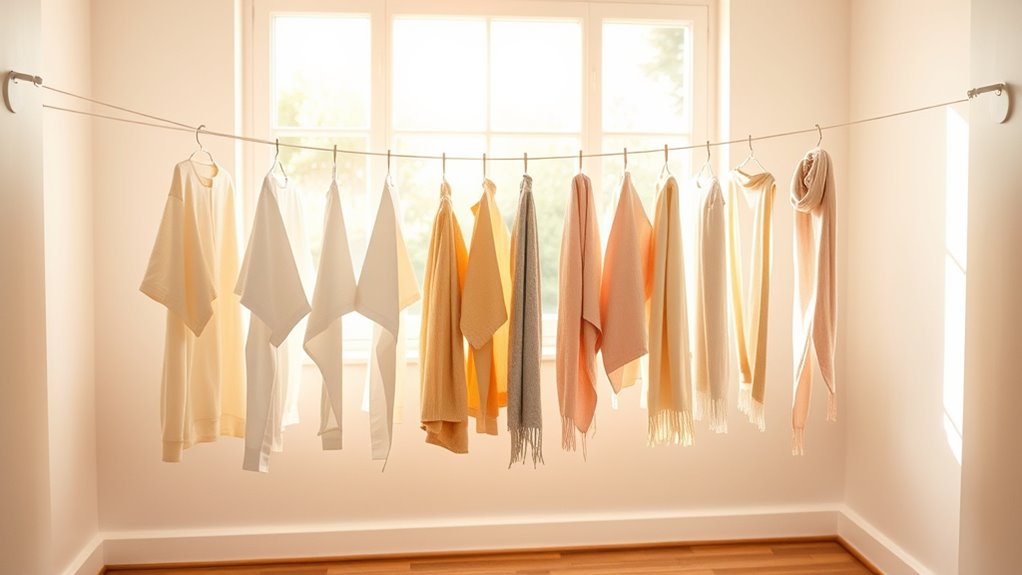
Ever wondered how to effectively dry clothes indoors without sacrificing space or comfort? The key lies in choosing methods that maximize efficiency while maintaining good indoor air quality. When you opt for line drying inside, you’re already making an energy-efficient choice compared to using a tumble dryer, which consumes a significant amount of electricity. By drying your clothes naturally, you reduce your energy bills and lessen your environmental impact. However, to keep your indoor environment healthy and clutter-free, you’ll need a strategic approach that balances drying needs with space management.
Dry clothes indoors efficiently while maintaining air quality and saving space with smart drying solutions.
First, consider installing a retractable or foldable drying rack. These space-saving options can be tucked away when not in use, freeing up room in your living space. Position your drying rack near a window or a well-ventilated area to promote good airflow. This not only accelerates the drying process but also helps maintain indoor air quality by preventing excess humidity and mold growth. Proper ventilation is essential—if your home has an exhaust fan or an air purifier, use them to keep the air fresh and free from excess moisture and odors.
To further optimize energy-efficient drying, spread your clothes out evenly on the rack to ensure good air circulation around each item. Avoid overcrowding, as this can prolong drying time and lead to damp spots that encourage mold. If you’re drying larger items like towels or bedding, consider hanging them in a way that maximizes space without overlapping too much. Utilizing hangers or clip hangers can help keep things organized and allow air to flow freely.
Managing indoor air quality is crucial when drying clothes inside. To prevent musty smells or the build-up of excess humidity, open a window or door periodically. If weather permits, you can also set up a small oscillating fan to circulate air and speed up drying. Keep in mind that using a dehumidifier in the room can be highly effective, especially during damp or cold seasons, as it pulls excess moisture from the air and prevents your home from feeling damp or stale. Proper ventilation and dehumidification are key components of an effective indoor drying strategy.
In essence, successful line drying indoors without clutter involves a combination of smart equipment choices, proper placement, and good ventilation practices. By doing so, you enjoy energy-efficient drying that keeps your clothes fresh and your indoor air quality healthy. With a little planning, you can keep your space tidy, your clothes perfectly dry, and your home atmosphere clean and comfortable.
Frequently Asked Questions
What Are the Best Materials for Indoor Drying Racks?
You should choose materials like stainless steel or aluminum for indoor drying racks, as they’re durable and easy to clean. Natural materials like bamboo or wood are eco-friendly and sturdy, making them great options. Synthetic fibers, such as nylon or plastic, are lightweight and resistant to moisture, ideal for portable racks. Combining these materials can give you a practical, clutter-free indoor drying setup that lasts and performs well.
How Can I Prevent Mold When Line Drying Indoors?
To prevent mold while line drying indoors, you might worry about extra effort. However, good ventilation strategies can make a big difference. Keep windows open or use fans to circulate air, and avoid overcrowding your drying space. Regularly check for excess moisture and use dehumidifiers if needed. Follow mold prevention tips like cleaning your drying area and ensuring clothes aren’t damp for too long, keeping your space fresh and mold-free.
What’s the Ideal Humidity Level for Indoor Drying?
You should aim to keep indoor humidity levels between 30% and 50% for ideal drying. Proper humidity control helps prevent excess moisture that can cause mold and mildew. Use a dehumidifier or ventilation to manage moisture levels effectively, especially when drying clothes indoors. Monitoring with a hygrometer ensures you stay within the perfect range, making your drying process quicker and safer without clutter or mold issues.
Can I Line Dry Delicate Fabrics Safely Indoors?
Yes, you can safely line dry delicate fabrics indoors, but you need to be cautious. Avoid fabric softeners, which can damage delicate fibers. Instead, hang fabrics in a well-ventilated area to prevent mustiness. Keep an eye on drying times—delicates dry slower, so patience is key. With proper care, your delicate clothes will come out fresh, soft, and beautifully dried, without clutter or damage.
How Do I Maximize Space in a Small Apartment?
To maximize space in a small apartment, you should optimize clothes folding and storage. Use multi-tiered racks or over-the-door organizers for your laundry area, and choose compact laundry detergents that require less space. Fold your clothes efficiently to reduce clutter and consider vertical storage solutions. Keep your laundry area tidy by hanging delicate fabrics on a drying rack, freeing up space and maintaining a neat, clutter-free environment.
Conclusion
So, next time you’re tempted to turn your living room into a laundry mat, remember: line drying indoors without clutter might just turn your home into a stylish disaster zone. Who needs sleek decor when you can showcase your wardrobe in all its drying glory? Embrace the chaos—after all, it’s only temporary, right? Just think of it as a modern art installation, featuring your mismatched socks and tangle of clothes as the latest trend in interior design.