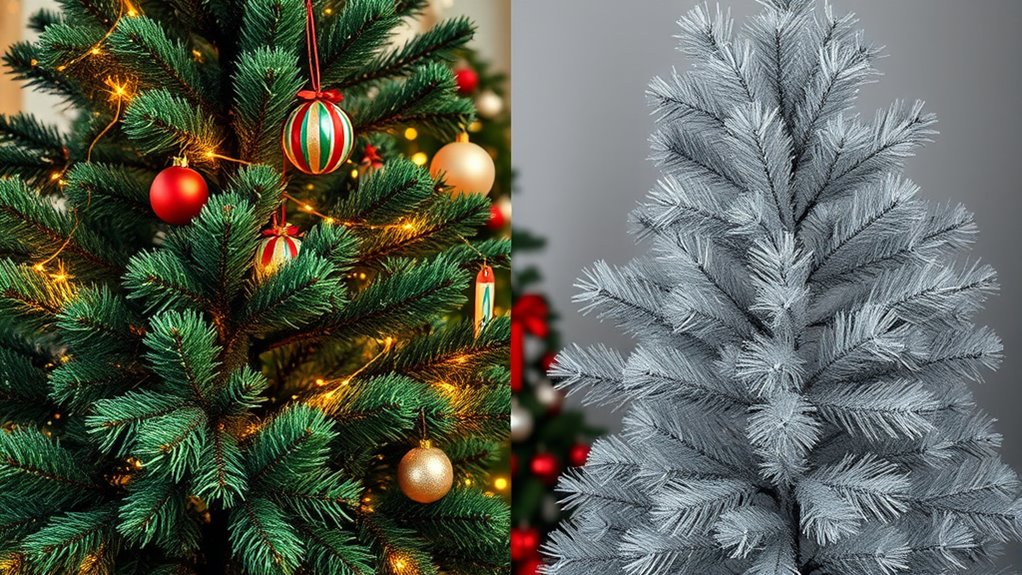

Choosing between a real or artificial holiday tree depends on your priorities. Real trees are biodegradable, support local farms, and have a lower initial environmental impact, but they can carry allergens and require yearly replacement. Artificial trees last longer and are hypoallergenic but are made from non-biodegradable materials and have a higher manufacturing footprint. Your decision balances eco-friendliness, allergy concerns, and convenience—exploring these factors further can help you make the best festive choice.

Get your wardrobe favorites delivered free — and shop member deals
- Fast, free delivery on millions of items
- Access to Prime Big Deal Days deals on October 6–7
- Prime Video, Amazon Music and more included
Key Takeaways
- Real trees are biodegradable and support local ecosystems, but their environmental impact depends on transportation and cultivation practices.
- Artificial trees have a higher initial carbon footprint but can be more sustainable over long-term use due to durability.
- Real trees may carry allergens like mold and pollen, posing issues for sensitive individuals, while artificial trees are generally hypoallergenic.
- Artificial trees require regular cleaning to prevent dust buildup, whereas real trees need disposal or composting after the season.
- The choice between real and artificial trees depends on balancing environmental sustainability with allergy concerns and personal preferences.
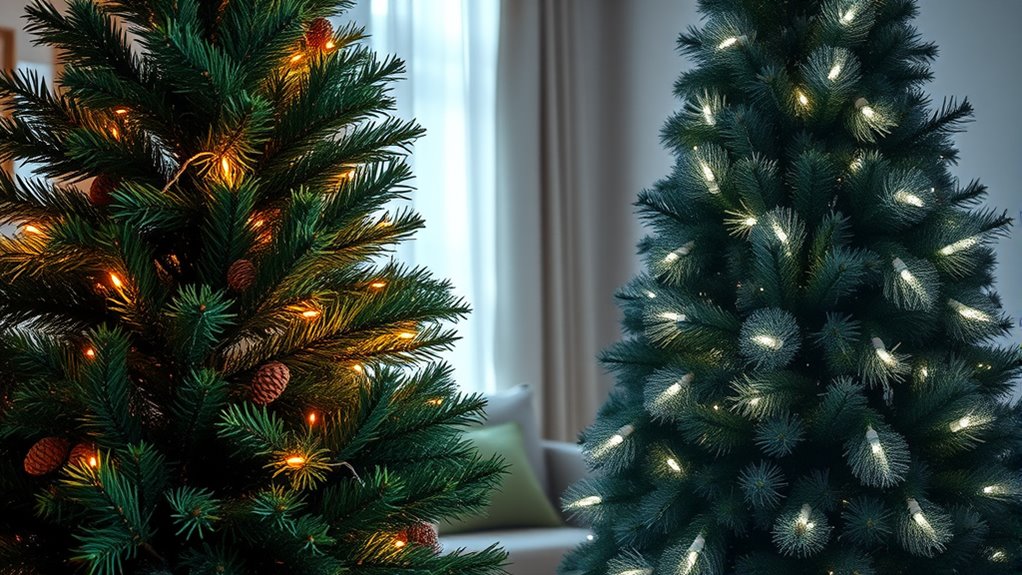
Have you ever wondered whether choosing a real or artificial holiday tree makes a bigger impact on the environment and your holiday experience? The decision isn’t just about aesthetics or tradition—it’s about understanding the sustainability comparison between the two options and how allergen concerns might influence your choice. Real trees are often seen as more eco-friendly because they’re biodegradable and can be composted after the season. They grow in nurseries, and in many cases, they’re replanted each year, which helps maintain local ecosystems and provides a renewable resource. However, the environmental benefit depends on factors like transportation distance and how the trees are cultivated. If you buy locally and guarantee the trees are sustainably farmed, you’re likely making a more environmentally conscious decision. On the other hand, artificial trees are typically made from non-biodegradable plastics and other materials derived from fossil fuels. While they don’t require annual planting, they do have a higher initial environmental footprint due to the manufacturing process. If you plan to use your artificial tree for many years—say, over a decade—that can offset some of the environmental costs, making it a more sustainable choice in the long run.
Allergen concerns are another vital aspect to consider. Real trees can carry mold spores, pollen, and pesticides, which might trigger allergies or respiratory issues for sensitive individuals. If you or your family members have allergies, a real tree could pose challenges, especially during peak pollen seasons. Regular cleaning and choosing trees that are freshly cut or properly stored can help reduce some of these concerns, but they may not eliminate them entirely. Artificial trees, meanwhile, are generally hypoallergenic, especially if they’re kept clean and free of dust. They don’t produce pollen or mold, making them a safer option for allergy sufferers. However, dust accumulation over the years can become a concern if the tree isn’t cleaned regularly.
In the end, your choice hinges on weighing the sustainability comparison and allergen concerns against your personal preferences and values. If minimizing environmental impact and supporting local farmers matter most, a real tree might be best. But if allergy sensitivity and convenience are your priorities, an artificial tree could be the better option. Both choices have their pros and cons, so consider what’s most important to you for a joyful, eco-conscious holiday season.
artificial Christmas tree hypoallergenic
As an affiliate, we earn on qualifying purchases.
As an affiliate, we earn on qualifying purchases.
Frequently Asked Questions
How Long Do Live Christmas Trees Typically Last Indoors?
A real Christmas tree typically lasts about 1 to 3 weeks indoors, depending on its freshness and care. To maximize indoor tree longevity, keep it well-watered and away from heat sources. The real tree lifespan varies based on the species and how quickly it dries out. You can extend its freshness by placing it in a cool spot and checking water levels regularly. Proper care guarantees your tree stays vibrant throughout the holiday season.
Are There Health Risks Associated With Artificial Christmas Trees?
Like Pandora’s box, artificial Christmas trees can pose health risks you should consider. You might be exposed to indoor allergens from dust or mold that cling to the branches. Additionally, chemical emissions from the plastics and dyes may release volatile organic compounds (VOCs), affecting your air quality. To stay safe, guarantee proper ventilation and choose high-quality, flame-retardant trees. Your health is worth the extra precautions during holiday cheer.
What Are the Best Sustainable Options for Holiday Trees?
You can choose eco-friendly alternatives like potted Christmas trees that are sustainably harvested, allowing you to reuse and recycle them each year. Consider opting for a locally grown tree to reduce your carbon footprint. Another great option is a living tree, which you can plant after the holidays. These choices support sustainable harvesting practices and help minimize environmental impact while still celebrating the season.
How Do Tree Disposal Methods Impact the Environment?
Disposing of holiday trees impacts the environment considerably. When you opt for tree composting, you help break down organic material naturally, reducing landfill waste. However, if trees are not properly disposed of, chemical leaching from artificial trees can contaminate soil and water. Avoid burning trees, which releases pollutants. Your responsible disposal choices support sustainability by minimizing pollution and promoting healthy ecosystems.
Can Artificial Trees Be Recycled or Reused Effectively?
Like a phoenix with potential, artificial trees can be reborn through recycling challenges and reuse potential. You can often repurpose parts or donate them, but recycling options are limited and complex, symbolizing the cycle of sustainability. By choosing to reuse or recycle, you embrace the hope of extending their life, reducing waste, and making a meaningful impact on the environment. Your actions can transform a holiday tradition into a symbol of mindful stewardship.
Conclusion
So, whether you choose a lush, real tree or a shiny, artificial one, remember that your holiday spirit outshines the greenery. Ironically, the real tree might leave behind a fragrant trail of memories and mess, while the fake one stays pristine—until it’s time to toss it out. In the end, it’s not the tree’s nature that matters, but the joy you bring to your home. After all, holiday magic isn’t about the tree itself—it’s what you make of it.
Fall Picks
fall essentials
As an affiliate, we earn on qualifying purchases.