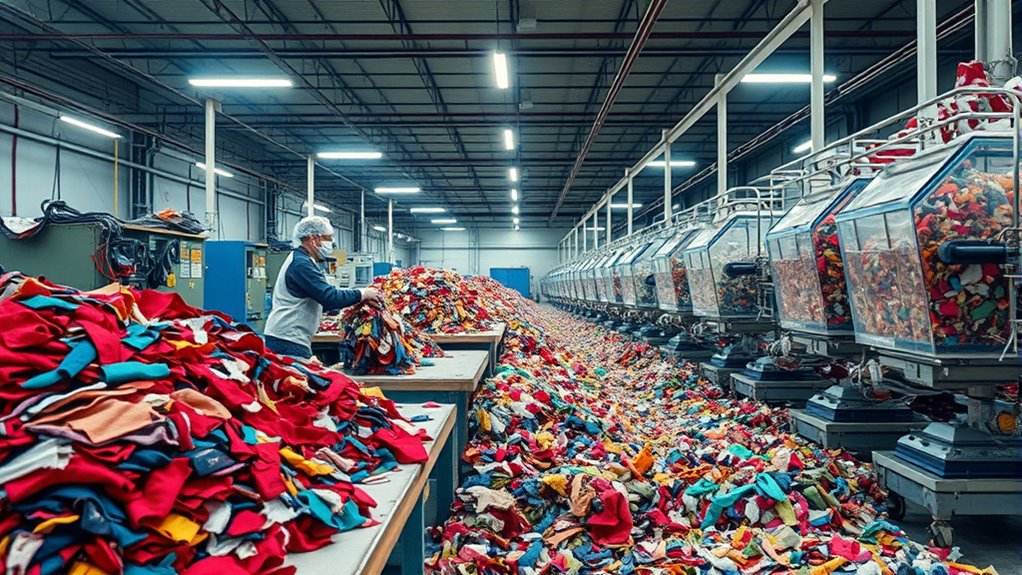

When you dispose of clothes, they don’t just disappear; instead, they often get sorted by fiber type, color, and quality. Natural fibers like cotton and wool are mechanically recycled into new yarns, while synthetic ones like polyester are broken down chemically for reuse. This process creates sustainable fibers that reduce waste and lessen the demand for virgin resources. To discover how these recycled materials are transformed into eco-friendly textiles, keep exploring what’s involved in textile reuse.
Key Takeaways
- Sorted textiles are separated by fiber type, color, and fabric quality for effective recycling.
- Mechanical recycling primarily reprocesses natural fibers like cotton and wool into new fibers.
- Chemical recycling breaks down synthetic fibers into basic components for re-polymerization into new synthetic fibers.
- Recycled textiles are transformed into sustainable fibers, reducing reliance on virgin resources such as cotton and petroleum-based polyester.
- Advanced recycling technologies improve fiber quality, supporting eco-friendly products and sustainable fashion practices.
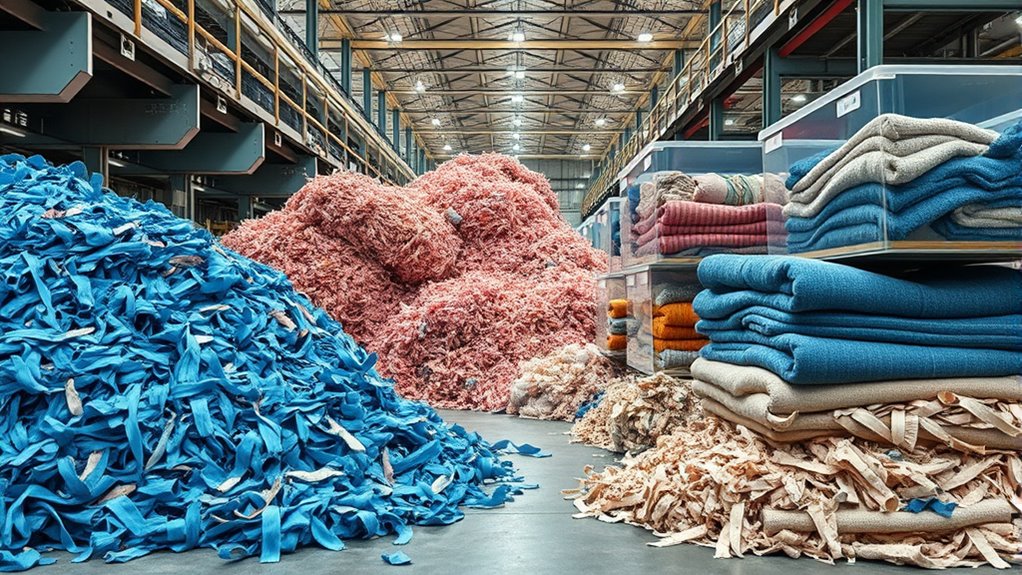
Have you ever wondered what happens to your old clothes once you discard them? When you toss out that worn-out shirt or outdated pair of jeans, they don’t just vanish. Instead, they often go through a series of recycling processes designed to give textiles a second life. A key part of this transformation involves creating sustainable fibers, which are vital for reducing waste and conserving resources. These fibers are produced from recycled textiles, offering an eco-friendly alternative to virgin materials. The process begins with sorting, where textiles are separated based on fiber type, color, and fabric quality. This step guarantees that only compatible materials are processed together, making the recycling more efficient. Proper sorting is crucial for maintaining the quality of the recycled fibers and ensuring successful reuse.
Once sorted, the textiles enter the recycling process itself. The methods vary depending on the type of fabric, but generally, there are two main pathways: mechanical recycling and chemical recycling. Mechanical recycling involves shredding the textiles into fibers, which are then cleaned and spun into new yarns. This method works well for cotton, wool, and other natural fibers, but it can degrade the fiber quality over time. Chemical recycling, on the other hand, breaks down synthetic fibers like polyester or nylon into their basic building blocks using specialized chemicals. These building blocks can then be re-polymerized into new fibers, effectively restoring the material to a near-original state. This process is vital for recycling synthetic textiles that are otherwise challenging to reuse.
The end goal of these recycling processes is to produce sustainable fibers that can be woven into new fabrics, reducing reliance on virgin resources like virgin cotton or petroleum-based polyester. These sustainable fibers are not only environmentally friendly but often retain desirable qualities such as durability and softness, making them suitable for a wide range of textile products. By transforming discarded textiles into new fibers, recycling helps cut down on textile waste in landfills and decreases the demand for environmentally costly raw materials. Additionally, advancements in fiber production technologies are continuously improving the quality and applicability of recycled fibers. This cycle encourages more conscious consumption and supports brands committed to sustainability.
Frequently Asked Questions
How Long Does Textile Recycling Process Typically Take?
The recycling timeline for textiles usually takes between one to three weeks, depending on the facility and the type of materials involved. Processing duration varies based on the complexity of sorting and cleaning, but generally, it’s a relatively quick process. You can expect your textiles to be sorted, shredded, and repurposed within this timeframe, making recycling an efficient way to reduce waste and give new life to old fabrics.
Are There Any Textiles That Cannot Be Recycled?
Imagine it’s 1999, and you’re still holding onto that old polyester shirt. Some textiles, especially those with synthetic fibers, can’t be recycled due to textile contamination or complex blends. Materials like certain coated fabrics, heavily dyed or chemically treated textiles, and items with non-recyclable components aren’t suitable for recycling. So, yes, there are textiles that can’t be reused through standard recycling processes, often due to their composition or contamination.
What Are the Environmental Benefits of Textile Reuse?
Reusing textiles helps reduce waste and supports fashion innovations that prioritize sustainability. When you choose to reuse, you cut down on landfill waste and lessen the demand for new resources, which benefits the environment. Your actions promote waste reduction and inspire eco-friendly fashion practices. By reusing textiles, you contribute to a healthier planet and encourage brands to develop more sustainable, innovative products that minimize environmental impact.
How Does Textile Recycling Impact Local Economies?
Textile recycling boosts your local economy by creating sustainable employment opportunities and supporting local business growth. When you participate, you help generate jobs in collection, sorting, and processing, which keeps money circulating within your community. This encourages small businesses to thrive and fosters a more resilient local economy. By recycling textiles, you contribute to a cycle that benefits everyone, strengthening your community’s economic health and promoting sustainable development.
Can Recycled Textiles Be Used for Industrial Purposes?
Recycled textiles can indeed find a home in industrial uses, acting like a phoenix rising from the ashes. Their durability makes them perfect for applications like insulation, cleaning rags, and automotive parts. You might not see it at first glance, but these reused textiles serve as resilient, cost-effective materials in various industries, proving that textile durability doesn’t fade after recycling. Instead, it transforms into a valuable resource for industrial purposes.
Conclusion
As you sort through textiles, remember each fabric is a thread in the larger tapestry of sustainability. What you choose to reuse or recycle becomes a symbol of hope, weaving a future where waste transforms into worth. Every piece recycled is a stitch in the fabric of change, reminding you that even the smallest act can unravel waste’s hold. Embrace this cycle, knowing your actions help craft a more resilient, lasting community.