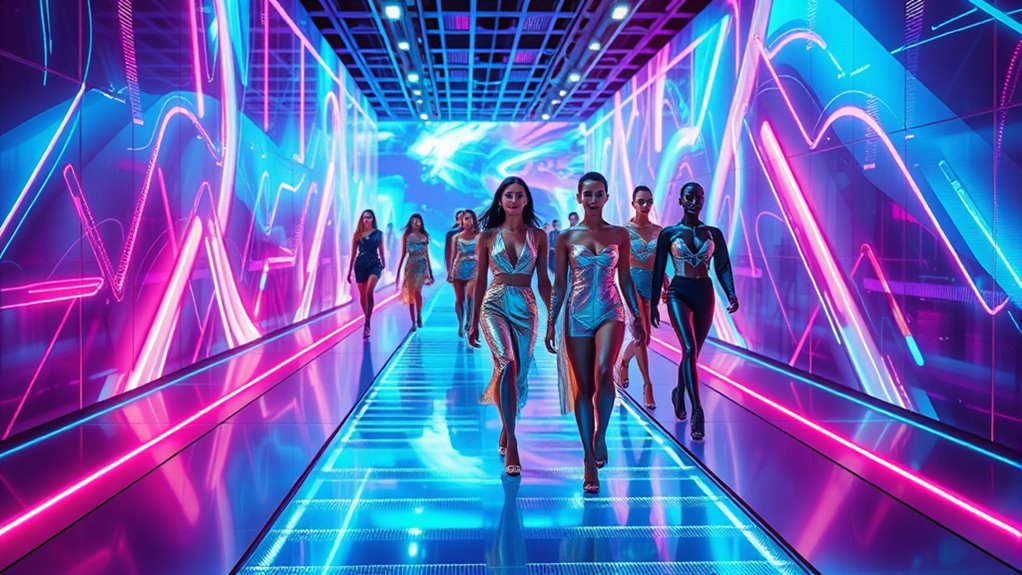

Digital shows and virtual runways transform how you experience fashion by offering immersive, online presentations that replace traditional physical events. You can explore collections from anywhere, enjoy interactive features like augmented reality, and participate in more sustainable practices that reduce waste and travel. These innovations make fashion more accessible and inclusive, letting you connect with designers and trends effortlessly. Keep exploring to discover how this new era is shaping the future of fashion shows.
Key Takeaways
- Digital shows and virtual runways replace physical venues, enabling immersive and technologically advanced fashion presentations accessible worldwide.
- Augmented reality enhances engagement through virtual try-ons and interactive features, offering personalized fashion experiences.
- Virtual formats reduce environmental impact by minimizing travel, waste, and resource use associated with traditional runway events.
- They democratize access, allowing global audiences to view collections regardless of location or financial constraints.
- These formats provide greater flexibility for viewers to watch, pause, and revisit shows, increasing engagement and understanding of fashion stories.
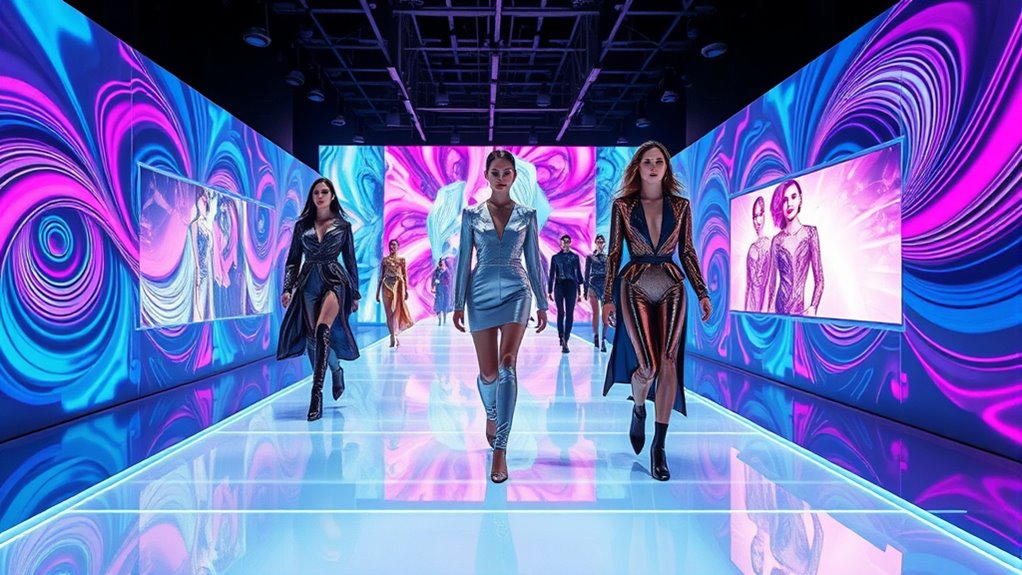
In recent years, digital shows and virtual runways have transformed the fashion industry, offering new ways for designers to showcase their collections without physical venues. This shift isn’t just about convenience; it’s reshaping how you experience fashion itself. By leveraging technology like augmented reality, designers create immersive presentations that allow you to engage with collections in innovative ways. Imagine donning a pair of virtual sunglasses to see how a new dress looks on you or exploring a runway from your living room, all through your device. Augmented reality blends digital elements seamlessly into your real-world environment, making fashion shows more interactive and personalized. This technology also promotes sustainable fashion by reducing the need for large-scale physical events, travel, and extensive production sets. Instead of shipping clothes and staging elaborate shows, designers can present their collections digitally, minimizing waste and carbon footprint. As a viewer, you benefit from these eco-friendly practices because they make fashion more responsible without sacrificing excitement or innovation. Furthermore, the development of virtual fitting rooms enhances the personalization and convenience of online shopping, giving you a more realistic idea of how garments will look and fit before purchasing.
Virtual runways also democratize fashion, breaking down geographical and financial barriers. You no longer need an invitation to attend a show in Paris or Milan; instead, you can access the latest collections from anywhere with an internet connection. This inclusivity not only broadens your access to high fashion but encourages designers to think creatively about how they present their work. They can experiment with interactive features, 3D models, and augmented reality filters that let you explore garments in detail, almost as if you were trying them on in a boutique. This approach also opens up opportunities for sustainable fashion initiatives, as designers can showcase eco-friendly materials and production techniques directly to their audience. It’s easier to understand the story behind each piece when you see how it’s made and learn about its environmental impact through virtual displays. Overall, digital shows and virtual runways give you a more flexible viewing experience. You’re no longer confined to scheduled showtimes or distant locations. Instead, you can watch at your convenience, pause, rewind, or explore additional content on demand. This immediacy enhances your connection with the fashion world, providing insights into trends and innovative practices, especially those focused on sustainability. Overall, these technological advancements are making fashion more accessible, eco-conscious, and engaging. They empower you to participate in the industry’s evolution, experiencing collections in ways that are immersive, responsible, and tailored to your personal preferences. As digital shows continue to grow, they promise a future where fashion is not only more inclusive but also more aligned with sustainable values and cutting-edge technology.
Frequently Asked Questions
How Do Virtual Runways Impact Traditional Fashion Show Careers?
Virtual runways considerably impact your career by accelerating fashion industry shifts, making shows more accessible globally. You can reach wider audiences and showcase your creativity through innovative digital formats. This environment fosters creative collaboration, allowing you to experiment with new ideas and styles without traditional constraints. Embracing virtual runways helps you stay competitive, adapt to industry changes, and expand your influence, ultimately boosting your career prospects in the evolving fashion landscape.
What Technical Skills Are Needed to Create a Virtual Runway?
To create a virtual runway, you need technical skills in augmented reality and 3D modeling. You should be comfortable designing immersive environments and modeling clothing digitally. Familiarity with AR software helps you overlay virtual elements onto real-world scenes, making the experience more engaging. Additionally, understanding animation and rendering techniques ensures your virtual runway looks realistic and polished. These skills enable you to craft innovative, enthralling virtual fashion shows.
How Do Brands Measure Success in Digital Fashion Shows?
Imagine your virtual runway glowing with vibrant engagement; that’s how you measure success. You track brand engagement through comments, shares, and interactive features, while audience metrics reveal viewership numbers, demographics, and online buzz. When these indicators soar, your digital fashion show truly resonates. You see your brand’s influence grow as more eyes, hearts, and conversations turn toward your innovative showcase—proof that your virtual runway captivates and connects.
Are Virtual Runway Experiences Accessible to Disabled Audiences?
Yes, virtual runway experiences can be accessible to disabled audiences. By addressing accessibility barriers, creators can incorporate adaptive technologies like screen readers, subtitles, and audio descriptions. You should guarantee your digital platform is compatible with these tools, making it easier for everyone to enjoy the show. When you prioritize inclusive design, you help remove barriers and make virtual fashion shows enjoyable for all, regardless of disabilities.
What Are the Environmental Benefits of Virtual Fashion Shows?
Think of virtual fashion shows as a gust of fresh air for the environment. You can reduce your carbon footprint by cutting down on travel and large-scale productions. These shows often feature sustainable materials and eco-friendly practices, helping to promote greener fashion. By embracing virtual runways, you’re supporting a more responsible industry that minimizes waste and energy consumption, making a meaningful impact on the planet’s health.
Conclusion
As you explore the world of digital shows and virtual runways, it’s clear they’re transforming fashion’s future. Did you know that virtual fashion events saw a 50% increase in attendance last year? This shift not only makes fashion more accessible but also reduces environmental impact. Embrace these innovations, and you’ll see how technology continues to reshape style, making it more inclusive and sustainable. The future of fashion is digital, and you’re right at the forefront.