Online digital fashion shows let you experience runway presentations from anywhere with just a click, offering immersive visuals, detailed outfit exploration, and global accessibility that physical shows can’t match. You can enjoy interactive features and celebrity cameos while reducing environmental impact. However, they can’t perfectly replicate the tactile feel, social buzz, or sensory richness of being physically present. Curious about how these digital innovations are reshaping the industry? Keep exploring to discover more.
Key Takeaways
- Online shows offer global accessibility and convenience, allowing viewers to experience fashion from home.
- Digital presentations enable detailed exploration of garments, fabrics, and embroidery not possible in physical shows.
- They lack the tactile, sensory, and social experiences that physical shows provide, such as atmosphere and in-person networking.
- Virtual formats reduce environmental impact by minimizing travel and resource use.
- Hybrid models combining digital and physical elements can deliver immersive experiences while maintaining safety and innovation.
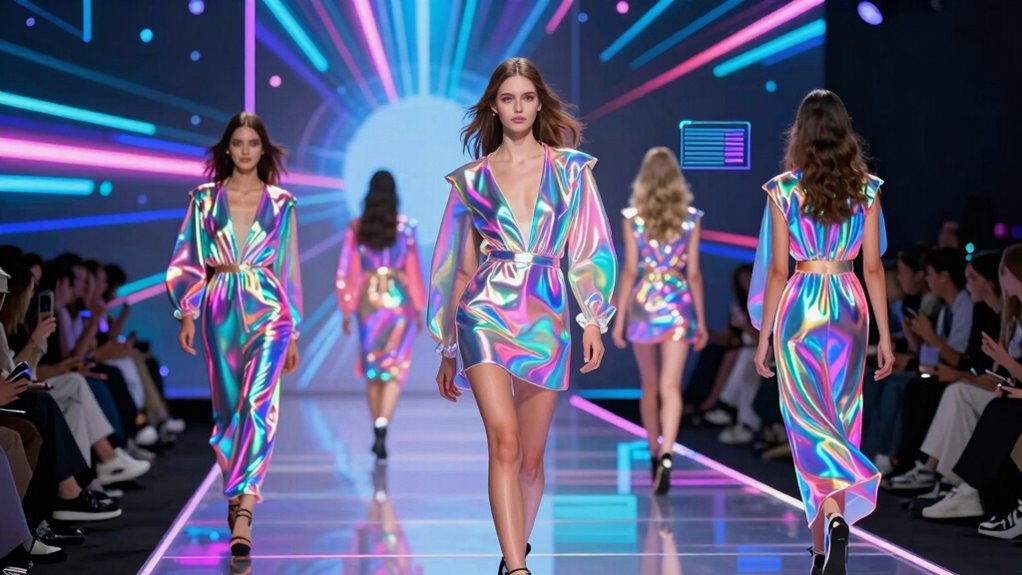
Have you ever wondered how fashion shows are evolving in the digital age? It’s a world where traditional runways are transforming into immersive virtual experiences. It’s a world where traditional runways are transforming into immersive virtual experiences. Instead of standing in a packed auditorium, you can now attend a virtual runway from the comfort of your home. These digital presentations leverage cutting-edge technology to showcase designers’ collections in innovative ways. With just a few clicks, you can explore every detail of the outfits, zoom in on intricate embroidery, or see how different fabrics move in real-time. This shift to virtual runways makes fashion more accessible to a global audience, breaking down geographical barriers that once limited attendance. You no longer need an invitation or a trip to fashion week; the entire show is just a screen away.
Virtual runways bring fashion closer to everyone, breaking barriers with immersive, accessible digital experiences.
Celebrity appearances in digital fashion shows also take on a new dimension. Instead of red carpets and exclusive parties, stars now make virtual cameos that feel more intimate and interactive. You might see a favorite celebrity sharing their thoughts on a collection through a live stream or even engaging directly with viewers via chat features. These appearances often generate buzz and excitement, as fans feel more connected when they can witness their icons in a digital space. Some brands even go further, creating augmented reality (AR) experiences where celebrities appear alongside models or interact with digital environments, blurring the lines between real and virtual. Such innovations elevate the anticipation around shows, making celebrity involvement more dynamic and immediate.
However, despite the advantages, digital fashion shows aren’t perfect replacements for the traditional experience. One of the main drawbacks is the lack of physical presence and tactile engagement. When you attend a physical show, you can see the craftsmanship up close, feel the textures, and experience the atmosphere firsthand. Virtual runways, no matter how stunning, can’t replicate that sensory connection. Additionally, some viewers miss the social aspect—the chance to mingle, network, and share the thrill of being part of a live event. The energy of a packed venue, the buzz of anticipation, and the collective gasp at a dramatic reveal are difficult to reproduce on a screen. Furthermore, as sustainable practices become more important in the industry, digital shows can help reduce environmental impact by cutting down on travel and resource use associated with traditional fashion events.
Moreover, as technology advances, some digital shows incorporate UTI prevention and other health-focused features to ensure a safer environment for in-person events, highlighting a blending of digital and physical safety measures. This merging of digital and physical elements demonstrates how the fashion industry is adapting to modern challenges, creating hybrid experiences that combine the best of both worlds. Additionally, these hybrid approaches open new opportunities for brands to innovate and personalize their presentations, reaching audiences in more meaningful ways. As the technology behind virtual and augmented reality continues to evolve, future shows may offer even more immersive and interactive experiences, further blurring the lines between the physical and digital worlds.
In the end, digital fashion shows excel at democratizing access and introducing new forms of interaction, yet they still struggle to replace the sensory and social richness of traditional runway experiences. They’re better suited for broadening reach and experimenting with technology, but for many, the magic of a physical show remains unmatched. As technology advances, perhaps the line between digital and real will continue to blur, offering an even more compelling future for fashion presentations.
As an affiliate, we earn on qualifying purchases.
Frequently Asked Questions
How Do Digital Fashion Shows Impact Sustainable Fashion Practices?
Digital fashion shows boost sustainable fashion practices by promoting virtual sustainability, reducing the need for physical travel, and cutting down waste. You can explore eco-conscious innovation through virtual runway experiences, which minimize environmental impact. By embracing online shows, you help lower carbon footprints and support environmentally responsible choices, making fashion more sustainable. This shift encourages brands and consumers alike to prioritize eco-friendly practices and rethink traditional production and presentation methods.
Can Digital Shows Fully Replace In-Person Runway Experiences?
Digital shows can’t fully replace in-person runway experiences because they limit virtual engagement and audience interaction. While online shows offer broader accessibility, they lack the immersive atmosphere and tactile details you get in person. You miss the energy of live models and the chance to connect with designers face-to-face. For now, digital fashion shows complement rather than replace traditional runways, providing convenience but falling short on full sensory engagement.
What Technology Is Essential for Hosting a Digital Fashion Show?
You need essential technology like Virtual Reality and Augmented Reality to host a digital fashion show effectively. Virtual Reality creates immersive experiences, making viewers feel like they’re on the runway, while Augmented Reality allows audiences to interact with designs through their devices. High-quality cameras, live streaming platforms, and reliable internet are vital for seamless presentation. Together, these tools help you deliver engaging, innovative shows that captivate your audience online.
How Do Digital Fashion Shows Influence Global Accessibility?
Digital fashion shows are like open doors, expanding your reach beyond physical borders. You can engage virtually with audiences worldwide, breaking down geographical barriers. This boosts global reach and fosters virtual engagement, making fashion more inclusive and accessible. However, some may miss the personal connection of in-person shows. Overall, digital formats democratize access, enabling more people to experience and appreciate fashion, regardless of where they’re located.
Are Digital Fashion Shows More Cost-Effective Than Traditional Ones?
Yes, digital fashion shows are more cost-effective because you save on venue, travel, and production expenses. With a virtual audience, you reach a larger, global crowd without additional costs. Plus, interactive features enhance engagement without the need for physical setups. You can stream high-quality content from your studio, making it easier and cheaper to produce while still delivering an enthralling experience.
Conclusion
As you explore the world of digital fashion shows, remember that every coin has two sides. While online platforms make runway access easier and more innovative, they can’t fully replicate the thrill of in-person excitement. Sometimes, the grass isn’t greener on the screen. As the saying goes, “You can’t judge a book by its cover,” so embrace digital fashion’s potential while recognizing its limitations. Striking a balance will shape the future of style.