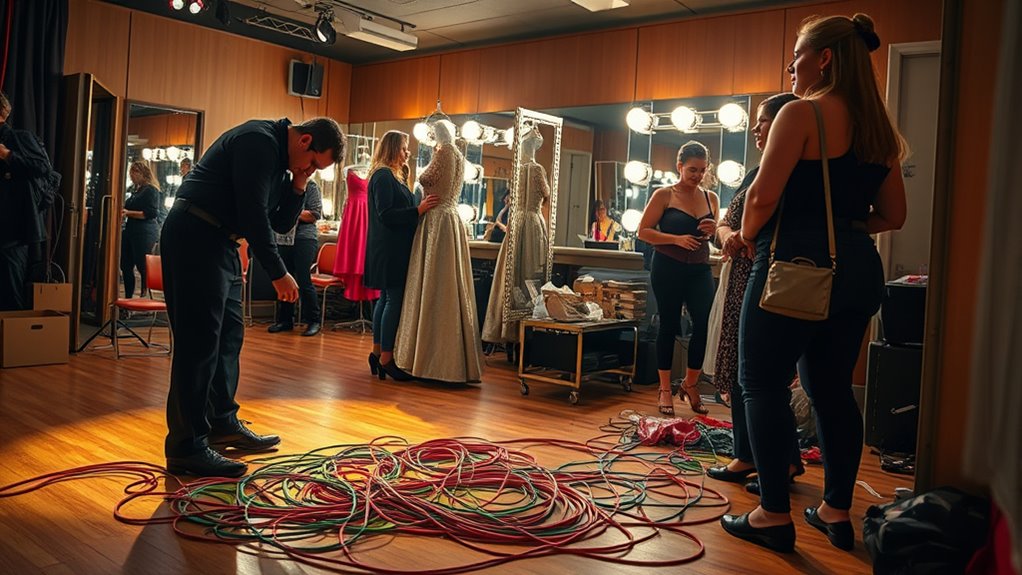

Backstage roles are essential for a smooth performance. As a backstage team member, you might operate lighting and sound, manage set changes, or call cues to coordinate action seamlessly. The stage manager acts as the central coordinator, communicating with everyone, while technical crew handles equipment and special effects. Every role works together to keep the show running flawlessly. If you want to understand how these roles collaborate behind the scenes, there’s more to discover below.
Key Takeaways
- The stage manager coordinates all production activities, creates schedules, and calls cues during rehearsals and performances.
- The technical crew operates lighting, sound, set changes, and special effects, executing cues and troubleshooting technical issues.
- Stage managers communicate instructions clearly to actors, designers, and crew, ensuring smooth transitions and scene changes.
- Technical crew manages complex machinery and adjusts technical elements to match mood and scene requirements.
- Behind-the-scenes roles are vital for the seamless execution of performances, ensuring all technical and logistical aspects run smoothly.
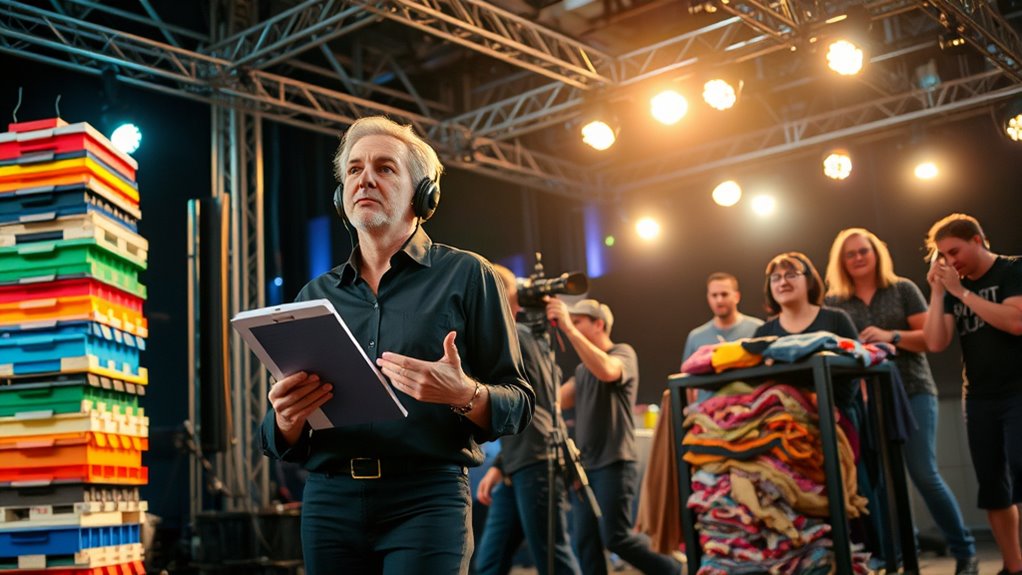
Have you ever wondered who keeps a production running smoothly behind the scenes? It’s often the stage management team and the technical crew working tirelessly to guarantee everything goes off without a hitch. As a crucial part of any performance, these roles might not be in the spotlight, but without them, the show simply wouldn’t happen. Stage management acts as the central hub, coordinating all aspects of the production, from rehearsals to the actual performance. They’re responsible for creating schedules, calling cues, and communicating with actors, designers, and crew members. When you see a show run seamlessly, it’s because the stage manager is meticulously managing every detail, often from backstage or a designated booth, guaranteeing the director’s vision is realized perfectly.
The technical crew, on the other hand, handles the complex machinery and technological elements that bring the production to life. These skilled professionals operate lighting, sound, set changes, and special effects. They’re the ones adjusting the lights to match the mood, managing sound levels for clarity and impact, and executing quick set changes during scene transitions. Their work requires precision, quick thinking, and a deep understanding of the technical systems involved. During rehearsals, they often work closely with the stage manager to rehearse cues and troubleshoot any issues that could arise during the live performance. Their expertise guarantees that all technical elements synchronize flawlessly, creating an immersive experience for the audience.
Both stage management and the technical crew work behind the scenes, but their roles are deeply interconnected. The stage manager relies on the technical crew to implement cues at exactly the right moments, while the technical crew depends on the stage management team’s clear communication and planning. They often work long hours, especially during rehearsals and setup, guaranteeing every detail is accounted for. Their collaboration requires clear communication, quick problem-solving, and a shared commitment to the production’s success. Additionally, clear communication is essential for seamless coordination during live performances. You might not see them on stage, but they’re the backbone of every live performance, making sure everything runs smoothly from start to finish. Without their dedication and skill, the magic of a theater show would never come to life.
Frequently Asked Questions
How Do Backstage Roles Differ Across Various Performance Types?
You’ll find backstage roles vary across performance types, with stage management taking on more coordination in theater, ensuring cues and timing are precise. In contrast, set design is more prominent in dance or elaborate productions, where creating a visual environment is key. In concerts, roles shift toward technical crews managing sound and lighting. Understanding these differences helps you appreciate how each role adapts to suit the specific demands of the performance.
What Skills Are Essential for Success in Backstage Roles?
You need strong organizational skills and attention to detail to succeed in backstage roles like stage management and set design. Effective communication is vital for coordinating with cast and crew. Creativity helps in set design, while problem-solving keeps everything running smoothly behind the scenes. Technical knowledge of equipment and safety procedures is also essential. With these skills, you’ll guarantee a seamless performance and support the entire production team effectively.
How Do Backstage Teams Coordinate During a Live Event?
Think of backstage teams as a well-oiled machine, with each part syncing seamlessly. During a live event, you coordinate through clear communication, using walkie-talkies and cues to keep everyone on the same page. Stage management guides the flow, ensuring equipment setup happens smoothly and timely. You stay alert, adapt quickly, and trust your team to handle surprises, turning chaos into a harmonious performance.
What Are the Career Progression Opportunities in Backstage Roles?
You can advance your career growth in backstage roles by gaining diverse experience and pursuing professional development opportunities. Start as a technician or assistant, then move into supervisory or specialized roles like stage manager or production manager. Networking, attending industry workshops, and earning certifications boost your prospects. Over time, you’ll increase responsibilities, potentially leading to higher positions such as production director or event producer, expanding your expertise and influence in the industry.
How Has Technology Impacted Backstage Roles Over Recent Years?
Technology has substantially transformed backstage roles by introducing digital tools and enabling remote collaboration. You now use advanced software for scheduling, lighting, sound design, and production management, making processes more efficient. Remote collaboration allows you to work seamlessly with team members from different locations, increasing flexibility and creativity. These innovations have streamlined workflows, reduced costs, and opened new opportunities for career growth in the backstage field.
Conclusion
As you explore backstage roles, you realize every task, from lighting to costumes, is a crucial piece of the puzzle. It’s funny how, just when you think you understand the process, a small detail reveals how these roles intertwine unexpectedly. Like a perfectly timed cue, each person’s effort makes the show come alive. So, next time you attend a performance, remember—behind the scenes, it’s all about teamwork, coincidence, and the magic they create together.