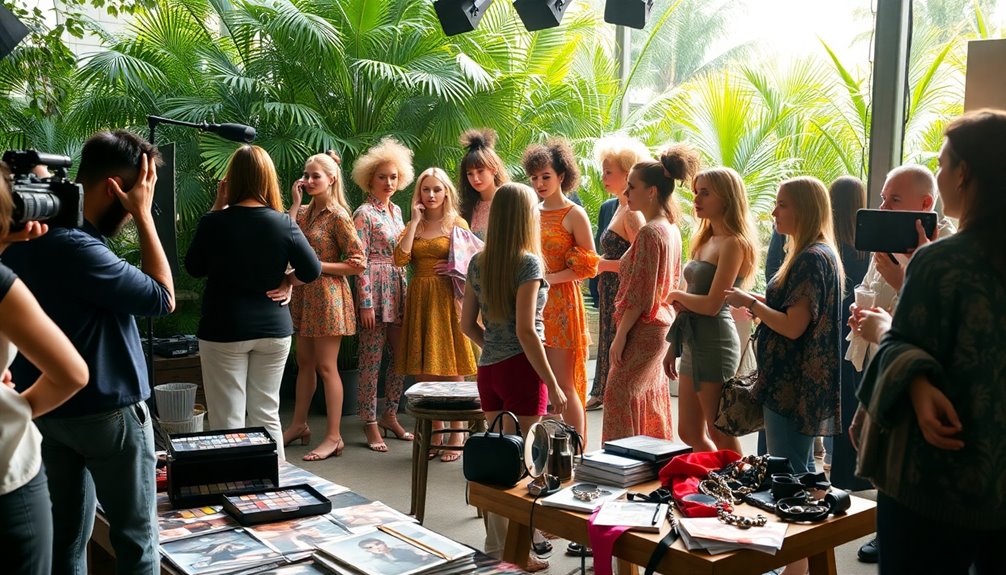
To prepare your garments for the big walk, start with fitting techniques like pinning and tacking to check how fabrics behave and adjust seams for the perfect fit. Focus on critical areas like bust, waist, and hips, and make subtle tweaks to improve comfort and movement. Keep fabric response in mind, especially with delicate or stretch fabrics. Proper communication with the wearer and multiple fittings ensure the final look is polished and comfortable—continue to learn more about perfecting your garment fit.

Get your wardrobe favorites delivered free — and shop member deals
- Fast, free delivery on millions of items
- Access to Prime Big Deal Days deals on October 6–7
- Prime Video, Amazon Music and more included
Key Takeaways
- Conduct multiple fittings on a dress form or model to assess fabric behavior and overall fit.
- Pin, tack, or temporarily stitch to make precise adjustments before final sewing.
- Focus on critical areas like bust, waist, hips, and shoulders to ensure comfort and proper drape.
- Communicate with the wearer to address comfort, style preferences, and movement needs.
- Anticipate how fabric and seam placements affect the final look and functionality during the walk.

Ever wondered what fittings are and why they matter? Fittings are crucial steps in creating a garment that fits perfectly and looks stunning on the wearer. They allow you to assess how the fabric behaves, how the design complements the body, and where adjustments might be needed before the final version. When you approach fittings, one of the first considerations is fabric selection. The fabric you choose influences how the garment will drape, stretch, and settle on the body. For example, stiff fabrics like taffeta require different fitting techniques compared to stretchy knits. Selecting the right fabric for your design ensures that the fit will be true to your intentions and that the final garment will perform as expected.
During fittings, you’ll use specific fitting techniques to evaluate the garment’s shape and structure. These techniques involve pinning, tacking, and sometimes sewing temporary stitches to see how the fabric responds when worn. You need to be precise, paying attention to areas like bust, waist, hips, and shoulders, adjusting as needed. For instance, if the fabric pulls or gaps, you might need to take in seams or reshape darts. The key is to manipulate the fabric on the dress form or model to achieve a smooth, flattering fit without restricting movement. Fitting techniques also include checking the length and balance of the garment, ensuring it aligns properly with the wearer’s proportions. Additionally, understanding the importance of color accuracy can influence how you assess the fabric’s true appearance under different lighting conditions, helping ensure the final garment’s look meets expectations. Recognizing the impact of fabric behavior during fittings helps anticipate how the material will perform once completed. Being aware of seam placement is also essential to avoid discomfort and ensure durability in the finished piece.
As you work through multiple fittings, you learn to read the fabric’s behavior and anticipate how it will look after finishing. For delicate fabrics, extra care is necessary because they can be more prone to puckering or distortion. Using proper fitting techniques helps minimize these issues, allowing you to make subtle adjustments that enhance the overall silhouette. It’s also essential to keep communication open with the wearer or client, so you understand their comfort preferences and style expectations. Adjustments aren’t just about appearance—they’re about creating a garment that feels right and moves naturally with the person.
Frequently Asked Questions
How Far in Advance Should Fittings Be Scheduled?
You should schedule fittings at least 4 to 6 weeks before the event, allowing ample time for adjustments. This fitting timeline guarantees you can select the right fabric and make necessary changes. Rushing the process might compromise the fit or fabric choice, so plan ahead. Booking early also gives you time to address any issues, ensuring your garment looks perfect for the big walk.
What Should I Wear During a Fitting Session?
Did you know that wearing the right clothes can improve your fitting experience by 30%? During a fitting, you should wear simple, well-fitting undergarments and the shoes you plan to wear for the event. Focus on fabric choices that mimic your final outfit, and prioritize comfort considerations to guarantee the garment fits perfectly. This helps designers see how the clothing will look and feel on you.
Can Adjustments Be Made After the Final Fitting?
Yes, adjustments can be made after the final fitting, but it depends on your fitting timeline. Typically, the alterations process is quicker if done early, giving your tailor enough time to make necessary changes. If you notice issues later, some modifications might still be possible, but they could require rushing or additional costs. It’s best to communicate with your tailor promptly to ensure your garment fits perfectly for the big walk.
How Many Fittings Are Typically Needed Before the Event?
Think of your fitting process as sculpting a masterpiece—each session refines the details. Usually, you need two or three fittings before the event to perfect the fabric selection and guarantee everything fits just right. The fitting timeline helps identify adjustments early, so you avoid surprises. After the final fitting, minor tweaks can still be made, but most major changes are best addressed earlier to keep your garment flawless for the big walk.
What Should I Bring to the Fitting Appointment?
When you go to your fitting appointment, bring your chosen accessories to see how they complement the outfit. Don’t forget to consider fabric considerations—bring any fabric samples or notes to guarantee the garment fits well with your overall look. Pack any necessary undergarments or shoes that you’ll wear on the big day. This way, you can make sure everything aligns perfectly and feels comfortable for the event.
Conclusion
Now that you’ve navigated the world of fittings, you’re like a skilled tailor shaping a masterpiece. With each pin and stitch, you’re weaving confidence into your garment’s fabric, preparing it to walk the runway of life. Remember, the perfect fit isn’t just about size—it’s about feeling fabulous in your own skin. So go ahead, strut your stuff with pride, because you’ve got the knowledge to make every step a runway moment.
Fall Picks
fall essentials
As an affiliate, we earn on qualifying purchases.