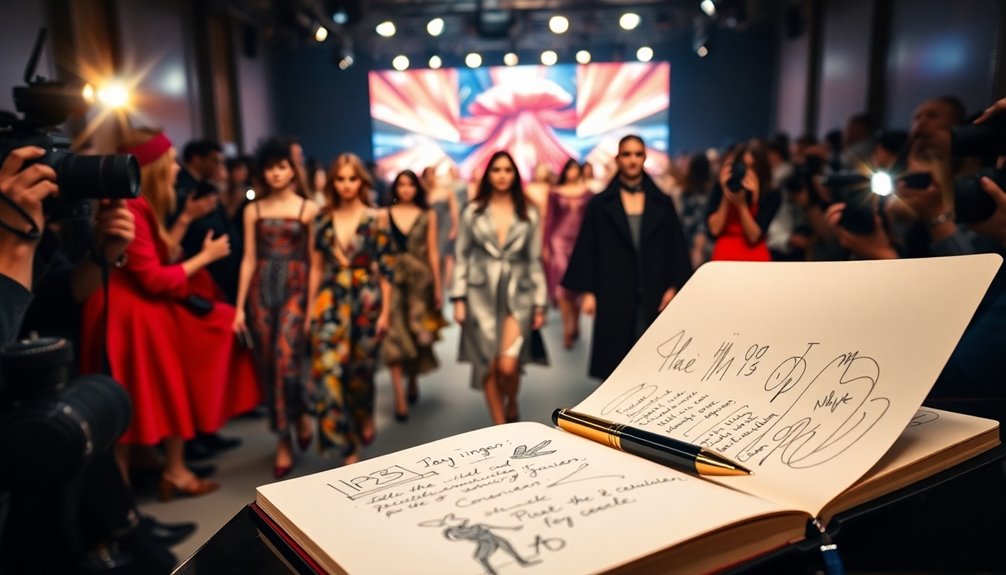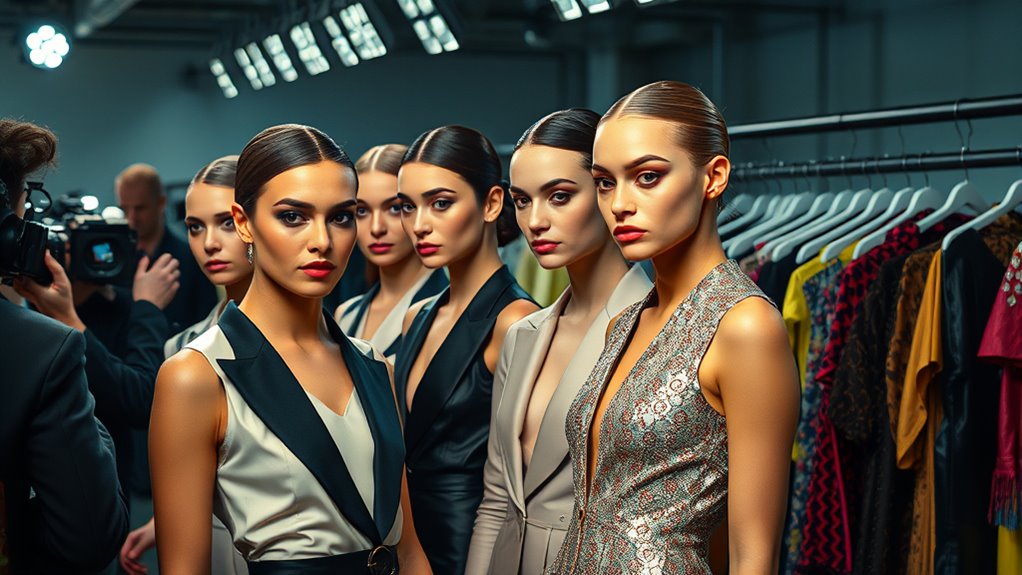

At Fashion Week, you’ll see a process that starts months in advance with designers planning collections, selecting eco-friendly materials, and organizing rehearsals. The casting stage is competitive, choosing models to match the collection’s vibe and promote diversity. During the runway show, models showcase designs with celeb guests adding excitement. Afterward, media coverage and social media amplify the event’s message, shaping trends and inspiring conscious choices. If you keep exploring, you’ll discover how each step truly connects to the overall impact.
Key Takeaways
- Designers plan collections months in advance, including sourcing eco-friendly fabrics and selecting diverse models.
- The casting process matches models to collection aesthetics, emphasizing diversity, credibility, and sustainability.
- Models walk the runway to showcase themes, craftsmanship, and eco-friendly features, often with celebrity presence.
- Post-show, photos and videos circulate on social media, boosting visibility through celebrity endorsements and media coverage.
- The event promotes sustainable fashion, influences consumer choices, and shapes the future of ethical industry practices.
Ever wondered what happens during Fashion Week? It’s a whirlwind of activity where designers showcase their latest collections to industry insiders, media, and enthusiastic fans. But behind the glitz and glamour, there’s a lot more at play, especially when it comes to sustainable fashion and celebrity influence. Designers are increasingly using Fashion Week to highlight eco-friendly materials and ethical production methods. They want to prove that style doesn’t have to come at the planet’s expense. Celebrity influence plays a significant role here—stars often attend shows wearing pieces from the collection, boosting visibility for sustainable fashion brands. Their presence can make a statement, encouraging fans to consider eco-conscious choices and making sustainability trendy.
Fashion Week spotlights eco-friendly fashion and celebrity influence, making sustainability trendy and inspiring conscious choices worldwide.
The process begins long before the runway lights turn on. Designers start planning their collections months ahead, sketching ideas, sourcing fabrics, and selecting models. When it’s time for the show, casting becomes a key step. You’re invited to imagine how designers choose models that best reflect their aesthetic, often seeking diversity and inclusivity to resonate with a broader audience. Models walk the runway in carefully curated outfits that tell a story—sometimes emphasizing eco-friendly materials or innovative designs that push sustainability forward. The casting process can be competitive, with designers looking for fresh faces or familiar names to draw attention and lend credibility to their message.
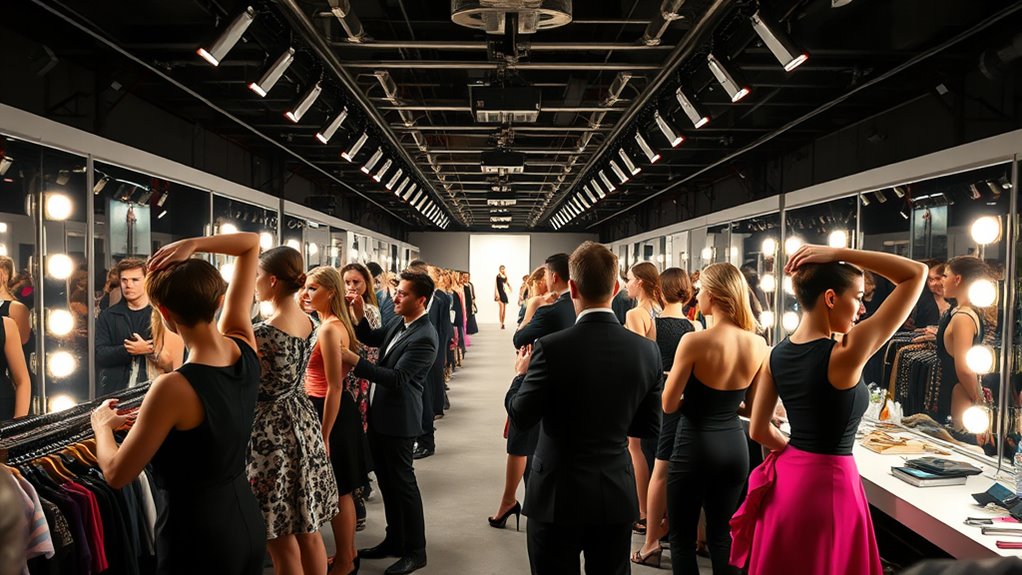
Once the cast is finalized, rehearsals begin, fine-tuning every step to guarantee a flawless presentation. During the show, each model struts down the runway, showcasing the collection’s theme, craftsmanship, and sustainability features. As a viewer, you notice how influential celebrities sitting in the front row often wear standout pieces, instantly turning them into viral moments. Their endorsements can propel a brand from niche to mainstream overnight, making sustainable fashion more appealing and accessible. The audience’s reaction is vital—they’re not just admiring clothes but also absorbing the underlying messages about ethical practices and environmental responsibility. Additionally, the use of accurate color reproduction in runway presentations helps convey the true essence of each design, emphasizing sustainability and craftsmanship.
After the show, the real work continues with marketing and media coverage. Photos and videos from the event spread across social media, amplifying the designer’s message and highlighting the commitment to sustainability. Celebrities sharing their favorite looks further reinforce the importance of eco-conscious choices. As someone observing all this, you can see how Fashion Week isn’t just about runway beauty; it’s a platform for innovation, activism, and influence. It’s where fashion’s future is shaped, blending style with responsibility, and where celebrity influence helps push sustainable fashion into the spotlight, inspiring change beyond the runway.
Frequently Asked Questions
How Are Models Selected for Fashion Week Shows?
You’re selected for fashion week shows through a casting process where agencies and designers prioritize model diversity to showcase a range of looks. Casting directors look for models who fit the designer’s vision, considering runway choreography to match the collection’s vibe. Your portfolio, runway walk, and ability to adapt to different styles matter most. If you stand out and align with the show’s theme, you’ll likely get chosen to walk the runway.
What Criteria Do Designers Use to Choose Their Models?
You might think designers only pick tall, slender models, but they actually prioritize runway casting criteria like versatility, confidence, and unique looks. They seek model diversity to reflect current fashion trends and broaden their audience. The selection process often involves evaluating how well a model’s personality and presence match the show’s theme, ensuring the collection comes alive on the runway. Ultimately, they choose models who can authentically embody the brand’s vision.
How Do Fashion Brands Secure Invitations to Showcase?
You secure invitations to showcase by building strong relationships with organizers and understanding fashion show logistics. Brands often collaborate through sponsorships, providing financial support or products in exchange for runway space. You also need a compelling brand story and innovative designs that align with the event’s theme. Networking at industry events and maintaining a professional portfolio further increases your chances, ensuring you’re on the invite list for this exclusive platform.
What Role Does Social Media Play During Fashion Week?
Like a modern-day Gutenberg, social media revolutionizes fashion week by amplifying your reach instantly. You can showcase behind-the-scenes moments, generate buzz, and engage followers using platforms like Instagram and TikTok. Social media influence boosts digital marketing efforts, helping brands trend and attract buyers worldwide. It’s your direct line to a global audience, making every runway moment more accessible and impactful, turning fashion week into a digital spectacle that shapes trends overnight.
How Is the Audience for Fashion Week Determined?
You determine the audience for fashion week through ticket distribution, which is carefully managed to target specific audience demographics. Organizers analyze factors like age, gender, and fashion interests to guarantee the right mix of attendees. By controlling ticket access, they create an exclusive atmosphere and ensure the audience aligns with the event’s branding and industry goals. This strategic approach helps foster networking and media coverage, amplifying the event’s impact.
Conclusion
Now that you see how every step, from casting to catwalk, weaves together like a finely spun fabric, you understand why Fashion Week is so much more than just runway shows. Imagine it as a delicate dance where each move influences the next—like a ripple effect. Just last season, a designer’s bold decision sparked a trend that changed industry standards. With all these threads intertwined, Fashion Week truly is a living, breathing tapestry of creativity and innovation.