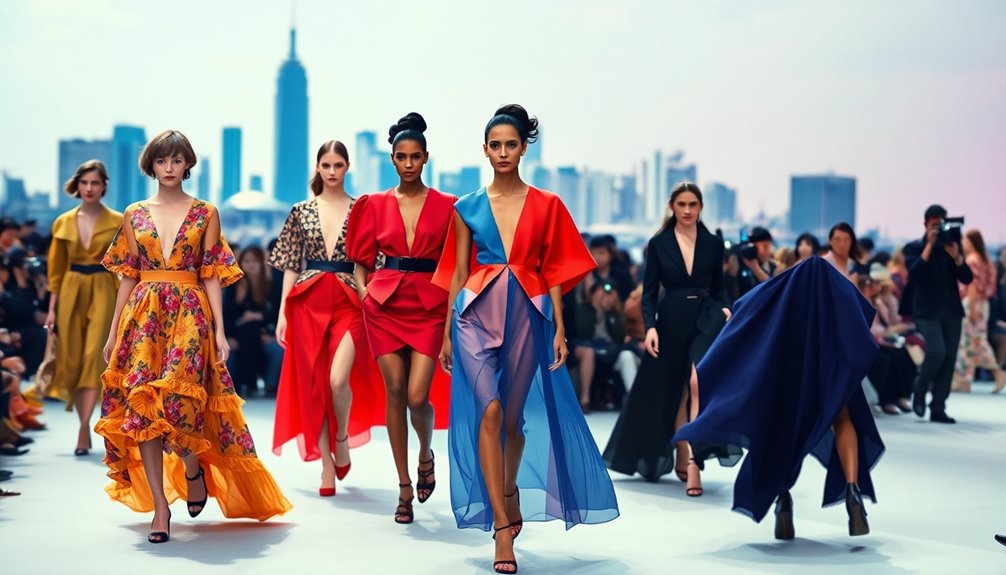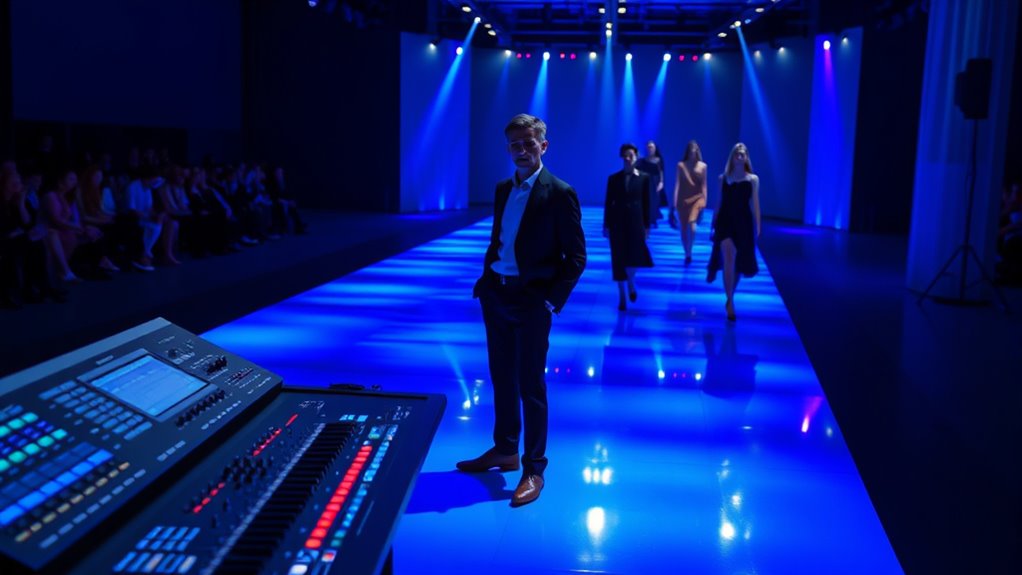

Music direction is key in shaping the mood and emotional flow of a runway show. By selecting the right genre, tempo, and sound design, you guide models’ movements and influence how the audience feels. Your choices create a cohesive atmosphere that amplifies the collection’s story and aesthetic. A well-crafted musical experience makes the event more immersive and memorable. Keep exploring, and you’ll discover how music can transform a runway into a compelling storytelling journey.
Key Takeaways
- Music direction establishes the overall atmosphere and emotional tone of the runway show through genre and tempo choices.
- It synchronizes models’ movements with musical rhythm, enhancing flow and visual storytelling.
- Selecting appropriate music genres evokes specific emotional responses, shaping audience perception.
- Dynamic adjustments in music tempo highlight key moments and maintain show engagement.
- Cohesive music direction aligns sound, choreography, and fashion to create a memorable, immersive experience.
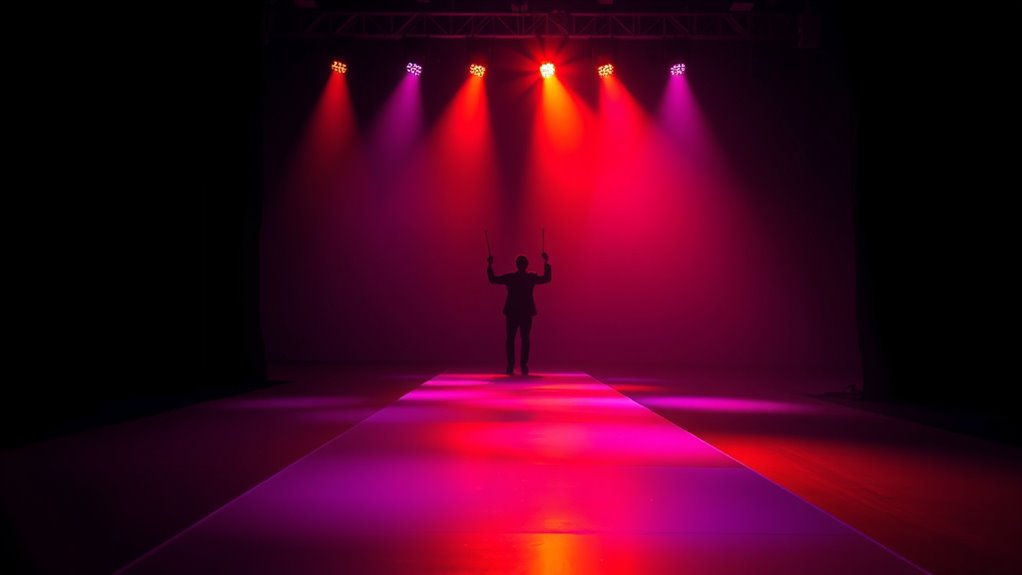
Music direction plays a crucial role in shaping the atmosphere of a runway show, guiding both the models’ pace and the audience’s experience. When you select the right music genre choices, you set the tone and mood that resonate throughout the event. Whether you opt for high-energy electronic beats or elegant classical melodies, your choices influence how the show feels and how viewers interpret the collection. The genre sets the emotional backdrop, whether it’s edgy and rebellious or refined and sophisticated. It’s not just about choosing a popular track; it’s about understanding how the genre aligns with the designer’s vision and the collection’s theme. Your role involves carefully curating music that enhances the narrative you want to tell through fashion.
Choreography integration is equally important because music isn’t just background noise—it’s a tool to synchronize the models’ movements with the rhythm. As a music director, you need to work closely with the choreographer and stylist to craft a seamless flow. The tempo of your chosen music influences the models’ pace, dictating how quickly or slowly they walk, turn, and pose. When you integrate choreography effectively, the music becomes a guiding force rather than just an accompaniment. For example, if the collection is dynamic and energetic, a fast-paced track will encourage lively, confident strides. Conversely, a softer, more melodic piece might inspire graceful, deliberate movements. You might even adjust the music’s tempo during the show to emphasize particular moments, ensuring the choreography and sound work together harmoniously. Additionally, understanding how different music genres evoke specific emotional responses allows you to craft an immersive experience that resonates deeply with viewers. Incorporating sound design elements can further amplify the mood you aim to create, making the atmosphere even more captivating. Familiarity with music theory can also help in selecting harmonies and rhythms that reinforce the desired emotional tone of the show. A thorough knowledge of the brand’s aesthetic ensures that the musical choices complement the overall vision, creating a cohesive presentation.
Your role also involves understanding how different music genres evoke specific emotional responses. A pop track might energize the audience, while a jazz piece could add a touch of sophistication. When you consider these elements, you craft an immersive experience that immerses viewers into the world you’re creating. The integration of music genre choices and choreography isn’t just technical; it’s about storytelling. You shape how the audience perceives each look and how the entire show flows emotionally. By thoughtfully selecting genres and aligning choreography, you set a compelling mood that elevates the show beyond just clothes—making it a memorable, cohesive event that leaves a lasting impression.
Frequently Asked Questions
How Do Music Choices Influence Audience Perception During Runway Shows?
You realize that your music choices greatly influence how the audience perceives the runway show. By selecting tracks that match the collection’s theme, you boost audience engagement and create emotional resonance. The right music captures attention, enhances the mood, and makes the experience memorable. Your strategic choices help evoke feelings and connect viewers to the designs, ensuring they stay emotionally involved and deeply engaged throughout the show.
What Factors Do Music Directors Consider When Selecting Runway Music?
You might think selecting runway music is simple, but it’s quite the balancing act. You consider current fashion trends to match the vibe, while cultural influences add depth and authenticity. Ironically, you often overlook how the music’s rhythm can overshadow the clothes themselves. You aim for harmony, ensuring the soundtrack elevates the collection’s story, making every walk down the runway a memorable experience that resonates with the audience.
How Does Music Tempo Impact the Pacing of a Runway Presentation?
You see, music tempo directly influences the pacing of a runway presentation. A faster tempo energizes the audience, amplifying excitement and aligning with current fashion trends that emphasize boldness. Conversely, a slower tempo creates a more dramatic, elegant atmosphere. By choosing the right tempo, you keep the audience engaged, ensuring the show’s flow matches the vibe of the collection and enhances overall audience engagement.
Can Live Music Alter the Overall Mood of a Runway Event?
You might find that live music dramatically alters the runway ambiance, creating an immersive experience. It adds spontaneity and energy, making the event feel more dynamic and engaging. Live music allows you to adapt the mood in real-time, amplifying emotions and emphasizing the designer’s vision. When you choose the right live performance, it can elevate the overall atmosphere, making the runway show memorable and enthralling for everyone involved.
What Are Common Challenges Faced by Music Directors in Runway Shows?
You often find yourself juggling challenges like budget constraints and artist coordination, which can make your job tough. Staying on schedule and ensuring the music complements the show’s vibe can feel like walking a tightrope. You need to balance creative vision with practical limits, all while keeping everyone on the same page. Despite these hurdles, your adaptability and communication skills help you turn obstacles into runway-ready moments.
Conclusion
You realize that music direction transforms the runway, sets the mood, and defines the moment. It guides the audience’s emotions, shapes the designer’s vision, and elevates every step. By mastering this art, you create an environment where fashion and sound collide, where energy flows seamlessly, and where every runway becomes unforgettable. In this dance of sound and style, you don’t just set a mood—you craft an experience, a memory, a story that resonates long after the lights fade.