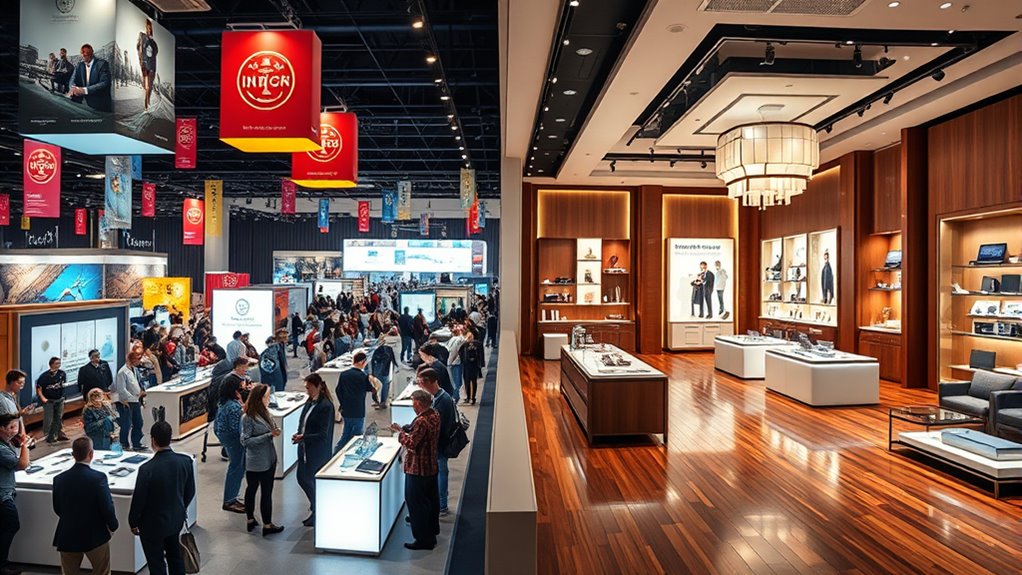

Trade shows and showrooms differ mainly in environment, purpose, and engagement. At trade shows, you encounter a bustling, visually driven atmosphere designed to attract a broad audience quickly and generate buzz. In contrast, showrooms offer a relaxed setting where you can connect more deeply, explore products hands-on, and build trust. By understanding these differences, you’ll better select how to showcase your products effectively—stay tuned to discover even more insights.
Key Takeaways
- Trade shows are large, crowded events focused on broad brand exposure, while showrooms offer personalized, intimate environments for in-depth engagement.
- Trade show displays aim to attract attention quickly with eye-catching visuals; showrooms showcase products through curated, detailed presentations.
- Trade shows emphasize generating buzz and leads; showrooms foster trust and build long-term customer relationships.
- Trade show interactions are brief and dynamic; showroom interactions are longer and more personalized.
- Trade shows are ideal for broad product exposure; showrooms are suited for showcasing high-end or complex products.
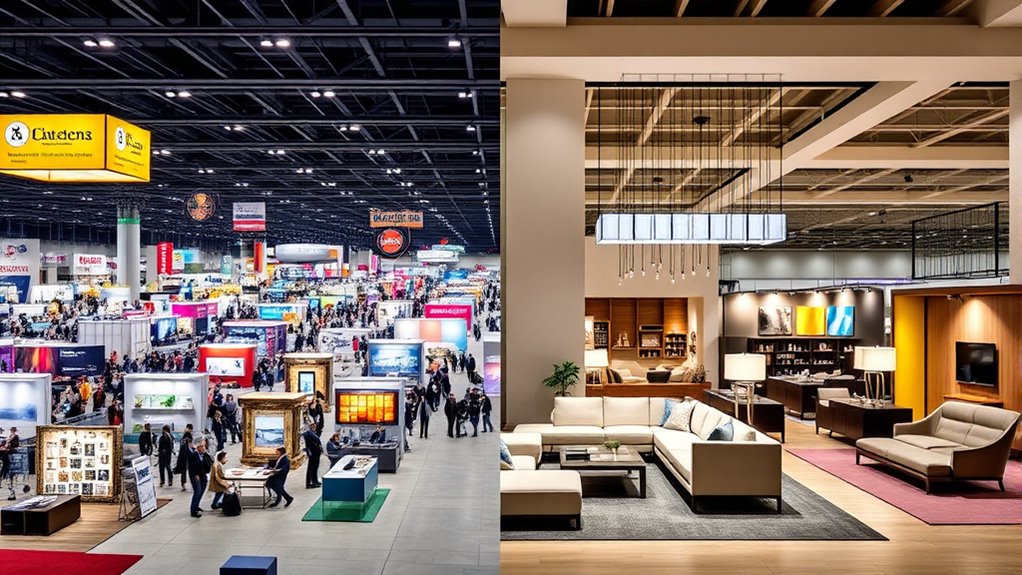
When deciding how to showcase your products, you might wonder whether trade shows or showrooms are the better choice. Both options serve as platforms to display what you offer, but they do so in fundamentally different ways. Trade shows are large, industry-specific events where businesses gather to present their latest products and innovations. Here, your product display is designed to attract attention quickly and stand out amidst many competitors. You focus on creating eye-catching displays that highlight your product’s unique features, aiming to draw in a broad audience of potential buyers, partners, and media. Customer engagement at trade shows is often dynamic and fast-paced—you get one-on-one interactions, demonstrations, and conversations that can spark immediate interest. The goal is to generate buzz, collect leads, and build brand awareness among a diverse crowd. Because of the bustling environment, your product display needs to be both visually appealing and informative, helping visitors instantly grasp what makes your product special. Additionally, incorporating science‑backed tips and innovative display techniques can enhance your effectiveness at these events.
In contrast, showrooms offer a more intimate setting, emphasizing a tailored customer experience. When someone visits your showroom, they come with a specific interest or need in mind. Your product display here is more curated, allowing visitors to explore your offerings in a relaxed, familiar environment. Customer engagement in showrooms tends to be deeper and more personalized—you have the chance to walk visitors through features, answer detailed questions, and demonstrate how your products fit into their lives. This environment encourages longer interactions, which can lead to stronger relationships and higher conversion rates. Showrooms are ideal for showcasing high-end, customizable, or complex products that benefit from hands-on experience. Your product display should be thoughtfully arranged to tell a story, guide visitors through different options, and create a sense of exclusivity. This setting allows you to build trust and rapport, as customers can see, touch, and feel the quality of your offerings firsthand.
Frequently Asked Questions
How Do Trade Show Costs Compare to Showroom Expenses?
Trade show costs are generally higher than showroom expenses due to booth rental and display costs. You’ll pay for booth space, which varies by event, plus expenses for creating eye-catching displays. Showrooms, on the other hand, involve ongoing rent and maintenance costs but usually don’t require large upfront investments for displays. Overall, trade shows tend to be more expensive upfront, while showrooms involve steady, ongoing expenses.
Can Small Businesses Effectively Participate in Trade Shows?
Think of trade shows as a golden ticket to boost your small business’s visibility. You can definitely participate effectively by leveraging your digital presence beforehand, creating buzz on social media, and setting clear goals. The networking opportunities are invaluable, helping you connect with industry peers, potential clients, and partners. With strategic planning and a focused approach, trade shows can turn your small business into a well-known name in your industry.
What Are the Best Practices for Showroom Design?
You should prioritize creating an inviting atmosphere by focusing on visual merchandising and lighting design. Use strategic lighting to highlight key products and create visual interest, guiding customers naturally through your showroom. Keep the layout open and organized, making it easy for visitors to browse comfortably. Incorporate attractive displays and consistent branding to reinforce your message. Regularly refresh your visual merchandising to keep the space engaging and encourage repeat visits.
How Do Customer Engagement Strategies Differ Between Trade Shows and Showrooms?
At trade shows, you focus on digital interactions and quick, engaging displays to attract a broad audience, emphasizing vivid presentations and interactive demos. In showrooms, you create personalized experiences by tailoring consultations and using immersive setups, fostering deeper connections. Your strategy shifts from broad awareness at trade shows to building trust and loyalty in showrooms through direct engagement and customized service. This tailored approach enhances customer relationships and sales effectiveness.
What Metrics Are Used to Measure Success in Trade Shows Versus Showrooms?
You measure success at trade shows through lead conversion rates and brand visibility, tracking how many prospects become customers and how many people recognize your brand. In showrooms, focus on customer engagement and sales figures, evaluating how effectively you turn visits into purchases. Both environments rely on these metrics to evaluate your efforts, but trade shows emphasize outreach impact, while showrooms prioritize direct sales and personalized experiences.
Conclusion
Now, picture yourself walking through a bustling trade show, where vibrant displays and enthusiastic conversations surround you, versus strolling into a sleek showroom, where polished products await your touch in a calm, curated space. Both environments offer unique experiences—one sparks excitement and connections, the other invites you to explore at your own pace. Understanding these differences helps you choose the right setting to see, feel, and decide on what truly fits your needs.