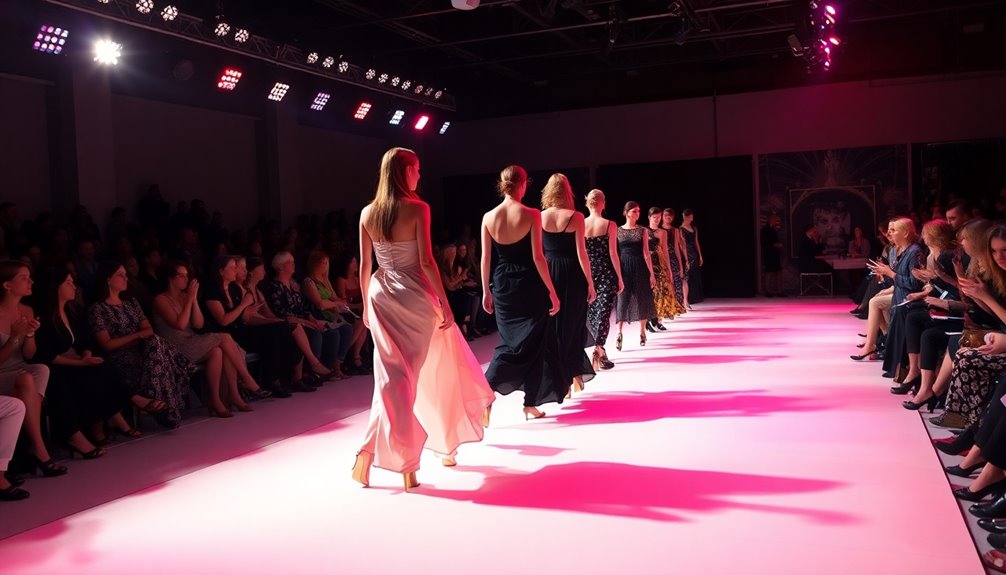
Virtual fashion shows have made front-row access available to everyone by streaming events online and using advanced technologies like AR. You no longer need invitations or VIP passes to experience high fashion; you can watch from anywhere with an internet connection. These digital platforms also offer behind-the-scenes content and interactive features, expanding audience reach worldwide. Stay with us to uncover how technology continues to reshape fashion’s exclusive world for all.
Key Takeaways
- Digital advancements like AR and virtual runways allow anyone with internet access to experience fashion shows remotely.
- Streaming platforms and social media make front-row views accessible worldwide, removing geographical barriers.
- Interactive features and behind-the-scenes content engage viewers, broadening participation beyond traditional exclusivity.
- Virtual try-ons and AR filters enable personalized engagement, enhancing the sense of being part of the front row.
- High-quality digital visuals create immersive experiences, making luxury fashion accessible to a global audience.

Have you ever wondered how fashion shows are evolving in the digital age? The traditional front row, once reserved for industry insiders, celebrities, and the most influential buyers, is increasingly becoming accessible to anyone with an internet connection. Thanks to advancements like augmented reality and digital runways, the barrier to experiencing high fashion has considerably lowered. Now, you don’t need an invitation or a VIP pass to get a front-row view; instead, you can immerse yourself in the show from the comfort of your own home.
Augmented reality (AR) plays a key role in this transformation. Designers and brands are integrating AR into their virtual presentations, allowing viewers to see garments in 3D, zoom in on intricate details, and visualize how pieces might look on themselves or in different settings. This technology creates an interactive experience that rivals the exclusivity of sitting in a front row. With AR, you can virtually walk around models, examine textures, and get a sense of the movement of the fabrics—all without leaving your device. It’s as if you’re physically present at the show, but with the added convenience of customization and control over your viewing experience.
AR transforms fashion viewing with 3D garments, interactive details, and personalized experiences—bringing the front row to your device.
Digital runways further democratize fashion shows by making them accessible to a global audience. Instead of attending in person, you can stream high-quality videos of the runway presentations on social media platforms, brand websites, or specialized apps. These digital runways often include behind-the-scenes footage, designer interviews, and interactive features that deepen your engagement. As a result, you no longer need to be part of the privileged few to witness the latest collections. Instead, you’re invited into an inclusive space where fashion is shared broadly, breaking down geographical and economic barriers.
This shift also means that the traditional notion of exclusivity is evolving. Brands are increasingly adopting virtual formats to reach wider audiences, offering immersive experiences that were once impossible outside the physical confines of a runway show. Whether through AR filters that let you try on virtual outfits or live-streamed shows that are accessible worldwide, the democratization of front-row access is reshaping how you experience fashion. It’s no longer about who you know or how much you can afford to attend; it’s about engaging with the art and craftsmanship of fashion on your own terms.
In this digital age, fashion shows are no longer just spectacles for a select few. They’re becoming shared experiences, accessible to all who want to participate. Augmented reality and digital runways are central to this evolution, transforming the front row from a symbol of exclusivity into a space of inclusivity and innovation. Incorporating high-quality projection technology ensures that viewers have a clear and immersive visual experience regardless of their device or location.
Frequently Asked Questions
How Do Virtual Shows Impact Traditional Fashion Industry Jobs?
Virtual fashion shows markedly impact traditional industry jobs by accelerating digital transformation and prompting industry adaptation. You might find that roles in event planning, set design, and production shift towards digital expertise, while jobs in physical show management decrease. This shift requires you to learn new skills, embrace technology, and adapt to changing demands, ultimately reshaping job opportunities and workflows within the fashion industry.
Are Virtual Fashion Shows Accessible to People With Disabilities?
Accessibility advances allow everyone to attend virtual fashion shows, whether you have disabilities or not. You’ll notice improved features like captions, audio descriptions, and easy navigation, making the experience inclusive and engaging. Assistive technologies, such as screen readers and adjustable interfaces, empower you to participate without barriers. These innovations transform the virtual runway into a welcoming space, ensuring you can enjoy fashion’s future, fully and freely.
What Technologies Are Used to Create Immersive Virtual Fashion Experiences?
You’ll find that augmented reality and 3D rendering are key technologies creating immersive virtual fashion experiences. Augmented reality overlays digital elements onto your real-world view, making you feel part of the show. Meanwhile, 3D rendering brings clothing and runway setups to life with realistic textures and movement. Together, these tools let you explore fashion in a dynamic, interactive way, enhancing your virtual experience and making high-end fashion accessible from anywhere.
How Do Virtual Shows Influence Designer and Brand Marketing Strategies?
Virtual fashion shows considerably influence your marketing strategies by boosting digital engagement and enhancing brand visibility. You can reach a global audience instantly, creating interactive experiences that resonate with viewers. This approach allows you to showcase collections creatively, gather real-time feedback, and build stronger online communities. Embracing virtual shows helps you stay innovative, competitive, and more connected to your audience, ultimately strengthening your brand’s presence in the digital landscape.
Will Virtual Fashion Shows Replace Physical Runway Events Entirely?
Imagine scrolling through a digital attendance list, where thousands join virtually, reducing the need for physical venues. You realize virtual shows might not fully replace physical runway events because they offer unique experiences. However, they do provide environmental benefits like lower carbon footprints. While virtual fashion shows will become more common, they’ll likely complement rather than replace traditional events, creating a more sustainable, accessible future for the industry.
Conclusion
Now, you can finally sit front row from your couch, enjoying the glamour without the hefty price tag. It’s ironic how virtual fashion shows, meant to democratize access, often leave you feeling more disconnected than ever. While you’re no longer crowding into packed venues, you might also miss the thrill of real-time excitement and face-to-face moments. But hey, at least now, everyone’s invited—just don’t expect the same magic to feel quite the same.