The 1920s flapper look is all about bold, rebellious style that shunned tradition. You’ll see shorter dresses with fringe, beads, and sequins, along with bobbed hair and cloche hats that radiate confidence. It was more than fashion—an expression of independence fueled by jazz music and lively nightlife scenes in speakeasies. If you want to uncover how this iconic look shaped modern fashion and culture, keep exploring the fascinating story behind the flapper era.
Key Takeaways
- The flapper look symbolized independence, modernity, and rebellion against Victorian-era norms through shorter dresses and bold accessories.
- Fashion featured loose, drop-waist dresses with fringe, sequins, and beads, emphasizing movement and comfort for dancing.
- Hairstyles like bob cuts and accessories such as cloche hats highlighted a carefree, modern attitude.
- Jazz music and speakeasies created an energetic, rebellious nightlife that complemented flapper fashion and social change.
- The era’s style became a lasting symbol of societal transformation, empowering women and influencing future fashion trends.
The 1920s flapper look revolutionized fashion by embodying a spirit of independence and rebellion. You can see how this era’s style was more than just clothing; it was a statement against traditional norms. Jazz music, with its lively rhythms and improvisational spirit, became the soundtrack of the decade, inspiring flappers to dance freely and express themselves boldly. As jazz clubs filled with energetic performances, women adopted a daring new style that matched the music’s vibrant vibe. Their fashion choices reflected the same sense of liberation, breaking away from the restrictive garments of previous generations.
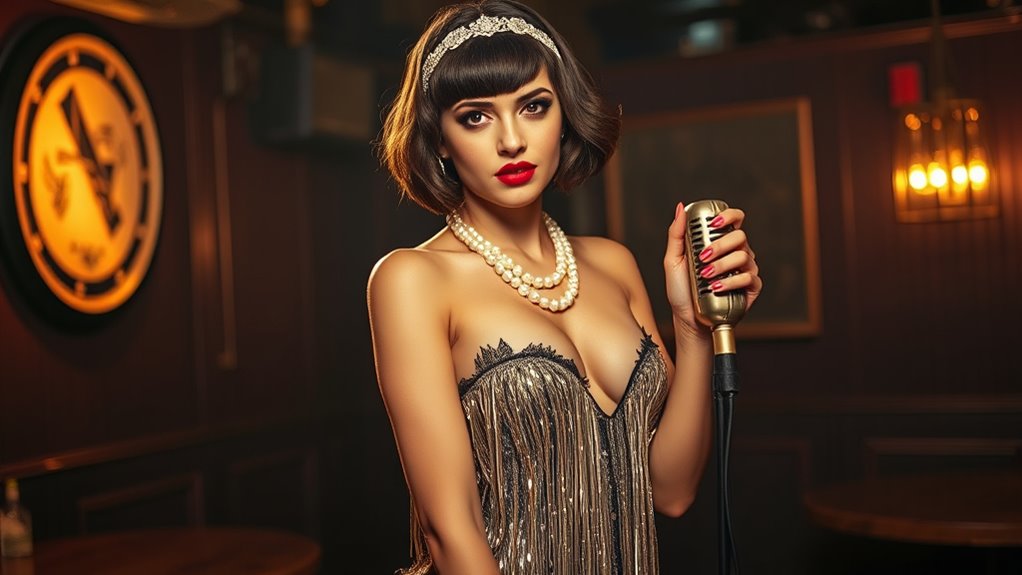
During the Prohibition era, when alcohol was banned, social scenes shifted underground, and nightlife became a symbol of defiance. You might have found yourself in secret speakeasies, where jazz music played loudly and flappers showcased their daring fashion. Dresses became shorter, often dropping just above the knee, with fringe, beads, and sequins catching every flash of light. The flapper silhouette was characterized by loose, straight lines that freed women from the constrictive corsets of the Victorian era. You could wear a drop waist dress that allowed for movement and comfort, perfect for dancing the night away.
In speakeasies, shorter drop waist dresses with fringe and sequins celebrated daring, rebellious fashion amid jazz-filled secret nights
Accessories became essential to complete the look. Long pearl necklaces draped effortlessly over bare shoulders, while cloche hats sat snugly on your head, framing your face with a chic, modern appeal. T-strap shoes and bobbed hairstyles added final touches, emphasizing a carefree attitude. The fashion of this era wasn’t just about appearance but about embracing a new sense of freedom. You no longer needed to conform to past expectations of femininity; instead, you could express your personality boldly through your style.
The influence of jazz music on fashion during the Prohibition era can’t be overstated. The energetic beats inspired women to dance and move in ways previously considered unconventional. This lively music scene fueled the flapper’s rebellious spirit, which was reflected in their clothing—shorter skirts, bold accessories, and daring makeup. The combination of jazz and fashion created a cultural revolution, where women could feel empowered and confident. The flapper look was more than just a trend; it was a symbol of societal change, representing a break from the past and a step into modernity. You could say that, through jazz and daring fashion, the 1920s gave women a voice and a style that continues to influence fashion today. Additionally, the era’s innovative fabrics and sewing techniques contributed to the distinctive silhouettes and luxurious details that defined the style.
Frequently Asked Questions
How Did the Flapper Look Influence Modern Fashion Trends?
The flapper look influences modern fashion by popularizing styles like fringe detailing and drop waist dresses, which you see in contemporary designs. These elements give your outfits a playful, free-spirited vibe reminiscent of the Roaring Twenties. You now enjoy clothing that emphasizes movement and comfort, echoing the flappers’ rebellious spirit. This era’s bold, avant-garde style continues to inspire designers and everyday fashion choices today, making vintage trends timeless.
Were Flapper Styles Popular Worldwide or Limited to Certain Regions?
You’ll find that flapper styles were mainly popular in Western countries like the US and UK, but regional variations and cultural influences shaped how the look was adopted elsewhere. In some regions, traditional attire blended with flapper elements, creating unique interpretations. Overall, while the style spread beyond its origins, its popularity remained strongest in Western urban centers, influenced by local culture and social norms.
What Materials Were Most Commonly Used in Flapper Dresses?
Imagine shimmering waves on a dance floor—that’s how flapper dresses sparkled with materials like silk, satin, and chiffon. You’d prefer sustainable fabric choices today, but back then, they used rayon, lace, and sequined trims. Crafted with skilled craftsmanship techniques, these fabrics created the glamorous, free-spirited look of the era. The materials hugged the body, making every dancer feel confident and stylish as they moved to jazz.
Did Flappers Face Any Social or Legal Restrictions on Fashion?
You’d find that flappers faced social restrictions rooted in traditional gender roles and modesty norms, but legal limits were minimal, though Prohibition laws influenced their social scenes. Women’s suffrage empowered you to challenge societal expectations, allowing more freedom in fashion. Still, some cities imposed dress codes or morality laws, making it harder to fully express your style without scrutiny. Despite this, flappers boldly embraced bold fashion choices, symbolizing newfound independence.
How Did the Flapper Look Evolve Throughout the 1920S?
The flapper look evolved throughout the 1920s by embracing art Deco inspiration and jazz age influence. You notice shorter hemlines, dropped waistlines, and more daring accessories as the decade progresses. Sparkling embellishments, fringe, and geometric patterns become prominent, reflecting the lively, modern spirit of the era. This shift captures the energetic, rebellious attitude of women who sought freedom and individuality, transforming fashion into a statement of cultural change.
Conclusion
You might think the flapper look was just about fashion, but it was also a symbol of independence and rebellion. It represented women breaking free from traditional roles, embracing freedom and self-expression. While some say it was just a trend, it truly marked a cultural shift. So, next time you see vintage flapper styles, remember they’re more than just clothing—they’re a bold statement of change. The 1920s flapper look changed history, one daring outfit at a time.