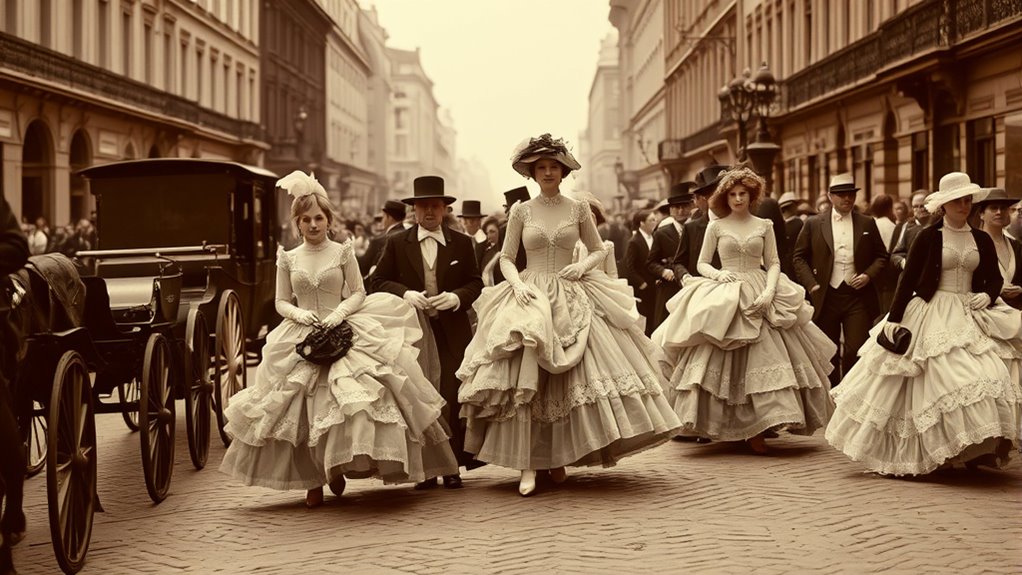

The crinoline skirt rose to fame in the mid-19th century as a symbol of Victorian elegance and social status, thanks to innovative textile techniques and manufacturing advances. It created a dramatic, bell-shaped silhouette that showcased wealth and femininity. However, by the late 1860s, changing fashion trends and practical concerns led to its decline. If you want to discover how this striking garment transformed fashion history, there’s more to explore.
Key Takeaways
- The crinoline rose to prominence in the mid-19th century, symbolizing Victorian fashion, social status, and technological innovation.
- Textile advances like steel hoops enabled the creation of lightweight, stiff structures that shaped the iconic bell silhouette.
- Its popularity reflected societal ideals of femininity, propriety, and wealth, with fashion magazines promoting elaborate styles.
- The crinoline declined in the late 1860s due to practicality issues, evolving fashion trends, and a preference for lighter, natural silhouettes.
- Today, it remains a symbol of Victorian ingenuity, illustrating how technological and cultural shifts influence fashion evolution.
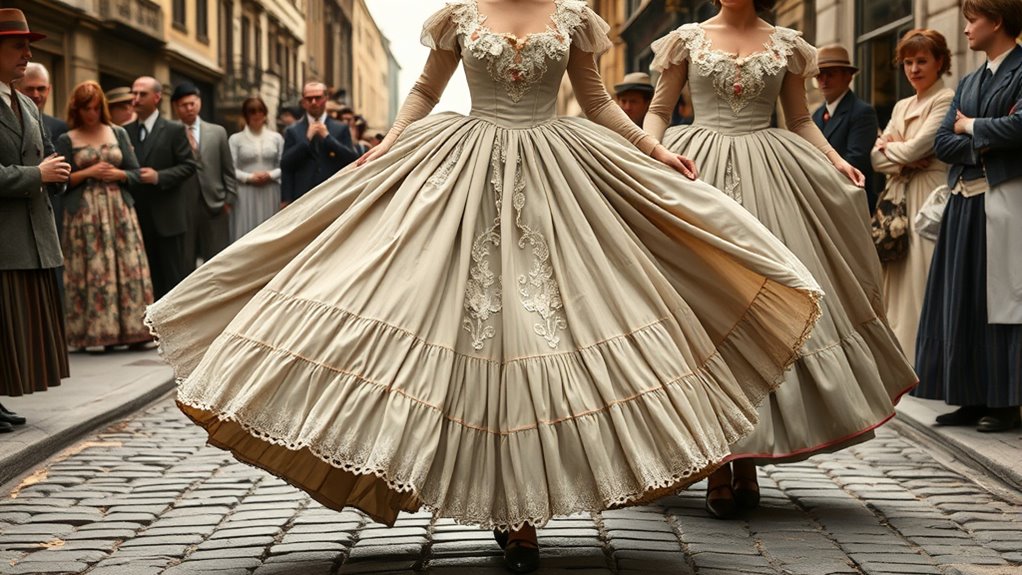
The crinoline skirt, once a symbol of Victorian fashion, rose to popularity in the mid-19th century before swiftly fading from mainstream style. As you explore this iconic garment, you’ll notice it marked a significant shift in historical fashion trends, reflecting both societal values and technological advances of the era. The rise of the crinoline wasn’t just about style; it showcased a period where silhouette and social status were intertwined, and fashion became a statement of modernity and elegance.
During this time, textile innovations played a vital role in making the crinoline feasible and popular. New manufacturing techniques allowed for the production of lightweight, stiff fabrics that could hold their shape while remaining comfortable enough for daily wear. Steel hoops and whalebone stays, combined with these innovative textiles, created the structured, bell-shaped silhouette that defined the skirt. These textile innovations made it possible for women to wear larger, more elaborate skirts without excessive weight or discomfort, revolutionizing how clothing adapted to changing aesthetic ideals. Additionally, the verification of manufacturer registration with the IRS and state regulators was essential to avoid scams and frauds, ensuring confidence in the purchase.
Textile innovations enabled lightweight, stiff fabrics and steel hoops, shaping the iconic bell silhouette of the crinoline skirt.
As you observe the evolution of fashion, you’ll see that the crinoline’s popularity was driven partly by a desire to emphasize a narrow waist and broad hips, embodying the Victorian ideals of femininity. The silhouette was dramatic, and the crinoline skirt allowed women to showcase a more voluminous and eye-catching shape. Its design was both a reflection of the social emphasis on propriety and an expression of wealth, as the more elaborate the skirt, the more it signaled high social standing. The introduction of mass production techniques further increased accessibility and variety in crinoline styles, making the trend more widespread across different social classes. The influence of fashion magazines also played a role in popularizing the look and inspiring variations.
However, despite its initial popularity, the crinoline’s prominence was relatively short-lived. By the late 1860s and early 1870s, changing fashion trends began favoring slimmer, less obstructive skirts. The bulky structure of the crinoline became impractical for everyday life, especially as women started to prioritize mobility and comfort. The advent of new textile techniques that favored lighter fabrics, along with a shift towards more natural and less exaggerated silhouettes, contributed to its decline. Moreover, the societal push towards practicality and the influence of fashionable minimalism signaled a move away from the ornate styles of earlier decades.
In essence, the crinoline skirt’s rise and fall encapsulate a period of rapid innovation and shifting tastes in fashion history. It highlights how technological advances in textiles and manufacturing can influence styles, shaping trends that reflect the social and cultural currents of the time. Today, the crinoline remains a fascinating symbol of Victorian ingenuity and aesthetic preference, even as it has been replaced by more streamlined and practical designs.
Frequently Asked Questions
How Did Crinoline Skirts Influence Women’s Social Status?
You see, crinoline skirts affected women’s social status by reinforcing gender roles and societal perceptions of elegance and wealth. Wearing such elaborate garments signaled that you belonged to a higher social class, showcasing your ability to afford fashionable, restrictive clothing. This fashion choice emphasized traditional femininity, shaping how society viewed women’s roles and reinforcing the idea that appearance was a key marker of social standing.
Were Crinoline Skirts Worn Worldwide or Only in Specific Regions?
Think of crinoline skirts as a fashion wave that only reached certain shores. They weren’t worn worldwide but found regional popularity, mainly in Europe and North America. Cultural variations influenced their adoption, so you’d see them in some areas more than others. You won’t find them as common in Asia or Africa, where local styles took precedence. So, their influence was regional, shaped by cultural and societal preferences.
What Materials Were Commonly Used to Make Crinolines?
You might be surprised to learn that crinolines were made from a variety of materials, reflecting historical textiles and fashion innovation. Commonly, steel or whalebone stays provided structure, while the outer fabric varied from cotton and silk to lightweight linen. These materials allowed for the dramatic, bell-shaped silhouette that defined the era. Your understanding of these textiles reveals how fashion innovation shaped the design and comfort of crinoline skirts.
How Did Fashion Designers Contribute to the Rise of Crinolines?
Fashion designers fueled the rise of crinolines, turning them into a fashion revolution. They embraced fabric innovation to create sturdier, lightweight materials, making crinolines more comfortable and practical. By shaping the silhouette evolution, designers emphasized a dramatic waist-to-hem volume that captured everyone’s attention. They pushed boundaries, transforming crinolines from simple undergarments to statement pieces, much like artists painting a bold new picture of femininity and style.
Are There Modern Fashion Trends Inspired by Crinoline Skirts?
You’ll notice that modern fashion often draws on historical inspiration, and crinoline skirts are no exception. Designers reinterpret these voluminous silhouettes with contemporary fabrics and styles, creating modern reinterpretations that blend vintage charm with current trends. Whether in runway shows or everyday wear, these influences celebrate the drama and elegance of the past while making them fresh and wearable today. It’s a timeless look that continues to inspire new fashion statements.
Conclusion
So, here you are, marveling at the crinoline’s grand rise and sudden fall. Ironically, what once symbolized elegance and innovation now just gathers dust in old closets. You might think fashion is forever changing, but sometimes, it’s just a cycle of fleeting trends. Today’s statement piece is tomorrow’s forgotten relic. Next time you see a crinoline, remember—what’s in vogue today might just be vintage tomorrow.