
The evolution of denim shows how it transformed from tough workwear to a fashion staple. You’ve seen it adapt through decades, embracing vintage styles and modern trends. Today, brands focus on sustainability—using organic, recycled, and eco-friendly fabrics—reflecting a shift toward mindful consumption. Vintage denim, with its unique character, celebrates craftsmanship and history. If you continue exploring, you’ll discover how denim remains a symbol of tradition, innovation, and responsible style for future generations.
Key Takeaways
- Denim originated as durable workwear and evolved into a versatile fashion staple over time.
- The shift toward sustainable fabrics like organic cotton and recycled fibers reflects environmental awareness.
- Vintage denim and retro styles from past decades are experiencing a revival, emphasizing authenticity and craftsmanship.
- Characteristics such as fading, distressing, and wear showcase denim’s history and unique character.
- Denim’s cultural significance now includes eco-consciousness, responsible consumption, and its role as a symbol of style and sustainability.
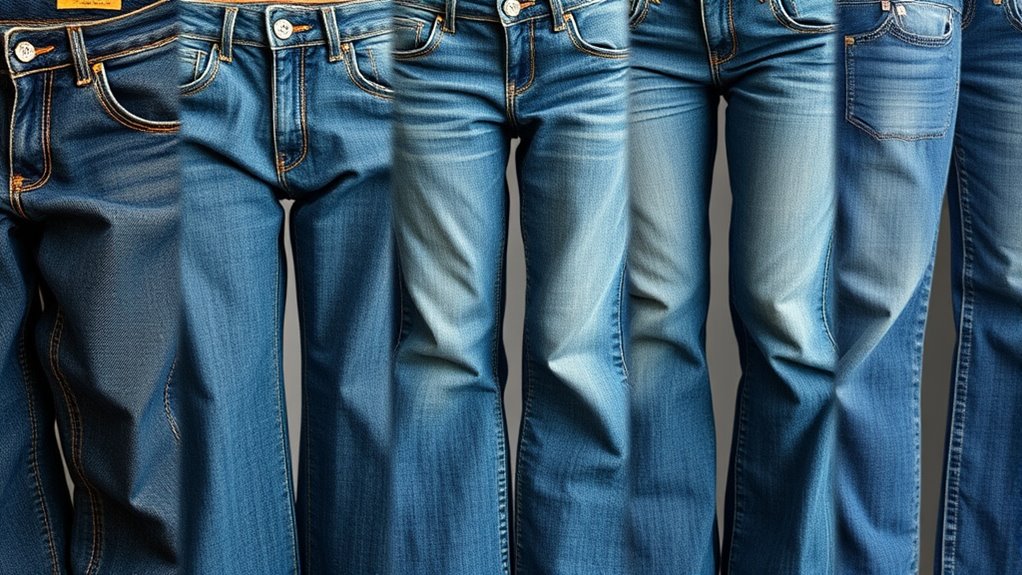
Denim has come a long way from its origins as sturdy workwear to become a versatile fashion staple. Today, it’s more than just durable fabric; it’s a symbol of style, sustainability, and cultural expression. As you explore the evolution of denim, you’ll notice how brands and consumers are increasingly prioritizing sustainable fabrics, which are reshaping the industry’s future. These eco-friendly materials, made from organic cotton, recycled fibers, or innovative hemp blends, reduce environmental impact and promote ethical manufacturing. This shift isn’t just about caring for the planet; it also influences fashion trends, encouraging you to choose jeans and jackets that align with your values. The focus on sustainable fabrics has sparked a vintage revival, too. Retro styles from the ’70s, ’80s, and ’90s are making a comeback, driven by a desire to embrace authenticity and reduce fast fashion waste. Vintage denim pieces, whether found in thrift stores or vintage boutiques, hold a unique charm that mass-produced items can’t replicate. They connect you to the past, carrying stories and craftsmanship that newer clothes often lack. This resurgence encourages you to reimagine your wardrobe with timeless pieces that stand the test of time both in style and durability. You might find yourself gravitating toward well-worn, authentic denim that has aged gracefully, showcasing fading, distressing, and character that only experience can bring. The vintage revival isn’t just about nostalgia; it’s about valuing quality over quantity and making more mindful choices. As you incorporate vintage denim into your wardrobe, you participate in a broader movement that champions sustainability and individual style. Whether it’s a pair of high-waisted jeans from the ’70s or a classic denim jacket from the ’80s, these pieces often embody better craftsmanship and more sustainable manufacturing practices than some fast fashion counterparts. Plus, by choosing vintage, you reduce waste and lessen the demand for new denim production, which is resource-intensive. This shift toward sustainable fabrics signals a shift in how you view fashion—not just as a fleeting trend but as a way to express your identity responsibly. Denim’s journey from rugged workwear to eco-conscious fashion icon underscores its adaptability and cultural significance. As you wear denim today, you’re part of a larger story that values innovation, tradition, and sustainability—ensuring this timeless fabric remains relevant for generations to come.
Frequently Asked Questions
How Did Denim Become a Symbol of Youth Culture?
You see, denim became a symbol of youth culture because it was adopted by denim icons and rebels who wanted to challenge societal norms. As they wore rugged jeans, they expressed individuality and nonconformity, making denim a powerful icon of youth rebellion. Over time, this rebellious image resonated with young people worldwide, transforming denim into a timeless symbol of freedom, attitude, and defiance.
What Are the Environmental Impacts of Denim Production?
You should know that denim production impacts the environment considerably. It consumes large amounts of water, leading to water pollution when untreated wastewater is released. Additionally, chemical use in dyeing and finishing processes can harm ecosystems and pose health risks. By choosing brands that prioritize sustainable practices, you can help reduce these environmental impacts, supporting cleaner water sources and less chemical waste in the environment.
How Has Denim Manufacturing Technology Advanced Over Time?
You see, denim manufacturing technology has advanced considerably, especially in fabric dyeing and automated tailoring. Modern dyeing processes now use eco-friendly methods that reduce water and chemical use, making production more sustainable. Automated tailoring speeds up the process, ensuring precision and consistency while minimizing waste. These innovations make denim production faster, cleaner, and more efficient, helping to meet growing demand while reducing environmental impacts.
Are There Sustainable Alternatives to Traditional Denim?
Yes, there are sustainable alternatives to traditional denim. You can choose jeans made from organic cotton, which reduces the use of harmful chemicals and water. Recycled fibers are also popular, as they repurpose old textiles, minimizing waste. By selecting these options, you contribute to environmental conservation and support eco-friendly fashion choices. Look for brands that prioritize sustainable materials to make a positive impact with your wardrobe.
How Do Different Global Cultures Influence Denim Styles?
You notice how different global cultures influence denim styles through cultural embroidery and regional dyeing techniques. For example, Indian artisans add intricate embroidery, while Japanese methods use unique dyeing processes like shibori. These cultural touches personalize denim, making it unique to each region. By incorporating such techniques, you can create diverse, expressive denim styles that honor cultural heritage and add depth to your wardrobe.
Conclusion
As you look at denim today, it’s clear how much it’s evolved from humble workwear—like your favorite jeans, still standing strong after all these years, just like the first Levi’s. You’ve seen how trends come and go, but denim remains timeless, much like a vintage vinyl record. So, next time you put on those jeans, remember, you’re part of a long, stylish history that’s still playing on, no need to bring your smartphone—some things never change.