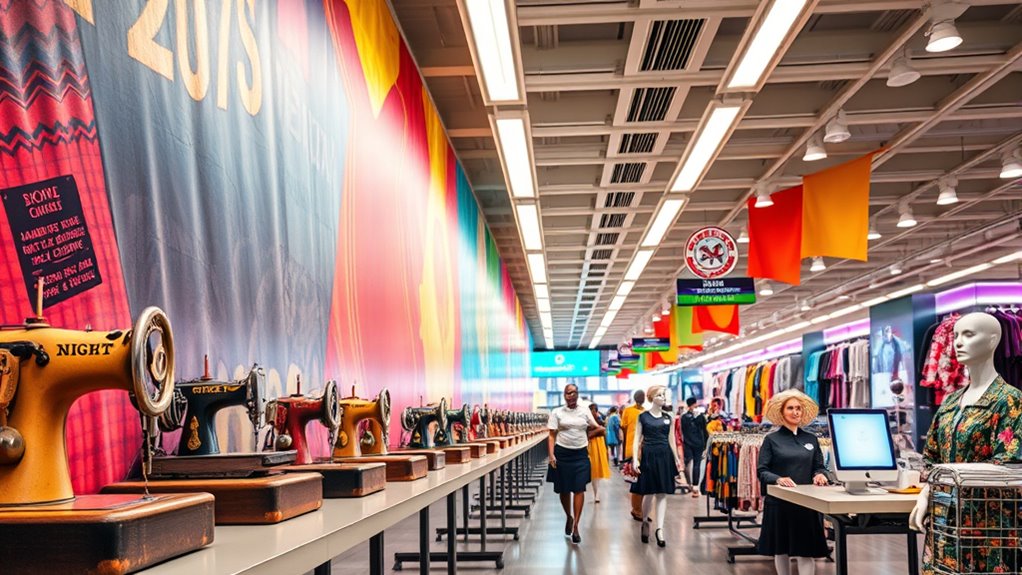

Fast fashion began in the 20th century as manufacturers and retailers sought ways to quickly produce trendy, low-cost clothing. Innovations in supply chain management let brands cut lead times from design to store shelves and respond swiftly to new trends. This shift made fashion more accessible and constantly changing, fueled by global networks and technological advances. By focusing on rapid production and affordability, the industry transformed how clothes are made and sold—stay tuned to learn more about this evolution.

Get your wardrobe favorites delivered free — and shop member deals
- Fast, free delivery on millions of items
- Access to Prime Big Deal Days deals on October 6–7
- Prime Video, Amazon Music and more included
Key Takeaways
- The 1960s-1980s saw the rise of mass production and global supplier networks, reducing costs and increasing clothing availability.
- Supply chain innovations enabled rapid response to fashion trends, transforming seasonal collections into weekly updates.
- The late 20th century introduced fast fashion brands that prioritized speed, affordability, and frequent new styles for consumers.
- Early efforts focused on cost-cutting, often at the expense of environmental and labor considerations.
- Recent decades have seen a push toward sustainable practices alongside ongoing industry acceleration.

Have you ever wondered how fashion became so instant and affordable? The answer lies in a combination of innovative supply chain strategies and a shift towards more sustainable practices. As the 20th century progressed, manufacturers and retailers sought new ways to meet consumer demand for the latest styles at the lowest prices. They revolutionized how clothing was produced and distributed, laying the groundwork for the fast fashion industry we see today. Supply chain innovations played a critical role, allowing companies to drastically cut lead times from design to store shelves. By streamlining production processes and establishing global networks of suppliers, brands could quickly respond to changing trends. This agility meant that new collections could be rolled out almost weekly, turning fashion into a constantly evolving cycle that consumers could access almost immediately after runway shows or celebrity sightings.
Alongside these advancements, the industry also began to adopt more sustainable practices, although often these efforts were driven more by cost-cutting than environmental concern. For example, some brands started using cheaper, less durable materials to meet the demand for low prices, which contributed to a cycle of rapid wear and disposal. However, in recent years, there’s been a growing awareness of the environmental impact of fast fashion, pushing companies to incorporate sustainable practices into their supply chains. This includes sourcing eco-friendly fabrics, reducing waste through innovative manufacturing techniques, and improving transparency to ensure fair labor practices. These initiatives aim to make fast fashion more responsible, even as the industry continues to prioritize speed and affordability. Additionally, advancements in global supply chain management have enabled brands to optimize inventory, reduce costs, and accelerate the speed at which new styles reach consumers.
Fast fashion is adopting sustainable practices like eco-friendly fabrics and fair labor transparency.
The rise of mass production also meant that fashion became less exclusive and more accessible. Retailers began to adopt the model of producing in large quantities, which lowered costs and increased availability. This shift was supported by innovations in logistics and inventory management, allowing brands to replenish popular items quickly and keep stores stocked with fresh styles. As a result, consumers gained the power to constantly update their wardrobes without breaking the bank. But this rapid turnover also meant that clothing was often designed without durability in mind, encouraging disposable fashion habits.
Despite the environmental and ethical questions that have emerged, the core drivers of the birth of fast fashion remain supply chain innovations and the pursuit of sustainable practices—albeit sometimes imperfectly. These elements continue to shape how clothing is designed, produced, and consumed, ensuring that the industry remains dynamic and ever-changing. You now understand how these developments have transformed fashion from a slow, artisanal craft into a global, fast-paced industry driven by technological advances and shifting societal values.
Frequently Asked Questions
How Did Technological Advances Influence Fast Fashion Development?
You see, technological advances drive fast fashion by enabling rapid production and quick design changes, making trends accessible instantly. Digital transformation allows you to react faster to consumer demands, while sustainable innovation helps reduce environmental impact. These innovations streamline supply chains and improve efficiency, so you get new styles faster and more affordably. As a result, technology fuels the growth of fast fashion, balancing speed with efforts toward sustainability.
What Role Did Consumer Demand Play in Shaping Fast Fashion Trends?
You drive fast fashion trends through your consumer behavior and shopping habits. As you seek affordable, trendy clothing, brands quickly respond to meet your demands, creating rapid turnover of styles. Your desire for new, inexpensive items pushes retailers to prioritize quick production cycles, fueling the fast fashion cycle. By constantly chasing the latest trends, you shape the industry’s focus on speed and affordability, making consumer demand a key force behind fast fashion’s growth.
How Did Global Economic Changes Impact Fast Fashion Industry Growth?
Did you know global trade increased by over 40% from 2000 to 2010? This economic shift boosted the fast fashion industry by making affordable clothing widely accessible. You see, as consumer spending grew due to cheaper goods, brands expanded rapidly through global trade networks. This allowed fast fashion to meet rising demand, keeping prices low and styles fresh, fueling industry growth and transforming how you shop for trendy, budget-friendly clothes worldwide.
What Environmental Effects Are Associated With the Rise of Fast Fashion?
As you explore fast fashion’s rise, you’ll see its environmental effects like increased textile waste and water pollution. The industry’s quick turnover leads to tons of discarded clothes, filling landfills and harming ecosystems. Plus, water pollution skyrockets from dyeing and treatment processes, contaminating water supplies. You can make a difference by choosing sustainable brands and reducing your consumption to help lessen these environmental impacts.
How Has Fast Fashion Affected Traditional Clothing Manufacturing Industries?
You might notice how fast fashion causes retail disruption, making traditional clothing industries struggle to keep up. As brands prioritize quick, cheap production, artisan craftsmanship declines, losing centuries-old skills. This shift pulls the rug from under small manufacturers and local artisans, replacing their detailed work with mass-produced garments. Your choices impact these industries, highlighting how fast fashion transforms not just what you wear, but the very foundation of traditional clothing craftsmanship.
Conclusion
So, as you see, fast fashion revolutionized how we shop and dress, turning runway trends into everyday wear overnight. But have you ever stopped to wonder what’s behind those quick turnaround times? It’s a whirlwind of manufacturing, marketing, and consumer demand that keeps you constantly craving the latest. Now, when you pick out your next outfit, ask yourself: are you just following the trend, or part of the story that’s shaping fashion’s future?
Fall Picks
fall essentials
As an affiliate, we earn on qualifying purchases.