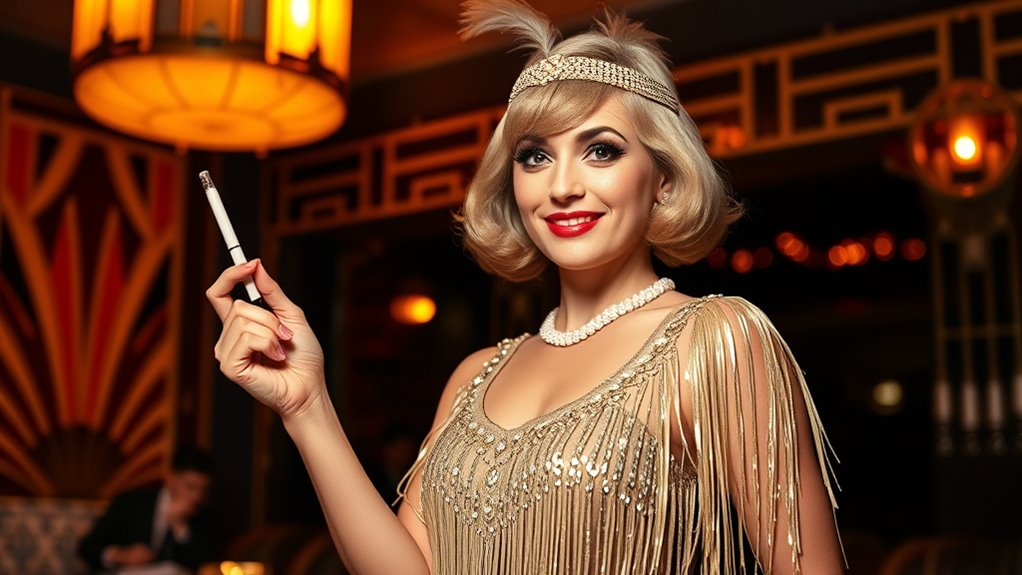

The Flapper Revolution during the Jazz Age changed how women expressed themselves through bold fashion choices like short skirts, bobbed hair, and striking makeup, signaling independence. It challenged societal norms by encouraging women to smoke, dance, and drink openly, all fueled by the feminist movement pushing for equality. This era marked a shift in traditional roles, promoting freedom and self-confidence—if you’d like to explore how this style still influences us today, keep exploring the details behind this cultural revolution.
Key Takeaways
- Flapper style featured short skirts, bobbed hair, and bold makeup, symbolizing independence and rebellion.
- Fashion choices challenged Victorian modesty, reflecting a shift toward personal freedom and self-expression.
- The style was influenced by societal shifts during the Jazz Age, Prohibition, and feminist movements.
- Flapper fashion and behavior openly defied traditional gender roles, promoting empowerment and social change.
- This revolutionary style left a lasting impact on modern notions of female independence and fashion.
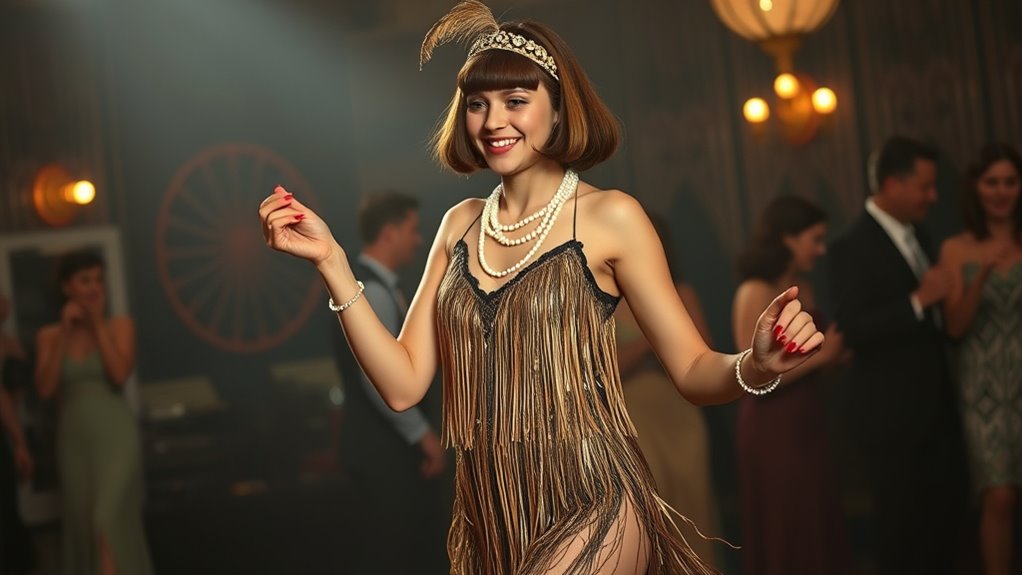
Have you ever wondered how a generation of young women transformed society’s expectations? The Flapper Revolution was more than just a fashion statement; it was a bold challenge to traditional norms. During the Jazz Age, women began to embrace independence, daring to express themselves in ways that previously seemed unthinkable. The influences of Prohibition impacts played a pivotal role here, as the ban on alcohol fostered secret gatherings and speakeasies where young women could let loose, dance freely, and socialize outside the confines of societal rules. These clandestine venues became symbols of rebellion, encouraging women to break away from Victorian modesty and embrace a more liberated lifestyle.
The Prohibition era fostered secret speakeasies where women embraced independence and rebellion.
At the same time, the feminist movement gained momentum, fueling the desire for gender equality and personal freedom. Women started to demand the right to vote, to work, and to make their own choices about their bodies and careers. The flappers embodied this spirit, shedding restrictive clothing and adopting a more relaxed, daring style that reflected their newfound independence. Short skirts, bobbed hair, and bold makeup weren’t just fashion trends—they signified a rejection of past constraints and a celebration of individual identity. You could say that the flapper’s style was a visual declaration that women were no longer content to be passive bystanders in society.
The impact of the Flapper Revolution extended beyond fashion and nightlife. It reshaped societal expectations about women’s roles, pushing boundaries in the workplace, in politics, and in social interactions. Young women frequently challenged the double standards that had long dictated their behavior, openly smoking, drinking, and dancing in ways that defied conventional morality. This defiance helped propel the feminist movement forward, making it clear that women wanted more than just equality—they demanded a complete overhaul of how they were perceived and treated. Additionally, the era saw a rise in women’s empowerment that encouraged women to pursue new opportunities and challenge traditional roles.
In essence, the flapper epitomized a cultural shift that questioned and rejected traditional values. You might notice how this period’s influence persists today, as notions of female independence and self-expression continue to evolve. Additionally, the movement was closely linked to the broader societal changes of the time, including shifts in lifestyle and social norms, which empowered women to challenge longstanding expectations. The Flapper Revolution didn’t happen in isolation; it was intertwined with the Prohibition impacts and the feminist movement, both of which contributed to shaping a new era where women could truly be themselves. This transformation marked a pivotal moment in history, one that challenged societal expectations and paved the way for future generations to pursue freedom and equality with confidence.
Frequently Asked Questions
How Did Flapper Fashion Influence Modern Everyday Clothing?
You see how flapper fashion influences modern clothing today? It popularized loose, comfortable styles that embrace freedom of movement, inspiring casual wear. You also notice accessory trends like headbands and layered jewelry, echoing the flapper’s flair. Today, sustainable fabrics are increasingly used, reflecting the style’s effortless yet stylish vibe. This revolution changed how you dress, blending comfort, elegance, and a daring attitude that still resonates in your wardrobe.
What Were the Social Impacts of the Flapper Movement?
You might be surprised to learn that the flapper movement helped reshape society, with nearly 60% of women voting after women’s suffrage. By challenging traditional roles, flappers inspired prohibition protests against alcohol and promoted gender equality. This social shift empowered women to express themselves freely, fueling ongoing debates about morality and rights, and laying the groundwork for future gender progress. Your awareness of these impacts shows how cultural change influences societal structures.
How Did Jazz Music Shape Flapper Culture?
You see, jazz music deeply shaped flapper culture by encouraging spontaneous swing dancing and jazz improvisation. It fueled their desire for freedom, self-expression, and breaking traditional norms. As you dance to lively jazz tunes, you embody the flappers’ bold spirit, embracing new social freedoms. Jazz’s energetic rhythms and improvisational style inspired their fashion, attitude, and nightlife, making it a essential part of their vibrant, rebellious identity during the Jazz Age.
Were Flappers Primarily From Urban or Rural Areas?
Imagine a vibrant city skyline—this is where flappers thrived, highlighting their urban origins. While some had rural roots, most flappers came from urban areas, drawn to the lively social scene. Urban environments offered the freedom and excitement that defined their rebellious spirit. You’d see them dancing in speakeasies, embracing modernity, making city life the perfect stage for their bold, new style and attitude.
How Did Flappers Challenge Traditional Gender Roles?
You see, flappers challenged traditional gender roles by embracing dance freedom and adopting a rebellious attitude. They rejected conservative expectations, wearing shorter skirts and bobbed hair, which symbolized independence. Their lively dance styles and bold behavior defied societal norms, showing that women could be expressive and autonomous. In doing so, they redefined femininity, inspiring others to question established standards and paving the way for future gender equality.
Conclusion
As you embrace the spirit of the flapper revolution, you realize it’s more than just a fashion trend—it’s a bold statement of independence and change. Like a vintage Chanel suit, the movement remains timeless, inspiring generations to challenge conventions. So, next time you see a modern swing dance or daring dress, remember, the Jazz Age’s rebellious flair still lives on, turning every era into its own kind of fabulous. After all, style is forever, darling.