During the golden age of haute couture from 1947 to 1960, you witness a period where craftsmanship, innovation, and celebrity influence soared. Designers like Dior, Chanel, and Balenciaga pushed creative boundaries with luxurious fabrics and sculptural designs. Celebrities became style icons, elevating couture to symbols of glamour and exclusivity. This era’s blend of artistry and fame set lasting standards in fashion. Continue exploring to uncover how this influential time shaped modern style and culture.
Key Takeaways
- The period marked the peak of craftsmanship, creativity, and fabric innovation in haute couture.
- Designers like Dior, Chanel, and Balenciaga led groundbreaking, artistic collections.
- Celebrity endorsements and media coverage elevated couture’s status and glamour.
- Luxurious fabrics and inventive techniques enabled sculptural, dramatic garments.
- The era’s craftsmanship and celebrity culture cemented haute couture’s cultural legacy.
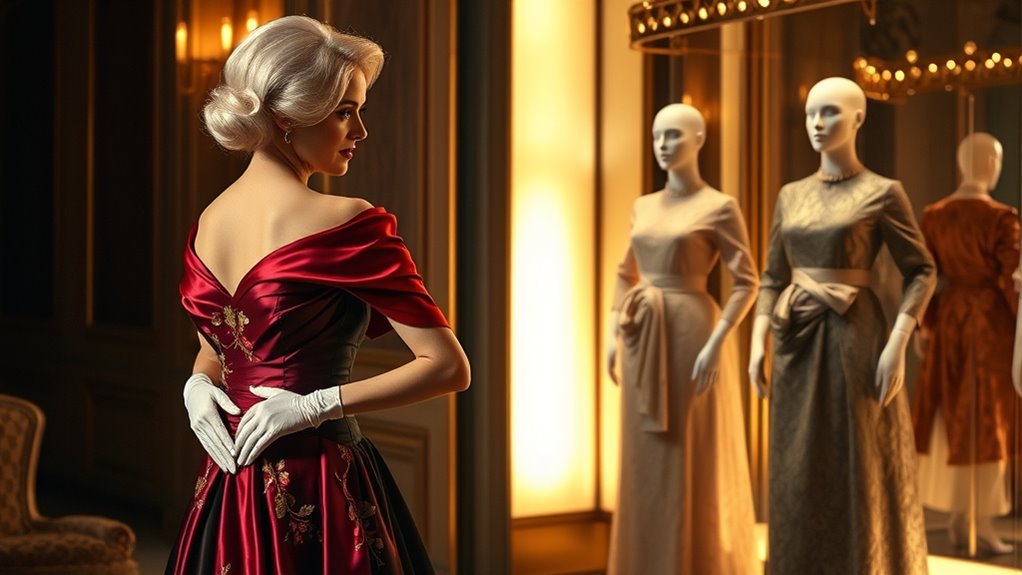
Once considered the pinnacle of fashion excellence, haute couture experienced its golden age during the mid-20th century when designers like Christian Dior, Coco Chanel, and Balenciaga pushed the boundaries of craftsmanship and creativity. During this era, fabric innovation became a essential element, transforming how designers approached their craft. They experimented with new textiles, integrating luxurious materials, innovative weaves, and inventive techniques to create stunning, sculptural garments. These advancements not only elevated the quality and look of haute couture but also allowed designers to craft more intricate and dramatic designs. You might notice how fabrics like taffeta, silk organza, and brocade took center stage, offering new textures and finishes that set garments apart. This relentless pursuit of fabric innovation meant that each piece was not just clothing but a work of art, meticulously constructed to showcase both technical mastery and aesthetic appeal.
Celebrity influence also played a fundamental role in shaping haute couture’s golden age. As movie stars, singers, and socialites became icons, their fashion choices elevated designers to new heights of popularity. When a celebrity stepped out in a Dior gown or a Balenciaga creation, it instantly became a must-have for the fashion-conscious. You could see how their endorsement turned couture into a symbol of status and glamour, fueling demand for custom-made pieces. Their influence extended beyond the red carpet—fashion magazines and media coverage amplified their impact, making haute couture a reflection of aspirational lifestyle. You, as a fashion enthusiast, would have watched how these celebrities didn’t just wear clothes; they embodied the artistry and innovation of the designers, inspiring the public and elevating fashion to new cultural heights.
This symbiotic relationship between celebrity influence and fabric innovation helped haute couture solidify its reputation as the ultimate expression of luxury and creativity. Designers tailored their work to impress and captivate, pushing fabric technology forward while also aligning their collections with the tastes of the stars. The glamour and exclusivity of couture during this period made it accessible only to a select few, but it set the standards for future fashion evolution. You might find it fascinating how these elements combined to create a golden age where craftsmanship, innovation, and celebrity culture intertwined, making haute couture not just clothing but an enduring symbol of style and artistry. This era’s legacy continues to influence fashion today, reminding us how innovation and influence shape the most extraordinary moments in fashion history.
Frequently Asked Questions
Who Were the Most Influential Haute Couture Designers of That Era?
During this era, you’d recognize iconic designers like Christian Dior, who revolutionized fashion with his New Look, emphasizing femininity and luxury. Coco Chanel’s timeless elegance also influenced the scene, while Balenciaga’s innovative shapes set new standards. These designers created signature styles that defined the period’s glamour. Their influence still shapes haute couture today, making them some of the most influential figures in fashion history.
How Did World War II Impact Haute Couture Production?
Can you imagine how fashion rebounded after chaos? World War II halted haute couture production, but as post-war economic recovery gained momentum, designers embraced a resurgence of craftsmanship. You see, fabric shortages and rationing challenged creators, yet they innovated with new techniques. This revival fueled the golden age of haute couture, turning devastation into elegance and sparking a new era of luxurious, meticulously crafted garments.
What Materials Were Predominantly Used During This Period?
During this period, you primarily used luxurious fabrics like silk, velvet, and fine wool for haute couture. You also explored innovative textiles such as taffeta and satin, which added elegance and structure to designs. These materials allowed you to create opulent, intricate garments that defined the era’s glamour. The focus on quality and innovation helped elevate haute couture, making each piece a symbol of luxury and craftsmanship.
How Did Haute Couture Influence Mainstream Fashion?
You see, haute couture influenced mainstream fashion by setting trends that everyone wanted to follow. Your favorite brands adopted luxury branding to elevate their status, making high-end style more desirable. Celebrity endorsements played a key role, bringing couture designs into the spotlight and inspiring mass-market collections. This synergy between exclusive craftsmanship and popular culture helped shape everyday fashion, making high fashion accessible and aspirational for a wider audience.
Were There Any Notable Fashion Innovations Introduced Between 1947-1960?
Imagine a painter boldly strokes new colors onto a canvas, transforming the scene. Between 1947-1960, fashion designers did just that with innovative fabric treatments and new silhouette techniques. They redefined elegance, blending structure with fluidity, and introduced bold shapes that revolutionized style. These innovations became the brushstrokes shaping modern fashion, inspiring both haute couture and mainstream trends—making this era a true masterpiece of creative evolution.
Conclusion
Remember, fashion is fleeting, but true elegance endures. During haute couture’s golden age from 1947 to 1960, you witnessed craftsmanship and creativity reach new heights, shaping timeless style. As designers pushed boundaries, they proved that innovation and artistry can define an era. Embrace this legacy, knowing that in fashion, as in life, it’s the details that make all the difference. Cherish the beauty of that golden age—it’s a reminder to always cherish true craftsmanship.