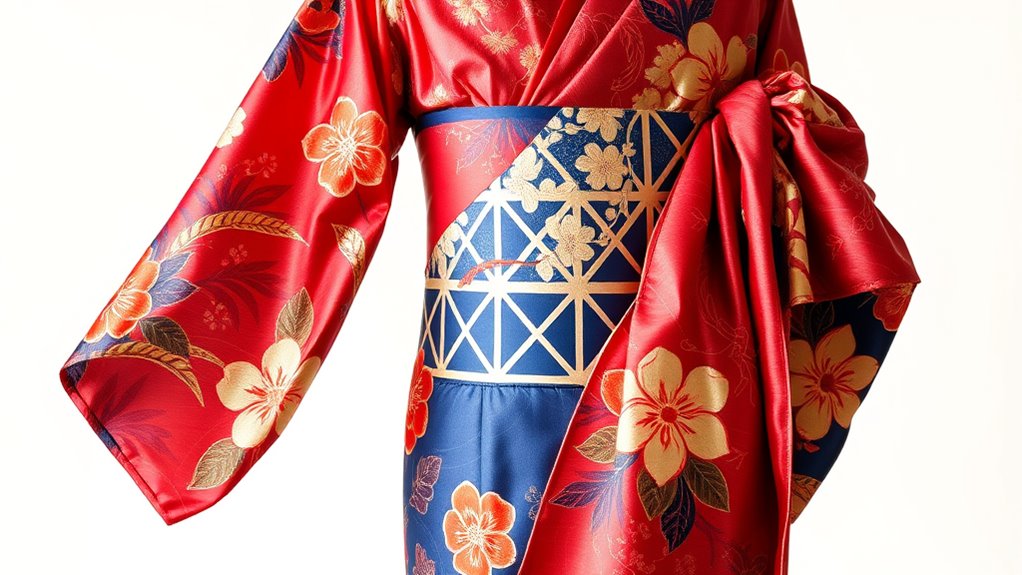

Traditional Japanese kimonos deeply influence modern design by inspiring elements like wide sleeves, obi-inspired belts, and layered fabrics. You’ll notice contemporary styles blend traditional craftsmanship with bold, minimalist, or avant-garde looks. Designers preserve the symbolism and detailed patterns, reinterpreting them for today’s fashion while maintaining cultural significance. This ongoing fusion of tradition and innovation keeps the kimono’s timeless appeal alive. If you explore further, you’ll discover how these influences continue shaping global fashion trends.
Key Takeaways
- Modern fashion incorporates kimono elements like wide sleeves, obi-inspired belts, and layered fabrics for aesthetic and cultural appeal.
- Designers reinterpret traditional patterns and symbolism to create contemporary, minimalist, or avant-garde fashion statements.
- Traditional stitching, dyeing techniques, and craftsmanship influence contemporary textile artistry and sustainable design practices.
- Kimono-inspired silhouettes and motifs continue to shape global trends, blending heritage with innovative fashion concepts.
- Preservation of traditional techniques ensures cultural significance remains integral to modern designs, fostering artistic continuity.
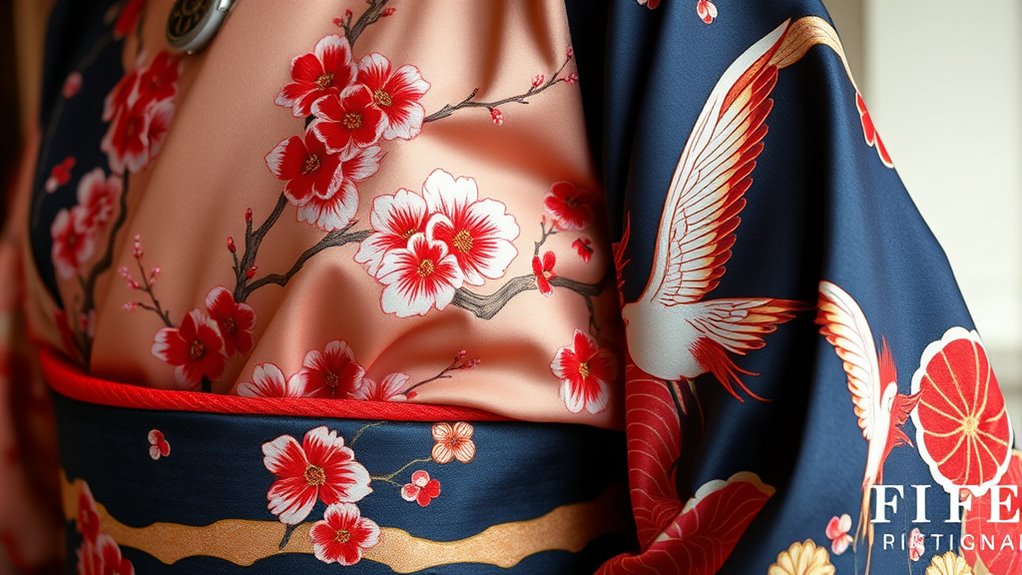
Have you ever wondered what makes the traditional Japanese kimono so iconic? It’s not just the flowing fabric or vibrant patterns; it’s the intricate Kimono craftsmanship that transforms simple cloth into a masterpiece. Every kimono is carefully crafted by skilled artisans who dedicate hours to stitching, dyeing, and assembling each piece. This meticulous process guarantees that the kimono isn’t just clothing but a work of art, reflecting centuries of tradition and cultural pride. From selecting the finest silk to applying traditional dyeing techniques, the craftsmanship involved is a testament to Japan’s rich textile history. It’s this attention to detail that has helped the kimono endure as a symbol of beauty and artistry through generations. Additionally, the cultural significance embedded in each design deepens its importance beyond mere aesthetics.
Beyond its craftsmanship, the kimono carries deep Kimono symbolism that imbues every design with meaning. You might notice that colors, patterns, and accessories aren’t chosen at random; they’re carefully selected to convey messages about the wearer’s social status, age, or even the season. For example, vibrant floral motifs often symbolize renewal and youth, while subdued tones can indicate formality or maturity. The placement of patterns can also have symbolic significance, representing wishes for happiness, longevity, or good fortune. This layered symbolism creates a garment that’s not only visually striking but also rich in cultural context. It’s as if each kimono tells a story, connecting the wearer to a long history of tradition and values. Additionally, the integration of traditional techniques into modern fashion highlights how the kimono’s influence persists today.
As you observe modern design influenced by the kimono, you’ll see how this traditional attire continues to inspire contemporary fashion. Designers borrow elements like wide sleeves, obi-inspired belts, and layered fabrics, blending them seamlessly into everyday wear. The kimono’s influence appears in sleek, minimalist silhouettes as well as bold, avant-garde statements. These modern adaptations retain the essence of Kimono craftsmanship, emphasizing quality and detail, while reimagining traditional patterns with a contemporary twist. The symbolism persists, too, often reinterpreted to suit modern aesthetics but still rooted in the same cultural significance. This blending of old and new keeps the spirit of the kimono alive, reminding you of Japan’s deep respect for tradition even as it embraces innovation. It’s fascinating to see how the traditional techniques continue to shape current fashion trends and inspire designers worldwide.
Ultimately, the kimono’s influence on modern design highlights its timeless appeal. It’s a perfect example of how craftsmanship and symbolism can transcend time, inspiring new generations to appreciate beauty, meaning, and artistry in fashion. When you see a modern piece inspired by the kimono, you’re witnessing a centuries-old tradition beautifully woven into today’s creative landscape.
Frequently Asked Questions
How Has Kimono Fabric Technology Evolved Over Time?
You’ll find that kimono fabric technology has evolved through fabric innovation and dyeing techniques. Modern methods incorporate synthetic fibers, making fabrics more durable and easier to care for. Advanced dyeing techniques, like shibori and yuzen, now use more precise, vibrant colors, while digital printing offers intricate patterns. This evolution enhances traditional aesthetics with contemporary efficiency, allowing kimono-inspired designs to influence modern fashion while preserving cultural heritage.
Are Kimonos Still Worn for Formal Occasions Today?
When it rains, it pours, and yes, kimonos are still worn for formal occasions today. You follow kimono etiquette carefully, choosing traditional styles or modern variants with sleek accessories. While daily wear has faded, donning a kimono for weddings or ceremonies keeps the cultural spirit alive. Modern kimono accessories add a contemporary touch, blending tradition with current fashion, ensuring the kimono remains a symbol of elegance and respect.
What Are the Cost Differences Between Traditional and Modern Kimono Styles?
When comparing traditional and modern kimono styles, you’ll notice a notable cost difference. Traditional kimonos often have a higher price range due to their intricate craftsmanship, expensive fabrics, and detailed designs. Modern styles tend to be more affordable, with a wider price range that includes simpler, mass-produced options. This cost comparison helps you choose a kimono that fits your budget while still capturing the elegant, cultural essence.
How Do Different Regional Kimono Styles Influence Modern Fashion?
Imagine vibrant fabrics flowing with regional variations, each telling a story through colors and patterns. You see how cultural influences shape modern fashion, blending traditional kimono styles with contemporary trends. These regional variations inspire designers to incorporate unique motifs, colors, and cuts, creating a rich tapestry of global fashion. By embracing these cultural influences, modern styles become more diverse and meaningful, reflecting Japan’s deep heritage in every thread and stitch.
Are There Sustainable Practices in Kimono Manufacturing Today?
You’ll find that modern kimono manufacturing increasingly adopts sustainable practices, like using eco-friendly textiles and sustainable dyeing methods. These efforts reduce environmental impact by minimizing chemical use and waste. Designers and producers are embracing these techniques to promote eco-conscious fashion, ensuring kimonos stay beautiful without harming the planet. By choosing kimonos made with sustainable dyeing and eco-friendly textiles, you support environmentally responsible craftsmanship and help preserve traditional artistry for future generations.
Conclusion
As you explore the influence of traditional Japanese kimono on modern design, you realize it’s like a timeless river flowing through fashion’s landscape. The kimono’s intricate patterns and elegant lines continue to inspire contemporary styles, weaving history into today’s trends. By embracing this cultural treasure, you keep its spirit alive, like a gentle current guiding your creative journey. So, let the kimono’s legacy be a steady compass in your design voyage, ever flowing and inspiring.