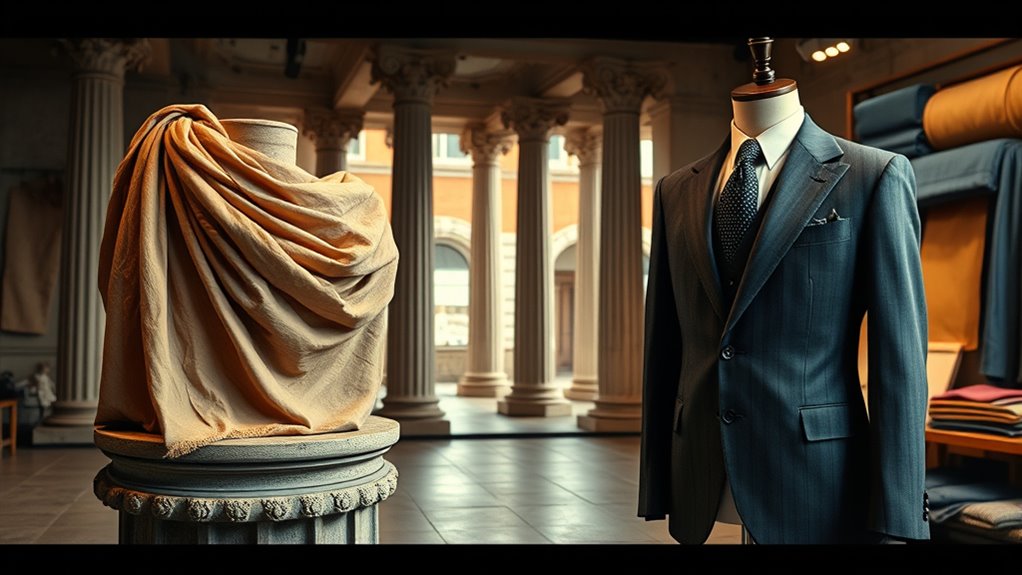

Over the past 2,000 years, men’s fashion has evolved from simple tunics, to armor that showcased strength and status, to elaborate Renaissance styles like ruffs that signified wealth and artistry. Armor influenced clothing details, blending function with fashion, while technological advances now inspire modern materials. This journey highlights how style reflects society’s values, power, and identity over centuries. Stay with us to uncover how these shifts shaped today’s tailored modern menswear.
Key Takeaways
- Men’s clothing evolved from simple tunics and togas in ancient times to elaborate Renaissance doublets and ruffs.
- Armor design influenced fashion, with ornate and functional elements shaping men’s attire across centuries.
- The Renaissance introduced structured, decorative garments like ruffs, symbolizing wealth and social status.
- Fashion shifted from purely functional to expressive, reflecting societal values, technological advances, and cultural trends.
- Modern menswear integrates historical influences, combining traditional craftsmanship with innovative materials for tailored, stylish clothing.
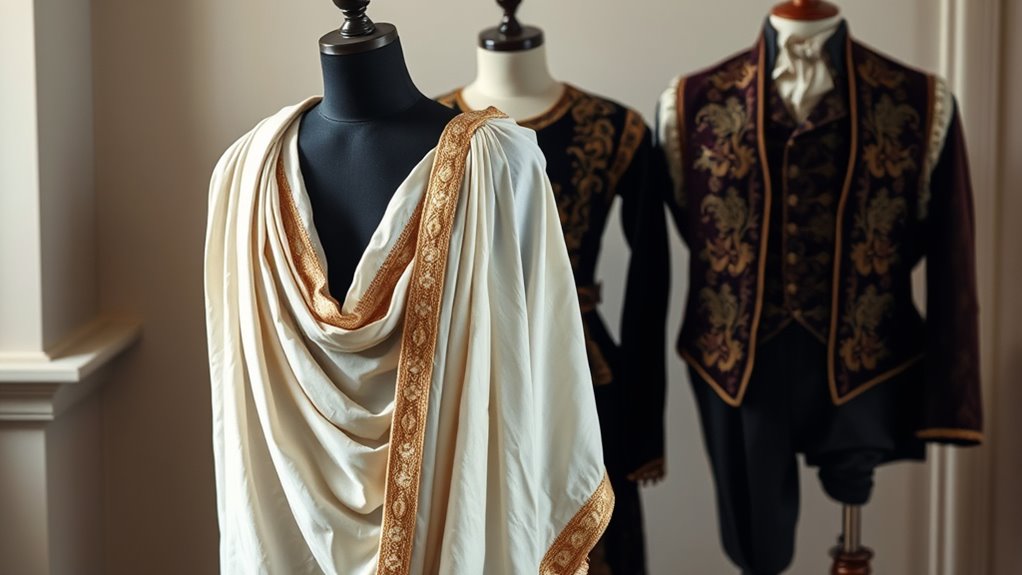
Have you ever wondered how men’s fashion has evolved over the centuries? It’s a fascinating journey that reflects cultural shifts, technological advances, and social changes. In ancient times, men wore simple tunics and draped garments, but the concept of armor played a vital role in both protection and status. Ancient armor wasn’t just functional; it became a symbol of power and prestige. Metal chest plates, chainmail, and helmets protected warriors in battle, but they also signified strength and authority to onlookers. Over time, these pieces became more ornate, integrating intricate designs and embellishments that showcased craftsmanship. While armor was primarily utilitarian, its influence trickled into everyday fashion, inspiring decorative elements in clothing and accessories. This blend of function and fashion persisted for centuries, highlighting how clothing often mirrored societal values and military prowess. Interestingly, modern innovations like innovative materials have continued to influence menswear design, blending tradition with cutting-edge technology.
Fast forward to the Renaissance period, where men’s fashion took a dramatic turn towards elegance and display. The Renaissance ruffs stand out as a vivid example of this era’s style. These elaborate, starched collars encircled the neck, sometimes reaching impressive widths, and became a symbol of wealth and sophistication. They weren’t just practical; they were a fashion statement, often made from fine linen or lace, meticulously starched to maintain their shape. Men of status wore ruffs to demonstrate their wealth, as the maintenance and fabric choice signaled social standing. The ruffs also reflected the broader Renaissance obsession with art, beauty, and display. During this period, clothing became more structured, with doublets, padded sleeves, and ornate embellishments that echoed the artistic flourish of the age. The ruffs encapsulated the era’s love for detail and grandeur, transforming everyday attire into a statement of identity and class.
Frequently Asked Questions
How Did Menswear Influence Social Hierarchy Throughout History?
You see that menswear has long shaped social hierarchy by reinforcing social class distinctions and gender norms. Clothing choices often signaled your status, from robes for elites to simpler garments for common folk. Over time, fashion reflected societal roles, with formal attire denoting power and influence. By controlling appearance, societies used menswear to communicate rank and expectations, shaping social interactions and maintaining hierarchies throughout history.
What Materials Were Most Popular in Ancient Menswear?
Ever wonder what materials men favored in ancient times? You’d find linen, wool, and silk were most popular, thanks to fabric innovations and dyeing techniques that made them vibrant and durable. Linen, lightweight and breathable, suited warmer climates, while wool provided warmth. Silk, rare and luxurious, signified wealth. These materials shaped not just clothing but social status, showcasing how fabric choices reflected the era’s technological and cultural advances.
How Did Military Uniforms Shape Civilian Menswear Trends?
Military influence profoundly shaped civilian menswear trends through uniform symbolism. You’d notice that military styles, like structured jackets and functional designs, often filter into everyday fashion. As soldiers’ uniforms became stylish and practical, civilians adopted these elements, making them symbols of discipline and authority. This shift reflects how military influence not only dictated practical clothing but also shaped societal perceptions of masculinity and authority in civilian attire.
Were There Regional Differences in Menswear Evolution?
You’ll notice regional styles and cultural influences greatly shaped menswear evolution. Different areas, like Europe, Asia, and the Middle East, developed unique clothing traditions reflecting their climates, customs, and histories. These differences influenced fabric choices, cuts, and accessories, creating a diverse global menswear landscape. So, regional variations aren’t just about aesthetics—they’re a reflection of cultural identity, history, and local resources, making each style distinct and meaningful.
How Have Technological Advances Affected Menswear Design?
Technological advances have transformed menswear design by enabling fabric innovation and improved manufacturing techniques. You now benefit from more comfortable, durable, and breathable fabrics thanks to new textiles and finishing processes. Modern manufacturing speeds up production, allowing for custom fits and intricate details that weren’t possible before. These innovations make menswear more functional, stylish, and accessible, shaping how you choose and wear your clothing every day.
Conclusion
As you’ve journeyed through two millennia of menswear, you’ve seen it evolve like a river carving new paths through ancient landscapes. From the grandeur of togas to the sleek lines of modern tailoring, each stitch and fabric tells a story of culture, class, and identity. Clothing becomes your armor and expression, a living tapestry woven with history’s threads. Embrace this rich legacy, knowing that every outfit you wear continues the timeless dance of style and self-discovery.