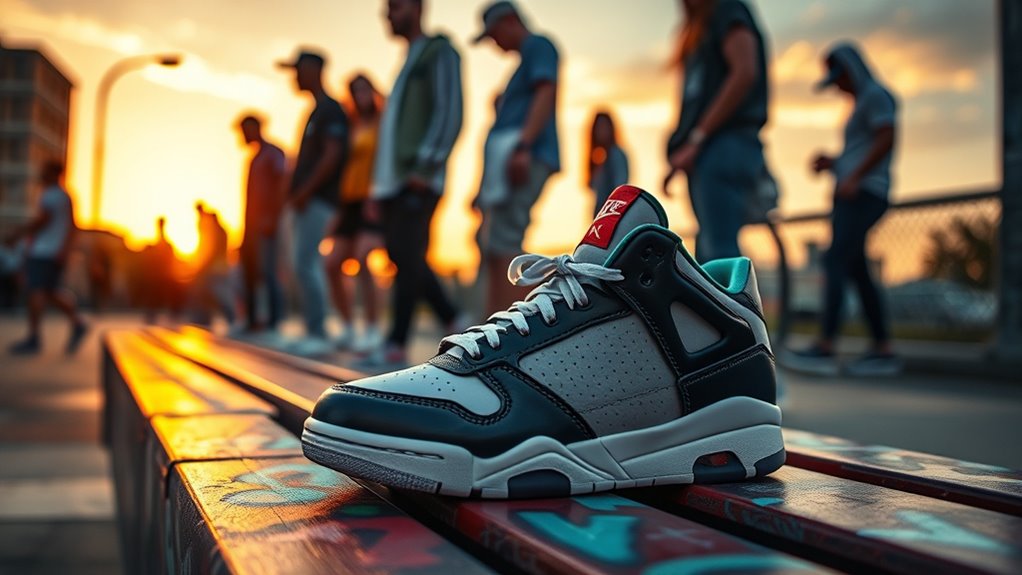

Sneaker culture has evolved from practical sportswear into symbols of identity, status, and style. You’ll notice collaborations with artists, celebrities, and designers create limited-edition releases that boost their exclusivity and desirability. Collectors see sneakers as modern art, connecting through shared passion and storytelling. Preserving rare and vintage pairs shows appreciation for craftsmanship and history. If you want to discover how sneakers became cultural icons, keep exploring the story behind this fascinating shift.
Key Takeaways
- Sneakers evolved from functional athletic gear to symbols of personal identity, status, and cultural expression.
- Collaborations with designers and celebrities create exclusive releases that boost sneaker hype and desirability.
- Limited-edition sneakers enhance their cultural value, fostering community and collector enthusiasm.
- Sneaker collecting is now seen as a form of modern art, reflecting craftsmanship and cultural storytelling.
- Preservation of rare and vintage sneakers maintains their cultural significance and monetary value.

Have you ever wondered why sneakers have become more than just athletic gear? The answer lies in how the culture around sneakers has evolved, transforming them into symbols of identity, status, and style. Today, sneaker collaborations play a significant role in this shift. When brands team up with designers, artists, or celebrities, they create limited-edition releases that generate buzz and exclusivity. These collaborations often bring fresh ideas and new aesthetics to the table, making sneakers more than just footwear—they become collectible icons. As a result, sneaker enthusiasts eagerly anticipate these drops, lining up for hours or even days to secure a pair. The hype around sneaker collaborations fuels a sense of community and shared passion, turning sneaker collecting into a form of modern art. Additionally, the limited-edition nature of many sneaker releases drives demand and elevates their status within popular culture.
Along with this excitement, sneaker preservation has emerged as a vital aspect of sneaker culture. People who invest in high-quality or rare sneakers understand the importance of maintaining their footwear’s condition. Preserving sneakers isn’t just about keeping them clean; it’s about protecting the value of a prized possession. Many sneakerheads go to great lengths—using special cleaning products, storage techniques, or even custom cases—to guarantee their sneakers stay pristine. This focus on preservation underscores the shift from simply wearing sneakers to cherishing them as collectible assets. It also reflects a broader appreciation for craftsmanship and history, especially when vintage or limited-edition pairs are involved. By preserving sneakers, enthusiasts acknowledge their cultural significance and the stories behind each design.
Frequently Asked Questions
How Did Sneaker Culture Originate in Different Countries?
You might find that sneaker origins vary across countries, shaped by local sports, fashion, and youth culture. In the US, basketball and athletic brands sparked sneaker trends, while Japan embraced streetwear influences. European countries blended sneaker style with luxury fashion, creating unique international sneaker trends. You see how each nation’s culture and sports scene influence sneaker popularity, turning simple footwear into global status symbols and fashion statements.
What Are the Most Valuable Vintage Sneakers Ever Sold?
You’ll be amazed to know that the most valuable vintage sneakers sold for over $1.8 million, showcasing their incredible collectible value. In the resale market, rare models like the Nike Air Yeezy 1 “Grammy” sold for $1.8 million, highlighting how sought-after these sneakers are. Their exclusivity and history drive high prices, making vintage sneakers a lucrative investment for collectors and enthusiasts alike.
How Do Sneaker Collaborations Influence Fashion Trends?
Sneaker collaborations markedly influence fashion trends by creating limited edition releases that generate hype and exclusivity. When you see popular brands teaming up with celebrities or designers, it sparks a desire to own unique pieces, shaping streetwear and high fashion alike. These collaborations often set new style standards, encouraging others to follow suit, and they fuel consumer excitement through limited availability, making sneaker culture more dynamic and trend-driven.
What Are the Environmental Impacts of Sneaker Production?
You might think sneaker production is eco-friendly, but it isn’t. The environmental impacts include high manufacturing emissions and waste. However, using sustainable materials can reduce this footprint. By choosing sneakers made with eco-conscious practices, you help lessen pollution and conserve resources. Your choices matter—opting for sustainable options can make a big difference in fighting climate change and promoting a greener sneaker industry.
How Do Sneaker Communities Organize and Communicate Globally?
You can organize and communicate with sneaker communities globally through online forums and social media platforms. These spaces let you share collections, discuss sneaker releases, and plan meetups. You can join groups, follow influencers, and participate in conversations instantly. By engaging with others worldwide, you become part of a vibrant, interconnected community that celebrates sneaker culture, making it easy to stay updated and connect with fellow enthusiasts wherever you are.
Conclusion
As you step back and reflect, you realize that sneaker culture isn’t just about shoes—it’s a vibrant dance of identity and expression. It’s like a whispered secret shared between friends, quietly shaping who you are without shouting for attention. So, next time you lace up, remember you’re part of a subtle, ever-evolving story—one that quietly elevates your style and connects you to a global conversation, all without missing a beat.