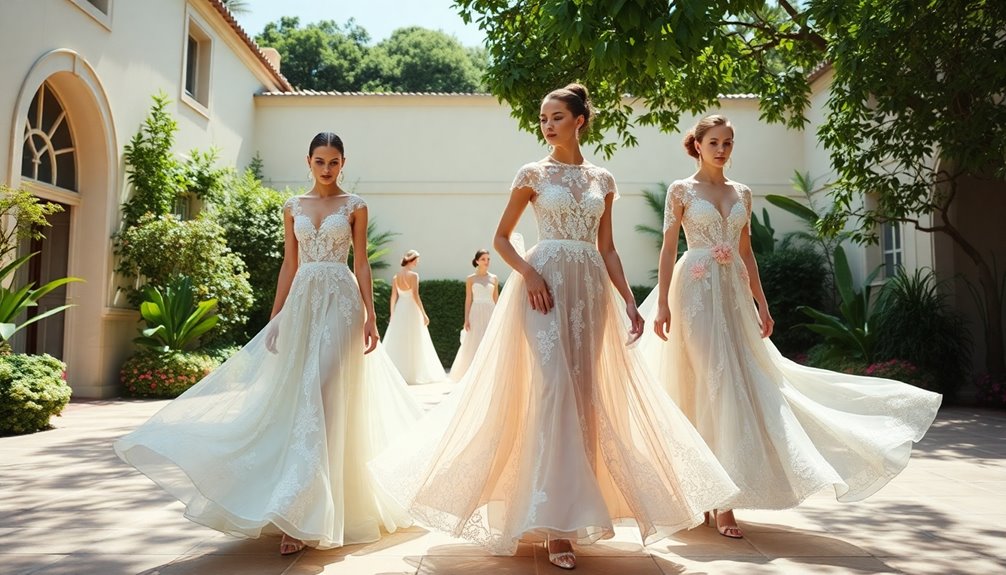
In couture archives, dresses are preserved for decades using careful techniques and high-tech storage environments. You’ll see specialized methods stabilize fabrics, beads, and delicate details, preventing deterioration. Climate control and humidity regulation protect the garments from environmental threats like mold and fading. Experts document, photograph, and monitor each piece to keep it as close to the original as possible. If you want to uncover more about how these timeless pieces stay preserved, keep exploring the fascinating world of couture preservation.

Get your wardrobe favorites delivered free with Prime
- Fast, free delivery on millions of items
- Prime Video, Amazon Music and more included
- Member-only deals all year
Key Takeaways
- Couture dresses are stabilized using vintage preservation techniques to maintain fabric integrity and intricate details over time.
- Climate-controlled archive environments protect garments from environmental threats like mold, light damage, and fabric deterioration.
- Detailed documentation, photography, and monitoring help track condition and facilitate careful conservation efforts.
- Specialized handling and display methods, such as custom mannequins and protective cases, prevent unnecessary stress and damage.
- Preservation focuses on retaining original beauty through expert cleaning, reinforcement, and environmental controls to ensure longevity.
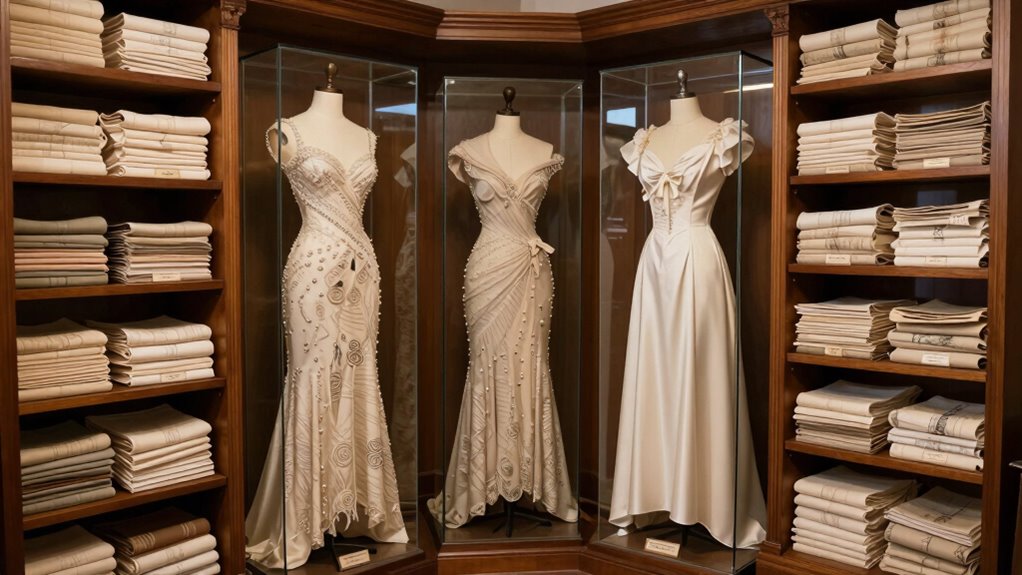
Couture Archives is a treasure trove for fashion enthusiasts and industry insiders alike, offering a meticulously curated collection of historic and iconic haute couture pieces. When you explore these archives, you get a glimpse into the craftsmanship, innovation, and artistry that define fashion history. Preserving these dresses isn’t just about protecting fabric; it’s about maintaining a cultural legacy that can inspire future generations. To do this, experts focus heavily on vintage preservation—an essential process that guarantees the delicate materials and intricate details remain intact over decades. Every stitch, bead, and fabric choice is carefully stabilized so that the dress retains its original beauty and significance.
Couture archives preserve fashion history, protecting delicate details and inspiring future generations through meticulous preservation and expert care.
Archive storage plays a critical role in this preservation process. You might think of it as a high-tech vault, but it’s more than just a safe space. Proper archive storage involves climate control, humidity regulation, and protection from light, all tailored to the specific needs of each piece. These measures prevent deterioration caused by environmental factors, such as mold, fading, or fabric weakening. When you handle a historic gown stored under ideal conditions, you can see how the preservation environment preserves the dress’s integrity and allows it to withstand the test of time. Additionally, understanding the importance of vintage preservation techniques is key to maintaining these delicate garments for future appreciation. Incorporating advanced archive storage solutions further enhances the longevity of these pieces, ensuring they remain preserved for generations to come. Recognizing the significance of environmental controls is essential in safeguarding these textiles against future threats.
The process of vintage preservation in couture archives requires meticulous attention. Every item is carefully documented, photographed, and cataloged, making it easier for conservators to monitor its condition. If a dress shows signs of wear or damage, experts intervene with specialized techniques—sometimes using delicate cleaning methods or reinforcing fragile seams—that don’t compromise the original design. The goal is to keep the dress as close to its original state as possible, so future viewers can appreciate its historical significance.
Archive storage also involves thoughtful display and handling practices. When you view these garments, they are often exhibited on custom mannequins or within protective cases that prevent unnecessary stress on the fabric. This approach ensures the preservation of the couture pieces while still allowing the public to experience their beauty firsthand. It’s a delicate balance—showcasing these iconic dresses without risking damage.
In essence, the preservation of haute couture in archives is a blend of science, craftsmanship, and passion. Vintage preservation techniques and advanced archive storage solutions work together to keep these dresses alive for future generations, allowing us all to appreciate the artistry and history woven into every stitch. Through careful stewardship, couture archives safeguard these fashion masterpieces, making them accessible and inspiring long after their runway debut.
climate controlled garment storage
As an affiliate, we earn on qualifying purchases.
As an affiliate, we earn on qualifying purchases.
Frequently Asked Questions
How Are Historical Dresses Authenticated Before Preservation?
You authenticate historical dresses by consulting fashion history experts who analyze fabric, construction, and design details to verify their period and origin. They use preservation techniques like careful cleaning and storage to prevent deterioration. You might also compare the dress with documented examples or provenance records. This thorough process guarantees the dress’s authenticity and helps preserve its cultural significance for future generations.
What Materials Are Used to Restore Delicate Couture Pieces?
When restoring delicate couture pieces, you use specialized materials like silk threads, fine netting, and conservation-grade adhesives. Fabric techniques such as hand-stitching and embroidery are essential to carefully reinstate torn or missing sections. You also focus on preserving decorative embellishments like beads, sequins, and lace, ensuring they’re securely reattached without damaging the original design. This meticulous process helps maintain the dress’s integrity and beauty for future generations.
How Do Archives Prevent Color Fading Over Time?
Did you know that textile stability is essential for preventing color fading? Archives use controlled environments with UV-filtered lighting and stable temperature and humidity to protect dresses. These conditions help maintain color retention by slowing chemical reactions that cause fading. By carefully monitoring these factors, archives guarantee that delicate couture pieces stay vibrant for decades, allowing future generations to appreciate their beauty without compromising their original hues.
Are Digital Copies Made of Preserved Dresses?
Yes, digital copies are often made of preserved dresses through digital documentation. You can explore virtual exhibitions that showcase these garments online, allowing you to appreciate the details without risking damage to the original. These digital archives help preserve the dresses’ history and design, making them accessible worldwide. By viewing virtual exhibitions, you get a closer look at couture pieces while ensuring they remain intact for future generations.
How Often Are Couture Archives Inspected for Damage?
Oh, how fortunate you must feel to be entrusted with such delicate treasures! Couture archives are inspected regularly, often annually, to catch fabric deterioration early. You meticulously examine the storage environment, ensuring humidity and temperature stay ideal. This vigilant routine prevents damage, preserving the dresses’ beauty. After all, neglecting inspections could turn these masterpieces into mere memories—so, you stay diligent, safeguarding history with every careful check.
Conclusion
You now see how couture archives are like time capsules, carefully preserving each stitch and fabric as if holding onto a precious secret. With meticulous attention, archivists guarantee that these dresses remain vibrant and intact for decades, allowing future generations to marvel at craftsmanship. Just as a painter preserves a masterpiece, they guard these garments, keeping their beauty alive—an elegant whisper from the past that continues to inspire and amaze.
Columbus Day / Indigenous Peoples' Day Picks
long weekend sales
As an affiliate, we earn on qualifying purchases.