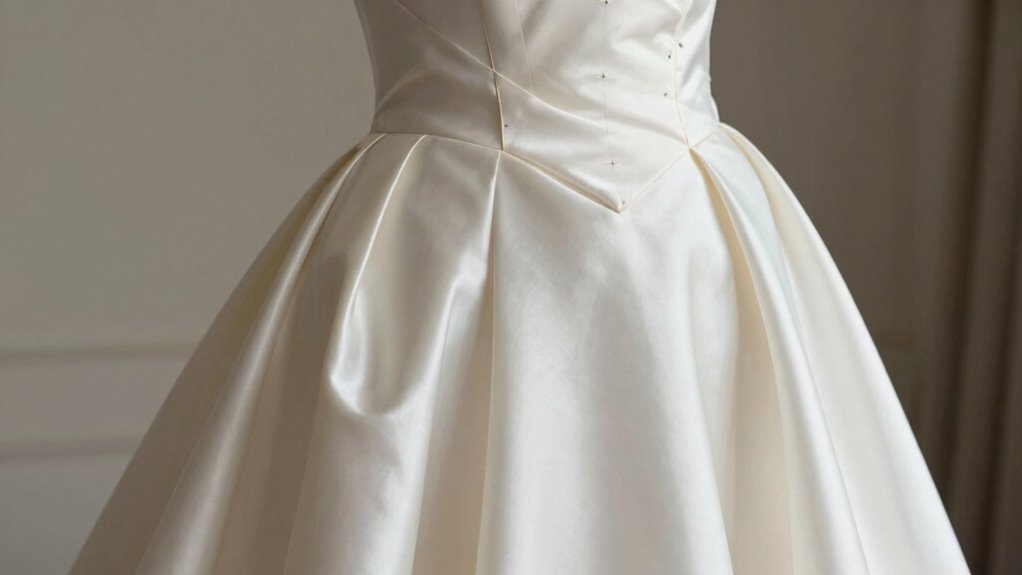

Draping plays a vital role in couture construction by allowing you to mold fabric directly on a dress form, creating three-dimensional, sculptural designs. It lets you see how fabrics fall, stretch, and stiffen, giving immediate feedback for adjustments. With draping, you can craft complex pleats, gathers, and unique silhouettes, blending craftsmanship with innovation. Mastering this technique helps you transform your creative ideas into articulated, artistic garments. Keep exploring to uncover the intricate artistry behind couture draping.

Get your wardrobe favorites delivered free with Prime
- Fast, free delivery on millions of items
- Prime Video, Amazon Music and more included
- Member-only deals all year
Key Takeaways
- Draping allows designers to sculpt and visualize complex, personalized silhouettes directly on a dress form.
- It provides immediate feedback for fabric behavior, ensuring precise fit and structure in couture garments.
- Draping helps create intricate details like pleats, gathers, and textured effects that define haute couture.
- The technique integrates craftsmanship with innovative design, enabling experimentation with fabric manipulation.
- It bridges traditional artisan skills with modern techniques, essential for achieving couture’s artistic and technical excellence.
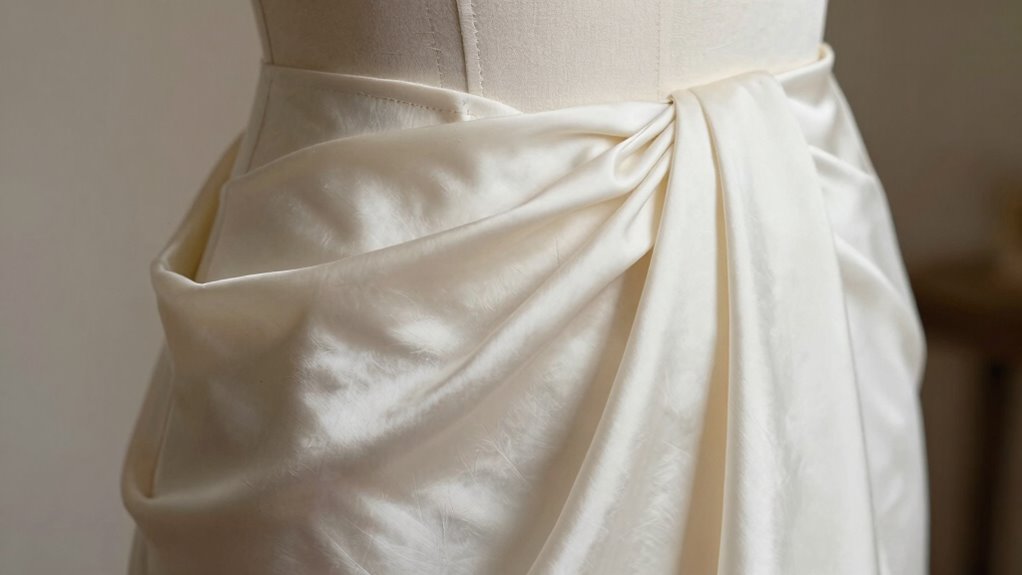
Have you ever wondered how high fashion garments achieve their flawless fit and intricate shapes? The secret often lies in the art of draping—a technique that allows designers to mold fabric directly on a dress form, creating a three-dimensional masterpiece. Draping is not just about arranging fabric; it’s about fabric manipulation—carefully shaping, pinning, and adjusting to realize a designer’s vision. This method grants the designer a tactile understanding of how different fabrics behave, how they fall, stretch, or stiffen, which is essential for creating garments with precise silhouettes. Over time, the technique’s role has evolved considerably, reflecting the historical evolution of fashion itself. In the early days, draping was a craft passed down through apprenticeships, with artisans developing a keen sense of how fabrics interacted with body shapes and movement. As fashion moved from handcrafted garments to industrial production, the importance of draping shifted from a primary method of construction to a skill used mainly for haute couture and bespoke designs. Today, it remains fundamental in couture, where every detail must be perfect, and the fit must be flawless.
Draping allows for immediate visual feedback, giving you the freedom to experiment with fabric manipulation techniques that would be difficult to achieve through flat pattern drafting alone. For example, you can create complex pleats, gathers, or drapes that flow naturally with the body’s contours. It’s an intuitive process that requires a deep understanding of fabric behavior—knowing when to let a fabric gently fall into soft folds versus when to stiffen it for a structured look. Incorporating fabric behavior understanding into draping techniques is crucial for achieving the desired silhouette and texture. Throughout its history, draping has continuously adapted, integrating new techniques and materials, but its core remains rooted in craftsmanship. This historical evolution underscores its importance; from the elaborate court dresses of the Renaissance to the sculptural forms of modern haute couture, draping has been central to shaping fashion’s creative expression. Mastering fabric manipulation enhances a designer’s ability to craft innovative silhouettes and explore creative boundaries.
When you master fabric manipulation through draping, you learn to see fabric as a malleable material, capable of transforming into complex shapes and forms. This skill enables you to push boundaries, explore new silhouettes, and craft garments that are true works of art. Whether you’re designing a flowing gown or a tailored jacket, understanding the historical evolution of draping enriches your approach, blending tradition with innovation. Ultimately, draping isn’t just about making garments—it’s about translating your creative vision into tangible, sculptural pieces that elevate fashion beyond mere clothing.
As an affiliate, we earn on qualifying purchases.
Frequently Asked Questions
How Does Draping Influence Fabric Choice in Couture Design?
Draping directly influences your fabric choice in couture design by helping you assess fabric texture and how it falls on the body. You can see how different textures catch light and move, guiding your selection for the desired silhouette. Additionally, draping allows you to experiment with color coordination, guaranteeing the fabric’s hue complements the overall design. It’s a tactile process that guarantees your fabric choice enhances the garment’s elegance and structure.
What Tools Are Essential for Successful Draping in Couture?
Ever wondered what tools transform fabric into art? You need sharp scissors and pins to secure fabric for precise fabric manipulation. A dress form is essential for pattern development, allowing you to see how the fabric drapes on a 3D surface. Seam rippers help refine details, and rulers or french curves guide accurate lines. Together, these tools empower you to shape couture pieces with finesse and confidence.
How Long Does a Typical Couture Draping Process Take?
A typical couture draping process can take anywhere from several hours to several days, depending on the complexity of the design and fabric choice. You’ll use historical techniques and fabric manipulation to shape the garment precisely. As you work, you’ll carefully manipulate fabric on the dress form, refining the fit and silhouette. Patience and attention to detail are key, ensuring each drape aligns perfectly with your creative vision.
Can Draping Techniques Be Adapted for Ready-To-Wear Collections?
Absolutely, you can adapt draping techniques for ready-to-wear collections. While couture relies heavily on fabric manipulation and intricate pattern transformation, ready-to-wear simplifies these methods for mass production. You harness the elegance of draping to create versatile, stylish pieces that maintain a tailored look without excessive handwork. This fusion of artistic fabric manipulation with efficient pattern transformation allows you to produce beautiful, wearable garments on a larger scale.
What Are Common Challenges Faced During Couture Draping?
You face challenges during couture draping, especially with draping fabric that’s difficult to manipulate or prone to slipping. Achieving a perfect couture fitting requires precision, patience, and skill, as small adjustments can substantially impact the final look. Dealing with delicate fabrics and maintaining symmetry can be tricky, but your expertise helps overcome these hurdles. Consistent practice and understanding fabric behavior are essential to mastering couture draping successfully.
Conclusion
So, next time you marvel at a couture masterpiece, remember it’s all about draping—yet, it’s almost ironic how effortless it appears. You’d think magic’s involved, but it’s really just skill, patience, and a keen eye for flow. Draping transforms fabric into art, proving that behind every stunning gown lies a delicate dance of tension and grace. Truly, the art of couture is a beautiful illusion—crafted by hands that make complexity look so simple.
Halloween Picks
halloween
As an affiliate, we earn on qualifying purchases.