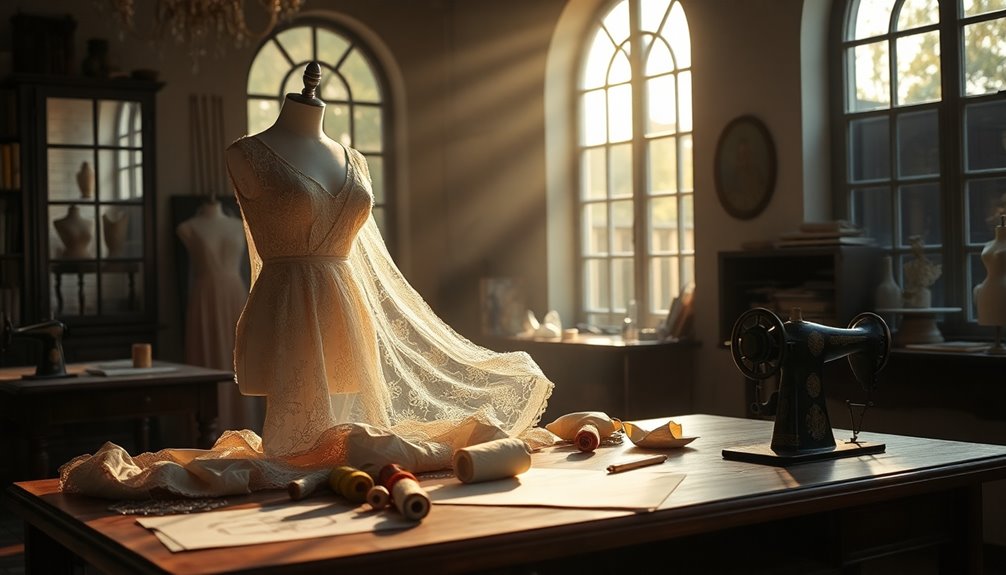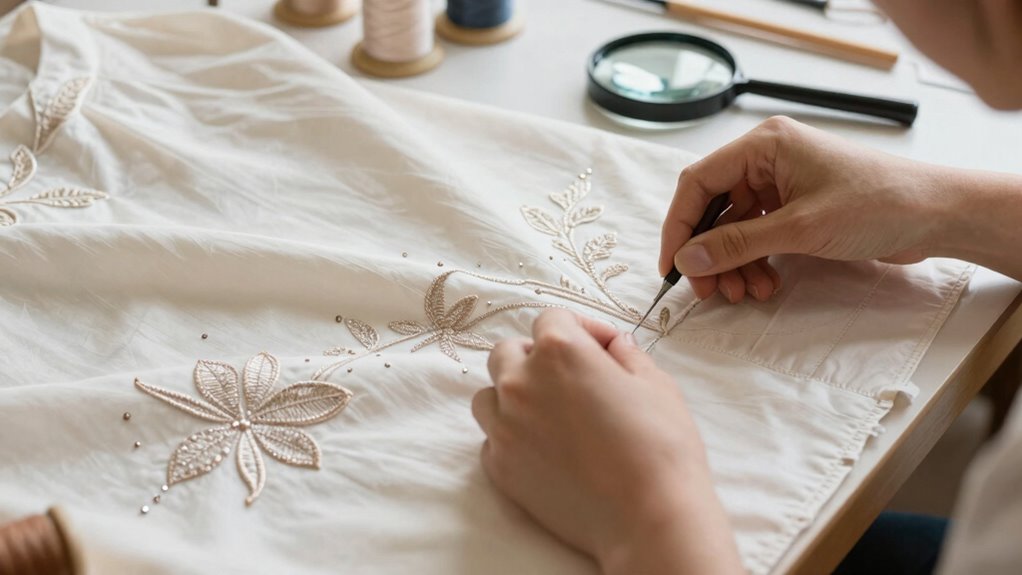
Couture handwork includes detailed techniques like hand embroidery, intricate embellishments, and fabric manipulation that transform garments into art. You’ll see precise stitches, hand-applied beads, lace appliqué, and carefully crafted pleats, all done with meticulous skill and artistry. Modern tools often complement these traditional methods, ensuring quality and sustainability. To spot authentic couture handwork and understand its true value, exploring these craft secrets offers exciting insights into high-fashion craftsmanship.
Key Takeaways
- Handwork in couture includes intricate embroidery, beadwork, appliqué, and detailed embellishments executed manually for precision and artistry.
- It involves techniques like French knots, satin stitches, and hand-sewn sequins to create textured, luxurious designs.
- Hand sewing methods such as hemming, tacking, and fabric manipulation add structure, detail, and unique character to garments.
- Couture handwork combines traditional craftsmanship with modern tools like digital design and automated embroidery for quality and efficiency.
- Authentic couture handwork is characterized by meticulous, small, even stitches, detailed motifs, and high-quality finishing, emphasizing artisanal skill.
What Handwork Means in Haute Couture
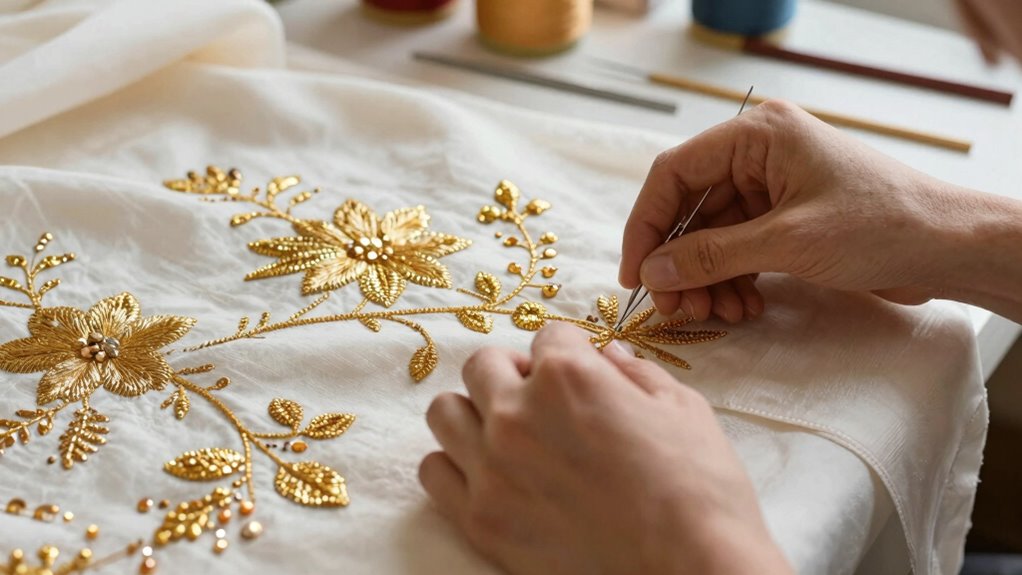
Have you ever wondered what truly sets haute couture apart? It’s the intricate handwork that elevates each piece, blending traditional techniques with modern methods like machine embroidery and textile printing. While machine embroidery allows for precise, detailed patterns, it still requires careful oversight and artistic input from skilled artisans. Textile printing adds vibrant designs and textures, often customized to match the designer’s vision. These techniques aren’t just about decoration—they’re about craftsmanship and innovation. Handwork in couture isn’t limited to needle and thread; it’s about integrating various methods seamlessly, creating luxurious fabrics that feel unique and personal. This meticulous attention to detail is what makes haute couture genuinely exceptional and highly valued in the fashion world. Additionally, understanding traditional craftsmanship can deepen appreciation for the skill involved in each garment, highlighting the cultural and historical significance embedded in haute couture. Recognizing the layered complexity involved in these techniques enhances the viewer’s admiration for the artistry behind each piece, especially as they incorporate modern textile technologies that push creative boundaries. Some artisans also incorporate sustainable handwork practices, reflecting a growing commitment to environmentally conscious fashion.
Classic Hand Embroidery Techniques in Couture
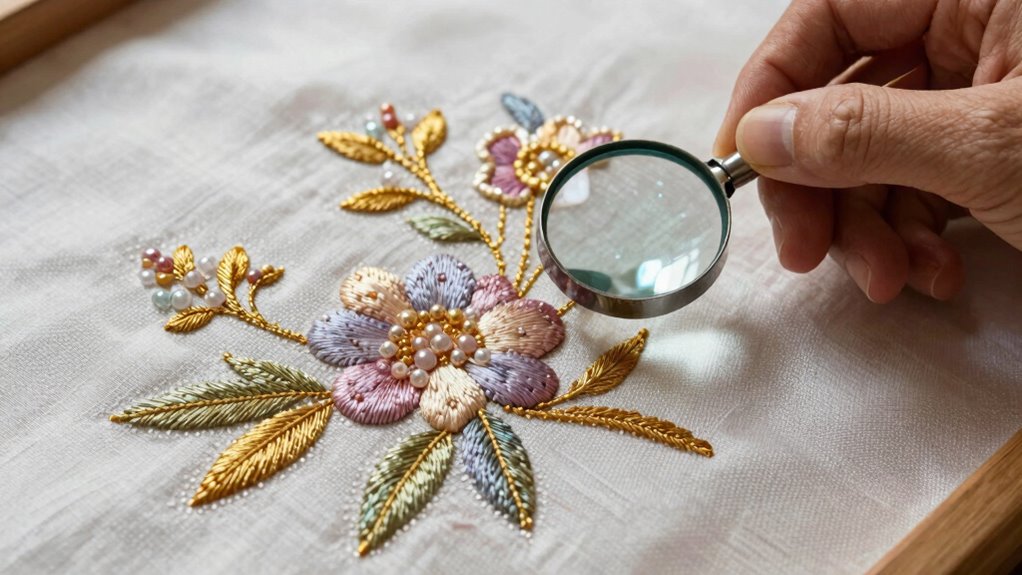
Classic hand embroidery techniques form the foundation of couture craftsmanship, transforming fabric into wearable art. You’ll often see the french knot used to add texture and dimension, creating tiny, raised dots that catch the light. Satin stitch, on the other hand, provides smooth, glossy coverage for motifs or background areas, giving a luxurious finish. Both techniques require precision and patience, as each stitch must be meticulously placed by hand. These methods allow designers to embed intricate details directly into the fabric, elevating the overall design. Mastering these classic stitches ensures the embroidery seamlessly blends with the garment’s structure, enhancing its beauty and value. In couture, these techniques are not just decorative; they are essential to the artistry and craftsmanship that define high fashion.
Hand Sewing and Stitching Methods That Define Luxury Fashion
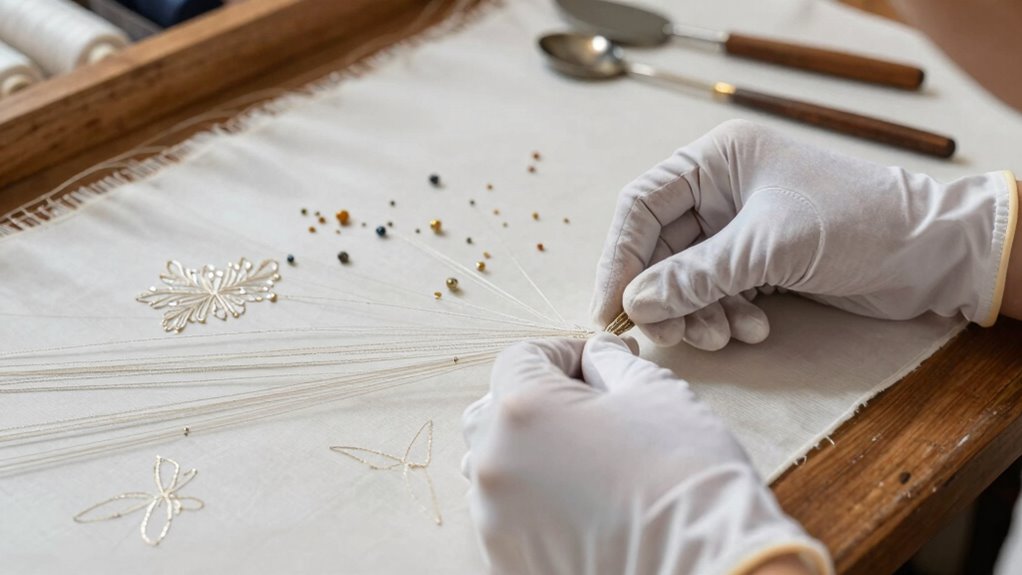
In luxury fashion, hand sewing and stitching methods are the hallmark of meticulous craftsmanship and attention to detail. These techniques affirm precision and refine the final garment. You’ll notice skilled artisans employ methods like delicate hand hemming, invisible stitches, and tailored seam finishing to achieve impeccable results. During textile dyeing, hand-dyeing techniques add depth and uniqueness to fabrics, while pattern drafting requires careful hand-cutting and fitting to ensure perfect proportions. These processes demand patience and expertise, elevating couture to art. You might also observe techniques such as hand tacking to secure layers or hand-picking to attach delicate embellishments seamlessly. Every stitch reflects a commitment to quality, making luxury pieces truly one-of-a-kind. The use of specialized tools and techniques further exemplifies the dedication involved in couture craftsmanship. Additionally, understanding the astrological influences can sometimes inspire the choice of colors and patterns used in bespoke designs, highlighting the artistry behind each creation. It’s this mastery that distinguishes couture from mass-produced fashion.
How Beadwork and Embellishments Are Handcrafted for Impact
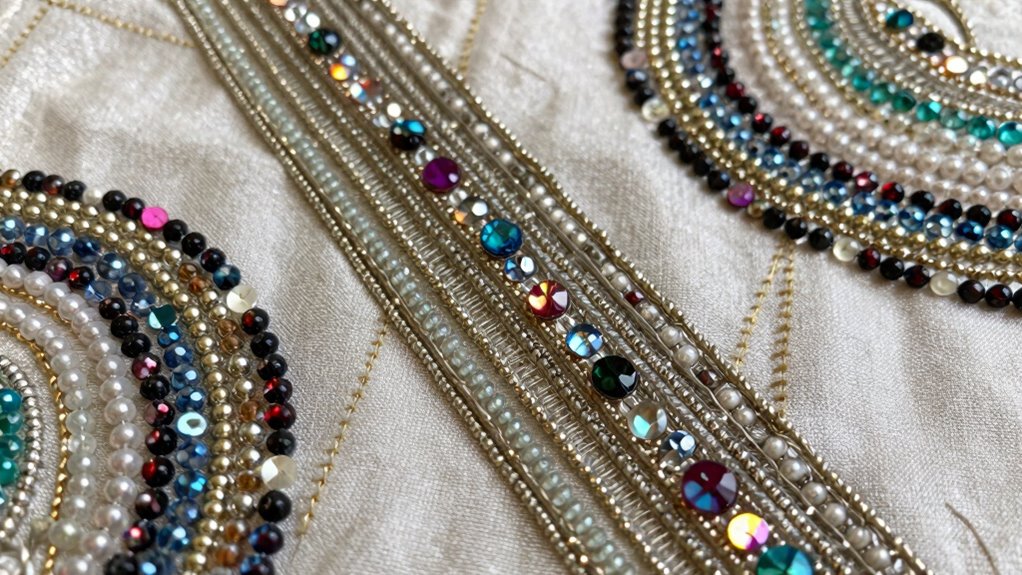
Building on the meticulous handcraftsmanship of sewing and stitching, beadwork and embellishments elevate couture pieces with intricate detail and striking impact. You carefully select beadwork embellishments that complement the fabric’s texture and color, often hand-placing each bead for precision. Fabric appliqué is skillfully layered onto the base fabric, creating dimension and visual interest. This process involves hand-stitching delicate beads or sequins onto the fabric’s surface, ensuring durability and detail. You must pay close attention to the design, spacing, and alignment to achieve seamless, harmonious effects. These handcrafted details transform a simple fabric into a work of art, showcasing the artisan’s skill and patience while adding a luxurious, eye-catching element to couture fashion. Incorporating hand-stitching techniques ensures a refined finish and enhances the overall durability of the embellishments. Additionally, understanding color accuracy in the selection of beads and embellishments helps achieve a cohesive and vibrant look. Furthermore, the use of specialized tools allows artisans to achieve precise and consistent results in their intricate work.
Fabric Manipulation and Pleating Techniques in Couture
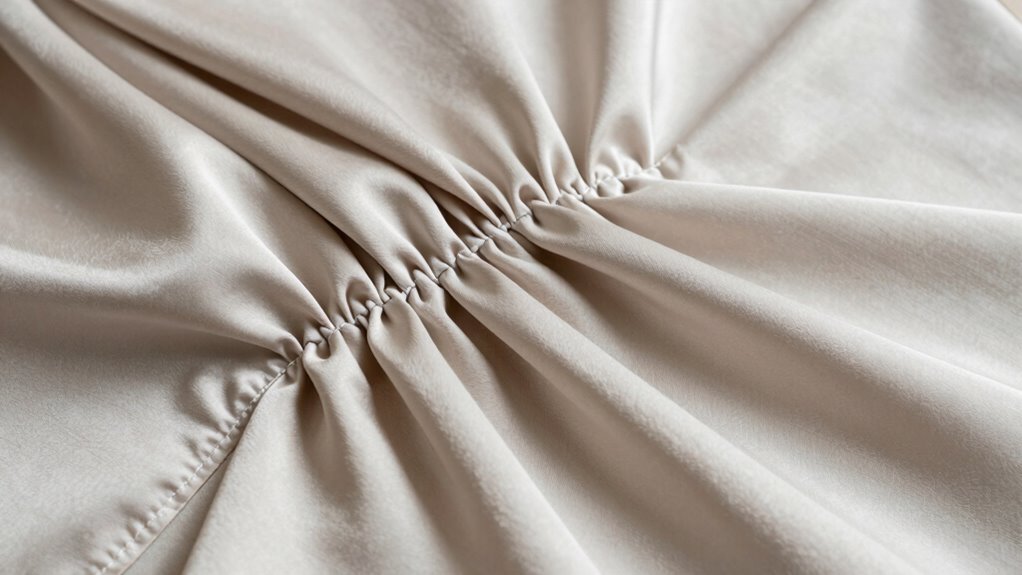
Fabric manipulation and pleating techniques transform flat textiles into dynamic, sculptural surfaces that define couture design. You can achieve this through intricate fabric folding, creating textures that add depth and movement. Pleating techniques, such as knife pleats or accordion pleats, allow you to control volume and shape precisely. These methods enable you to craft structured details or flowing drapes, elevating the garment’s aesthetic. Mastering hand-sewn fabric folding involves careful manipulation and patience, ensuring each fold stays in place. Pleats can be pressed, sewn, or even pinched, depending on the desired effect. Incorporating these techniques results in garments that are visually enthralling, showcasing the artisan’s skill in transforming simple textiles into works of art. Understanding fabric manipulation is key to mastering these couture techniques and achieving professional results. Developing a keen sense of fabric behavior helps in predicting how textiles will respond to different manipulation methods, leading to more precise and refined designs.
How Modern Innovations Complement Traditional Handwork
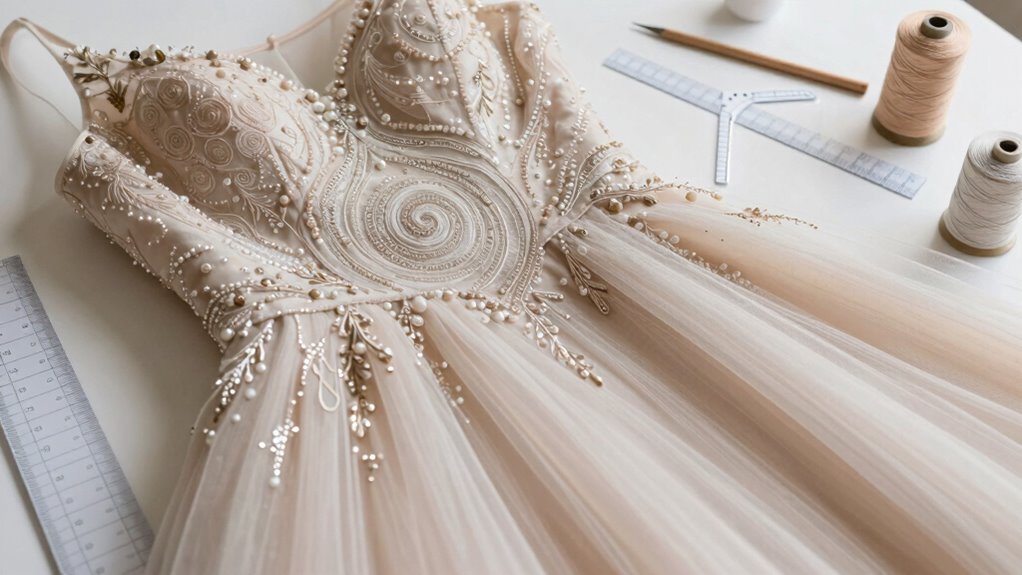
Modern innovations like precise tools and digital design software enhance your craftsmanship without replacing it. These advancements streamline complex tasks and allow for greater creativity in your work. By combining technology with traditional handwork, you can achieve exceptional results that honor both heritage and innovation. Additionally, embracing curiosity in exploring new techniques can lead to continuous improvement and innovation in your craft. Incorporating ergonomic tools ensures comfort and efficiency during extended periods of handwork, supporting both your health and productivity. Understanding Free Floating concepts can also inspire new ways to diversify and secure your investments for the future, fostering a mindset of continuous learning that keeps your skills sharp and adaptable.
Innovative Tools Enhancing Precision
Innovative tools have revolutionized couture craftsmanship by enabling artisans to achieve unprecedented levels of precision. Modern technology complements traditional handwork, making intricate details more consistent and efficient. These tools support sustainable sourcing and sustainable practices by reducing waste and optimizing material use. For example:
- Laser cutters allow exact fabric trimming, minimizing scraps
- Digital pattern makers streamline design adjustments with minimal material waste
- Precision sewing machines improve stitch accuracy and durability
- 3D scanning ensures perfect fit and pattern replication
Implementing safe installation practices ensures that these advanced tools are used effectively and reliably, enhancing both quality and safety in couture creation. Additionally, embracing technology integration can further optimize workflows and reduce environmental impact. Incorporating vintage-inspired techniques can also add unique character and authenticity to modern couture projects.
Digital Design Integration
Digital design tools have transformed the way couture artisans conceptualize and execute their work, seamlessly blending technology with traditional craftsmanship. With digital design, you can create detailed sketches and patterns that serve as precise blueprints for handwork. This technology allows for virtual fitting sessions, giving you a realistic view of how the garment will look and fit before any fabric is cut. Virtual fitting helps identify potential issues early, saving time and reducing waste. By integrating digital design, you can experiment with intricate embellishments and complex construction techniques more efficiently. This synergy of modern innovation and handwork enhances precision and creativity, ensuring that each couture piece maintains its artisanal integrity while benefiting from technological advancements.
Automation Supporting Handwork
Automation has become a valuable ally in supporting traditional handwork, allowing artisans to enhance their craftsmanship without replacing it. Modern tools like machine learning and automated patterning streamline repetitive tasks, freeing you to focus on creative details. For example, machine learning algorithms can analyze fabric behavior to suggest ideal stitching techniques. Automated patterning ensures precision and consistency, reducing errors and saving time. You might use digital cutting machines that interpret complex designs, enabling intricate embroidery to be executed flawlessly. Additionally, these innovations help preserve craftsmanship by combining human skill with technology, elevating the quality of your work. Integrating automation thoughtfully, you maintain the integrity of handwork while benefiting from increased efficiency and accuracy. This synergy keeps couture craftsmanship at the forefront of innovation.
How to Spot Genuine Couture Handwork in Finished Pieces
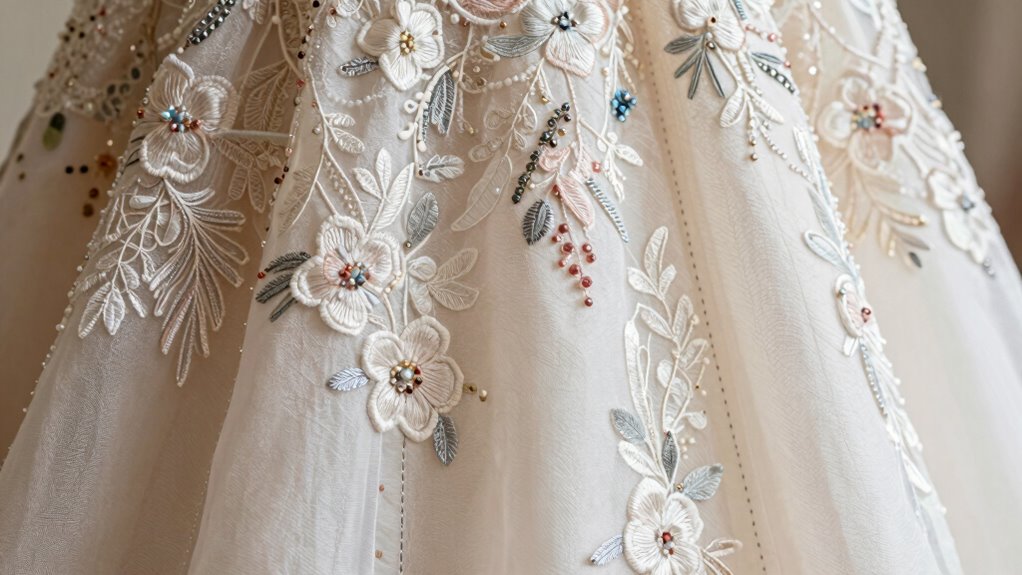
To identify genuine couture handwork, look closely at the visible stitches—they should be precise and uniform. Examine the embroidery details for intricate, carefully executed designs that highlight craftsmanship. Also, check the seams for consistent finishing, which indicates careful, skilled handwork throughout the piece. Additionally, pay attention to the overall craftsmanship quality, as well-executed handwork often reflects a high level of attention to detail and mastery in technique. Recognizing technique consistency across different elements of the piece can further confirm the authenticity of the handwork involved.
Visible Hand-Stitching Techniques
When examining finished couture pieces, the most telling sign of genuine handwork lies in the visible stitches. Unlike machine precision, hand stitches often display slight irregularities, adding character and authenticity. Look for small, even stitches that vary subtly in length and tension, indicating they were sewn by hand rather than industrial techniques. Genuine couture handwork may show a slight variation in thread direction, reflecting careful craftsmanship. The stitches often sit flat against the fabric, with no puckering or uneven tension. You might also notice tiny knots or backstitches that secure seams discreetly. These details distinguish true hand-sewn couture from machine-made imitations, emphasizing skill and artistry over uniformity. Recognizing these subtle differences helps you appreciate the craftsmanship behind each finished piece. Additionally, understanding credit card security measures can help protect your investments in luxury fashion from online threats. Being familiar with hand-sewing techniques can further aid in authenticating couture craftsmanship and ensuring the value of your collection. Learning about quality control processes in couture production can also help you identify genuine pieces and avoid counterfeits.
Intricate Embroidery Details
Genuine couture embroidery showcases a level of detail and craftsmanship that machine-made pieces often can’t replicate. Look closely at lace appliqué—hand-cut and carefully sewn onto the fabric, with precise edges that blend seamlessly. Authentic couture pieces feature silk threadwork, where each stitch is meticulously done, creating a rich texture and subtle shimmer. The embroidery often includes intricate motifs, with tiny, uniform stitches that form complex patterns. You may notice slight variations or irregularities, a sign of manual work rather than machine precision. These details reflect the skill and patience behind couture embroidery, elevating the garment from mass-produced to artful craftsmanship. Spotting these elements helps you distinguish genuine couture handwork from imitations or machine embroidery.
Consistent Seam Finishing
Consistent seam finishing is a hallmark of authentic couture craftsmanship, revealing the meticulous attention to detail that sets handmade pieces apart. You’ll notice how seams are carefully finished to prevent fraying and guarantee durability. Genuine couture often includes precise hem reinforcement, giving the garment a polished look and extra strength. Look for the following signs:
- Even, tight stitches along all seams
- Smooth, neatly pressed seam allowances
- Seam edges finished with hand-stitched binding or binding tape
- Reinforced hems with hand-stitched stitches for durability
Proper ventilation considerations also help preserve the integrity of handcrafted garments by preventing moisture buildup that could compromise delicate fabrics. These details demonstrate the artisan’s skill and dedication. Spotting consistent seam finishing and proper hem reinforcement helps you distinguish couture-quality handwork from mass-produced pieces, ensuring you appreciate the true craftsmanship behind each garment.
Why Handwork Elevates the Art and Value of Couture Fashion
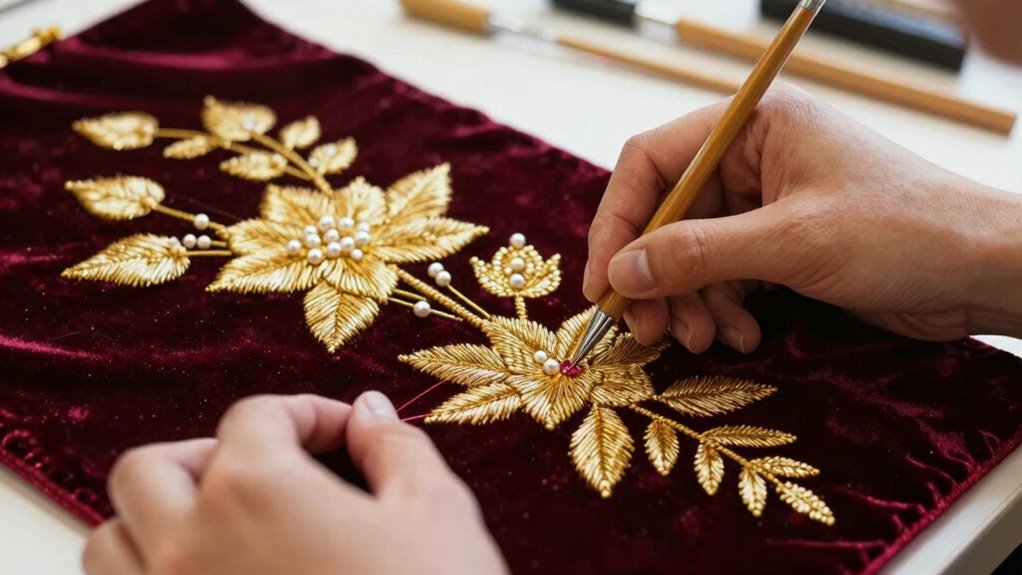
Handwork transforms couture fashion from mere clothing into works of art, showcasing craftsmanship that machines can’t replicate. This meticulous attention to detail elevates the value of each piece, making it unique and timeless. Unlike mass production, handwork emphasizes sustainable fashion by reducing reliance on shortcuts and supporting artisanal skills that preserve traditional techniques. The artistry involved adds depth and character, often resulting in intricate embroidery, beadwork, or hand-stitched embellishments that are impossible to replicate mechanically. By prioritizing quality over quantity, couture designers create garments with lasting beauty and significance. Your appreciation of handwork recognizes its role in maintaining the integrity of couture, emphasizing artistry and sustainable practices that stand apart from fast fashion and mass-produced trends.
Frequently Asked Questions
How Long Does It Typically Take to Complete Couture Handwork?
It typically takes anywhere from several days to several weeks to complete couture handwork, depending on your skill level and the complexity of the design. If you’re highly skilled, you might finish faster, but intricate details require meticulous effort and patience. A realistic time estimation allows for precise stitching and finishing touches, ensuring the highest quality. So, plan accordingly, and don’t rush—your craftsmanship will reflect in the beautiful final piece.
What Tools Are Essential for Intricate Couture Handwork?
You’ll need essential tools like fine embroidery needles, sharp scissors, and a thimble to master intricate couture handwork. These tools help you execute embellishment techniques precisely, ensuring delicate stitches and detailed work. When selecting fabric, choose high-quality, luxurious options that enhance your craftsmanship. With the right tools and fabric selection, you can achieve the meticulous detail and finesse that couture handwork demands, making your pieces truly exceptional.
How Does Handwork Influence the Garment’s Durability?
Imagine your garment as a delicate dance, where every stitch you make strengthens its soul. Your handwork directly enhances fabric longevity and seam integrity, ensuring it withstands time’s test. With each careful stitch, you’re weaving resilience into the fabric’s core, transforming a simple piece into an heirloom. Your craftsmanship not only beautifies but fortifies, making your creation more durable and ready to be cherished for generations.
Can Machine-Made Embellishments Replicate Hand-Stitched Details?
Machine embroidery and digital embellishments can mimic hand-stitched details, but they often lack the nuanced craftsmanship of true handwork. You might get similar visual effects, but the texture and depth of hand-stitched embellishments typically remain superior. If you want authentic, intricate detailing with a personal touch, handwork still outperforms machine-made options. However, for efficiency and consistency, machine embroidery and digital embellishments offer convenient alternatives.
What Are Common Challenges Faced During Couture Handwork Processes?
You face common challenges during couture handwork like fabric fraying, needle breakage, and uneven stitches. These issues test your patience and skill, demanding precision and care. You must choose the right tools, handle delicate fabrics gently, and maintain focus to prevent damage. Overcoming these hurdles guarantees your craftsmanship remains impeccable, allowing your intricate details to shine. Embrace these challenges as opportunities to refine your artistry and elevate your couture pieces.
Conclusion
When you admire couture, remember it’s not just the design, but the painstaking handwork that brings it to life. In a world rushing toward mass production, true craftsmanship stands as a affirmation to patience and passion. It’s where tradition meets innovation, creating pieces that evoke emotion and admiration. Cherish these masterpieces, knowing that behind their beauty lies countless hours of dedicated handcraft—proof that artistry and luxury are forever intertwined.