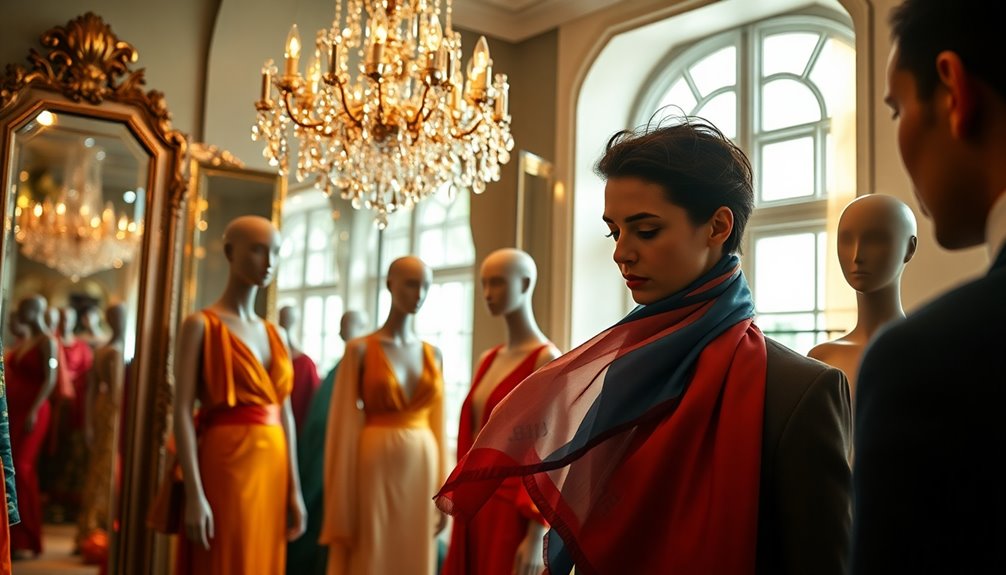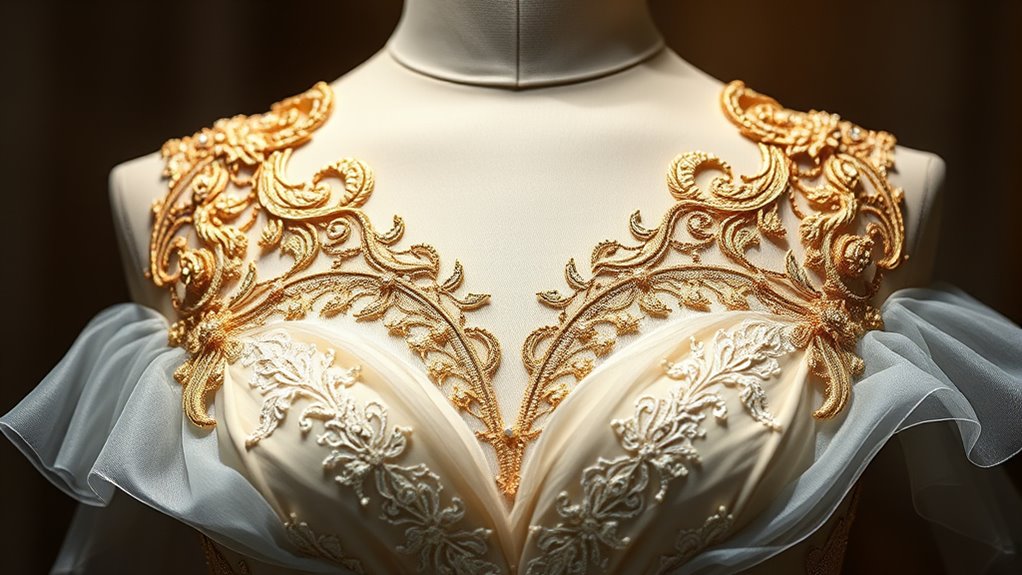

Haute couture is legally defined by strict standards set by the Chambre Syndicale de la Haute Couture. To qualify, you must create made-to-order garments for private clients, with each piece designed from scratch and tailored through multiple fittings for the perfect fit. The designs must showcase exceptional craftsmanship, use only the finest materials, and involve a minimum of 20 skilled artisans. If you’re curious to discover more about what makes haute couture so unique, keep exploring this fascinating world.
Key Takeaways
- Must produce made-to-order, custom-designed garments for private clients.
- Garments are crafted from scratch with multiple fittings for a perfect fit.
- Involves a minimum of 20 skilled artisans executing labor-intensive techniques.
- Collections are presented twice yearly at Paris haute couture fashion weeks.
- Must adhere to standards set by the Chambre Syndicale de la Haute Couture.
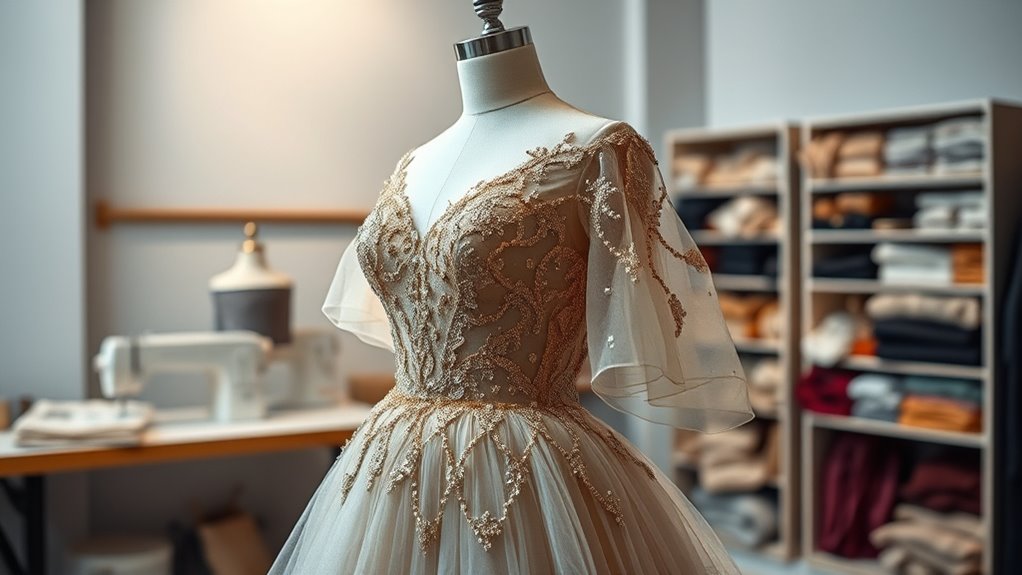
Qualifying as haute couture is a rigorous process that sets the most exclusive fashion houses apart from the rest. It’s not just about creating beautiful garments; it’s about adhering to strict standards that emphasize exceptional quality, craftsmanship, and a commitment to personalized design. When you think of haute couture, you should imagine pieces that are meticulously tailored to fit each client perfectly, often involving a custom design process that transforms fabric and ideas into wearable art. This isn’t mass production—you’re dealing with one-of-a-kind creations that demand the highest level of skill and attention to detail. Every stitch, seam, and embellishment reflects the exclusive craftsmanship that defines haute couture. Additionally, the use of high-quality materials ensures that each piece maintains its luxury and durability over time.
To qualify under the legal definition, a fashion house must meet specific criteria set by the Chambre Syndicale de la Haute Couture in Paris. These criteria are not arbitrary; they’re designed to preserve the integrity and heritage of haute couture. First, your house must produce made-to-order garments for private clients, with every piece custom designed to meet the exact specifications of each customer. This means each client’s measurements are taken, and the garment is crafted from scratch, often involving multiple fittings to ensure a perfect fit. The process emphasizes exclusivity—no two pieces are exactly alike, and each one is a reflection of the client’s preferences and personality.
Secondly, your house must employ a minimum number of skilled artisans—at least 20 employees involved in design and sewing—who are experts in their craft. These artisans are the backbone of the operation, executing the detailed, labor-intensive work that distinguishes haute couture from other forms of fashion. They use techniques that require years of training, ensuring each piece demonstrates the highest level of craftsmanship. This commitment to quality and detail is what makes haute couture so special and highly coveted. Moreover, the heritage and tradition of haute couture are maintained through continuous innovation, blending classic techniques with modern artistry to push creative boundaries.
Furthermore, your house must present at least one collection twice a year during official Paris haute couture fashion weeks. These collections showcase the pinnacle of your craftsmanship and innovation, often featuring revolutionary techniques or artistic concepts. The collections must also be shown in a dedicated haute couture salon in Paris, affirming your house’s status within this exclusive community. By meeting these standards, you’re not only maintaining a legal qualification but also upholding the tradition of haute couture as a symbol of artistry, luxury, and personalized excellence.
Frequently Asked Questions
Can Anyone Claim to Design Haute Couture?
You can’t just claim to design haute couture without meeting specific legal criteria. Haute couture involves custom design work, created for an exclusive clientele, and must be authorized by the Chambre Syndicale de la Haute Couture. If you don’t meet these requirements, your work isn’t legally considered haute couture. So, unless you’re officially recognized, you’re not qualified to call your designs haute couture, no matter how exclusive or high-end they seem.
Is Haute Couture Only for Women?
They say beauty is in the eye of the beholder, but haute couture isn’t just for women. Historically, its origins focused on gender exclusivity, mainly catering to women’s fashion. Today, designers challenge that notion, creating stunning pieces for all genders. Haute couture’s creative spirit breaks boundaries, proving it’s not limited by gender. You can enjoy and wear these luxurious creations regardless of your gender identity, showing fashion’s evolution beyond tradition.
How Many Couture Houses Are Officially Recognized?
You’ll find that only 15 couture houses are officially recognized under the legal standards of fashion legislation. These maisons meet strict criteria for craftsmanship and exclusivity, reinforcing their luxury branding. This official recognition guarantees their status in the high-fashion world and preserves the integrity of haute couture. Understanding this helps you appreciate the rarity and prestige associated with these select houses, emphasizing their importance in the luxury fashion industry.
Does the Legal Definition Vary Worldwide?
Isn’t it fascinating how international fashion regulations shape couture? Yes, the legal definition varies worldwide, reflecting diverse cultural influences on couture. Different countries establish unique standards, making the classification a fluid, global tapestry rather than a fixed rulebook. This variation respects local traditions and creative expressions, ensuring couture remains a rich, culturally infused art form that transcends borders while adhering to specific legal frameworks.
Is There a Certification Process for Haute Couture?
You might wonder if there’s a certification process for haute couture. While no official global certification exists, brands often adhere to strict craftsmanship standards to maintain exclusivity and quality. This impacts branding implications, as certification signals authenticity and superior craftsmanship. High-end fashion houses uphold these standards to preserve their reputation, ensuring their couture pieces meet the expected level of artistry. So, while formal certification isn’t required, craftsmanship standards serve as a mark of genuine haute couture.
Conclusion
So, now you see that haute couture isn’t just about fancy fabrics or intricate stitching; it’s about an unwavering commitment to artistry and exclusivity. Like a rare gem, true haute couture shines brightest when it’s crafted with passion and precision. Remember, in the world of fashion, authenticity isn’t just a label—it’s what makes a piece timeless. So, cherish those details, for they tell the story of true craftsmanship that can’t be replicated.