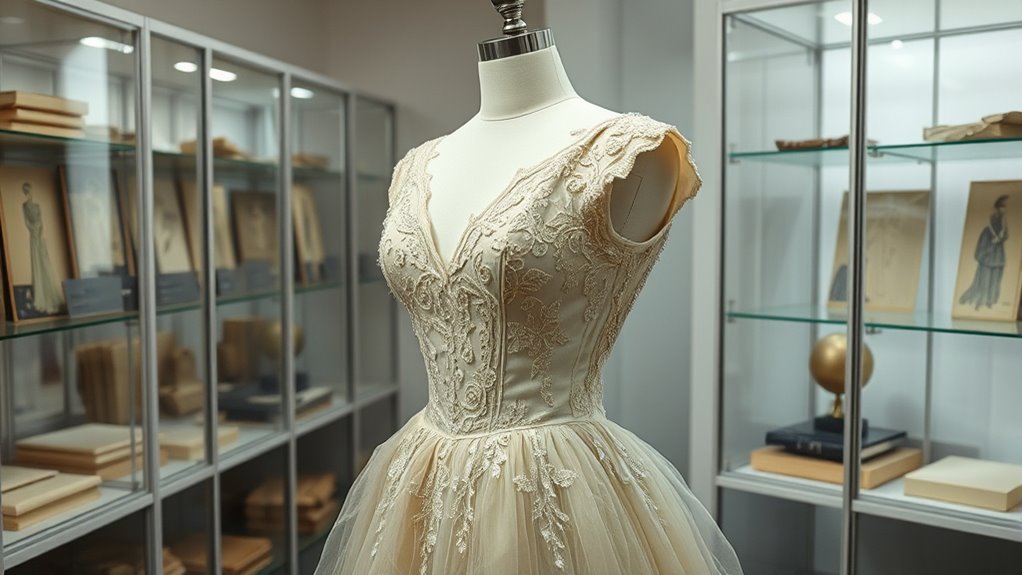

To preserve couture garments archivally, you should stabilize delicate fabrics with acid-free supports and tissues to prevent tearing and stretching. Use custom supports or padded hangers that evenly distribute weight, and display pieces flat when possible to avoid strain. Keep lighting low with UV-filtering to prevent fading, and maintain a stable environment with controlled temperature and humidity. Regular inspections help catch early deterioration signs—continue exploring ways to protect these masterpieces for the future.
Key Takeaways
- Use acid-free tissues and supports to stabilize delicate textiles and prevent deterioration.
- Employ custom padded supports and flat storage methods to reduce fabric stress.
- Display garments with padded hangers or flat supports to maintain shape and minimize strain.
- Control environmental conditions, including low UV lighting and stable humidity (50-55%).
- Conduct regular inspections and prompt interventions to address early signs of damage.

Couture garments are masterpieces of craftsmanship that deserve careful preservation to guarantee their beauty endures over time. Their delicate fabrics, intricate embellishments, and fine details make them treasures worth protecting. To ensure these garments remain in pristine condition, you need to focus on proper fabric stabilization. This process involves reinforcing fragile textiles to prevent tearing, stretching, or deterioration. Using appropriate materials like acid-free tissues or specialized supports, you can gently stabilize the fabric without altering its appearance. This step is crucial before display or storage, as it minimizes stress on fragile areas and keeps the garment’s original shape intact. Additionally, understanding the effectiveness of preservation techniques can help tailor your approach to each specific garment for optimal results.
Preserving couture requires careful fabric stabilization to prevent damage and maintain elegance over time.
When it comes to display techniques, you should prioritize methods that reduce strain on the fabric while showcasing the garment’s craftsmanship. Instead of hanging couture pieces on standard hangers, consider using padded or custom supports that conform to the garment’s shape. These supports distribute weight evenly and prevent distortion, especially for heavily embellished or voluminous designs. Lay flat display options are also effective for delicate or heavily beaded pieces, as they avoid unnecessary tension. If hanging is unavoidable, ensure the garment is suspended from a sturdy, padded hanger that minimizes stress on seams and fabric points. You might also need to incorporate tissue or foam padding to fill out the silhouette and maintain the original drape.
Good display techniques extend beyond supports; lighting plays a vital role in preservation. Use low-intensity, UV-filtered lighting to avoid fabric fading or deterioration caused by prolonged exposure to strong light. Position lighting at angles that minimize heat buildup and avoid direct contact with the garment. Additionally, controlling environmental conditions such as temperature and humidity is essential. Aim for a cool, stable environment with relative humidity levels between 50-55%, which helps prevent mold, mildew, and fabric brittleness. When displaying couture garments, ensure they are not exposed to pollutants or dust, which can accelerate deterioration.
In storage, your goal is to create a stable environment that closely mimics natural conditions and minimizes physical stress. Use acid-free boxes or tissue to wrap garments, and store them flat whenever possible. If hanging, ensure they are supported properly and not compressed by other objects. Regular inspections are vital to catch early signs of deterioration, allowing you to intervene before irreversible damage occurs. By combining meticulous fabric stabilization with thoughtful display techniques, you protect couture garments from harm, preserving their beauty and craftsmanship for future generations to admire.
Frequently Asked Questions
How Do Climate Changes Affect Couture Garment Preservation?
Climate impact and environmental risks considerably threaten your couture garments. Rising temperatures can cause fabric deterioration, while increased humidity fosters mold growth. Extreme weather events, like floods or storms, may damage storage environments. You need to monitor climate conditions carefully, using climate-controlled storage to prevent deterioration. By mitigating these environmental risks, you can better preserve your couture pieces, ensuring they remain in pristine condition despite changing climate patterns.
What Are the Latest Technologies Used in Garment Preservation?
You’ll find that modern preservation benefits from innovative fabric treatments and optimized storage environments. Advanced technologies like microclimate-controlled cases and gentle laser cleaning guarantee delicate couture garments stay pristine. Researchers also use smart sensors to monitor humidity and temperature, preventing damage. These cutting-edge methods create a gentle, supportive environment, helping your treasured pieces endure through time, while respecting their delicate fabric treatments and ensuring they’re preserved in ideal storage conditions.
How Often Should Couture Garments Be Professionally Inspected?
You should have couture garments professionally inspected at least once a year. Regular inspections help you catch fabric deterioration early and address pest management issues before they worsen. If you notice signs of fabric weakening or pest activity, schedule an inspection sooner. Consistent check-ups ensure your garments stay in pristine condition, allowing preservation efforts to be more effective and prolong their lifespan.
Can Digital Archiving Replace Physical Preservation Methods?
Digital archiving can’t fully substitute physical preservation methods because it offers digital cataloging and enables virtual exhibitions, but it doesn’t safeguard the actual fabric or structure of couture garments. You should use both approaches: digital archives for easy access and documentation, and physical preservation for maintaining the garment’s integrity. Combining these methods ensures your collection stays protected, accessible, and appreciated for generations to come.
What Are Common Mistakes to Avoid During Storage?
You should avoid improper packaging, as it can lead to fabric deterioration over time. Make certain garments are stored in acid-free tissue and breathable containers, not plastic, which traps moisture. Keep garments away from direct light, heat, and humidity. Regularly check for signs of deterioration and handle the pieces gently. By avoiding these mistakes, you protect your couture garments from damage and preserve their beauty for years to come.
Conclusion
By applying proper archival techniques, you guarantee couture garments stay beautiful and intact for generations. Imagine preserving a vintage Dior dress from the 1950s, carefully stored in climate-controlled conditions, its delicate fabrics protected from deterioration. With your attention to detail and commitment, you keep fashion history alive. Ultimately, your efforts in preservation don’t just safeguard garments—they preserve stories, artistry, and culture for future admirers to cherish.