To safeguard fabric art, keep environmental conditions stable by controlling light, humidity, and temperature using automated monitoring systems. Handle textiles gently, avoiding adhesives or pins, and support delicate pieces with padded mounts or acid-free backing. Store fabrics rolled in acid-free tissue, in climate-controlled environments, and avoid stacking or creasing. When displaying, use diffused lighting and proper supports. Regular inspections and careful cleaning help catch issues early—continue to explore methods that guarantee your fabric art stays beautiful for years to come.
Key Takeaways
- Store textiles rolled on acid-free tubes with acid-free tissue to prevent creasing and stress.
- Maintain stable environmental conditions, controlling light, humidity, and temperature to slow deterioration.
- Use UV-protective framing or acid-free mounts for display, avoiding direct sunlight and heat sources.
- Conduct regular inspections to identify early signs of damage like discoloration, mold, or pests.
- Handle textiles carefully, employing gentle mounting techniques and avoiding adhesives or pins during display and storage.
Fabric art is a valuable form of artistic expression that requires careful preservation to guarantee its longevity. When you’re handling these pieces, understanding the risks of textile deterioration is essential. Fabrics are inherently vulnerable to environmental factors such as light, humidity, and temperature fluctuations, which can accelerate deterioration. Sunlight, in particular, causes fading and weakening of fibers, so you should limit exposure or use UV-filtering glass or acrylic when displaying fabric art. High humidity can promote mold growth and attract pests, while low humidity might cause fibers to become brittle. Maintaining a stable, controlled environment is necessary to slow down these damaging processes. Additionally, advancements in automation technologies can assist in monitoring environmental conditions to ensure optimal preservation settings. Regularly checking these settings can help prevent unintentional damage caused by environmental fluctuations.
Protect fabric art by controlling light, humidity, and temperature for lasting preservation.
Display considerations play an important role in preservation. When you exhibit fabric art, avoid hanging it in direct sunlight or near heat sources. Instead, choose a location with diffused, indirect light and consistent environmental conditions. If the piece is fragile or delicate, consider supporting it with a padded mount or frame that distributes weight evenly, preventing stress on the fibers. You should also think about how the fabric is suspended; avoid using adhesives or pins that could cause tears or other damage. Instead, employ gentle mounting techniques, such as framing behind UV-protective glass or using acid-free backing materials. Ensuring proper handling during display can significantly extend the lifespan of textile works.
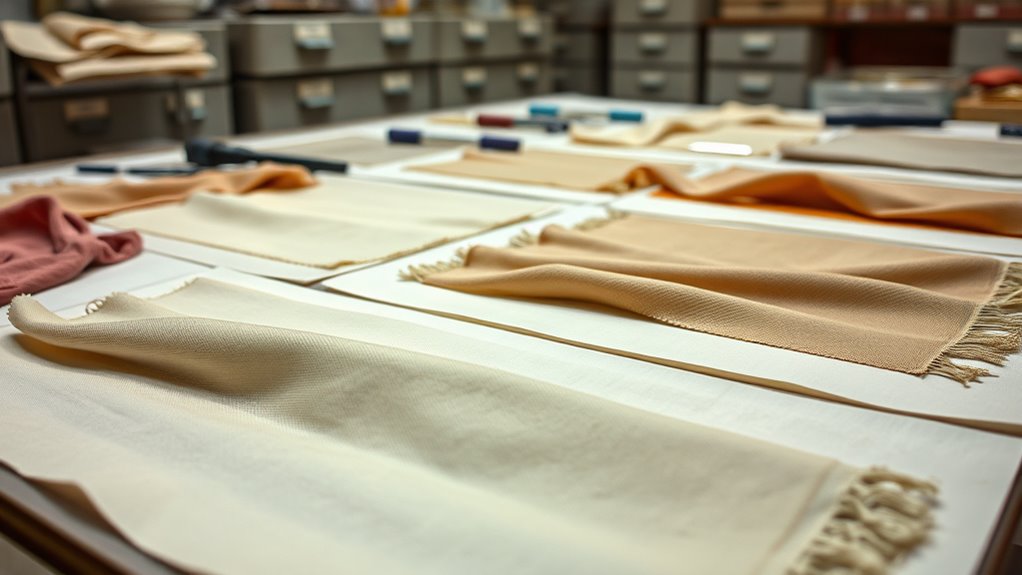
Storage is equally important. When not on display, you need to store fabric art properly to prevent further deterioration. Rolled storage is often preferred for large textiles, as it minimizes creasing and stress on the fibers. Use acid-free tissue paper to wrap the piece, and keep it in a climate-controlled environment. Avoid stacking textiles, which can cause crushing and deformation over time. If folding cannot be avoided, make sure to fold along existing creases or seams to reduce stress, and pad the folds with acid-free tissue to prevent permanent creases. Additionally, understanding the role of temperature and humidity is critical because fluctuations can significantly accelerate fiber degradation. Regular inspection is essential to catch early signs of deterioration, such as discoloration, mold, or pest activity. When you notice any issues, act promptly to mitigate damage. Cleaning should be done cautiously—dry brushing or vacuuming with a low-suction attachment can remove surface dust, but avoid harsh chemicals or washing unless advised by a conservator. In sum, preserving fabric art involves understanding the vulnerabilities of textiles and taking deliberate steps with display considerations and storage practices. By maintaining a stable environment and handling pieces with care, you can markedly extend the life of these treasured works for future generations to appreciate. Proper documentation and conservation techniques are also vital components in comprehensive preservation efforts.
Frequently Asked Questions
How Do Environmental Factors Affect Fabric Art Longevity?
Environmental factors greatly impact fabric art’s longevity. UV light causes fading and weakens fibers over time, so you should protect pieces from direct sunlight. Humidity control is essential to prevent mold, mildew, and fabric deterioration. By maintaining a stable environment with minimal fluctuations in temperature and humidity, you help preserve your fabric art, ensuring it stays vibrant and intact for years to come. Proper environmental management is key to long-term preservation.
What Are the Best Storage Materials for Fragile Textiles?
When storing fragile textiles, you want materials that protect without causing damage. Use acid-free tissue to wrap the fabric gently, preventing creases and chemical reactions. Cotton storage bags are excellent for keeping textiles breathable and protected from dust and light. Avoid plastic or non-archival materials, which can trap moisture or emit harmful chemicals. These storage solutions help preserve your fabric art’s integrity over time.
How Can I Safely Display Vintage Fabric Pieces?
Think of your vintage fabrics as delicate butterflies needing gentle handling. To display them safely, use framing techniques that support without stressing the material. Choose UV-filtering glass to protect against light damage, and consider soft, acid-free mounts. Pay attention to lighting considerations—avoid direct sunlight and harsh bulbs. This careful approach guarantees your fabric pieces remain vibrant and intact, allowing you to enjoy their beauty while safeguarding their future.
Are There Eco-Friendly Preservation Options Available?
You’re wondering if eco-friendly preservation options exist. Yes, sustainable conservation offers eco-conscious methods like using natural, biodegradable materials and avoiding harsh chemicals. You can opt for acid-free, recycled storage supplies and natural drying techniques to safeguard vintage fabric pieces. By choosing these environmentally friendly approaches, you ensure your preservation efforts are gentle on the planet while maintaining your fabric art’s integrity over time.
How Often Should Fabric Art Be Inspected for Deterioration?
You wonder when to inspect your fabric art for deterioration, and the answer isn’t simple. Regular inspection schedules are essential—every six months, or more often if conditions change. Using conservation techniques, you catch issues early before they worsen. Don’t wait too long; deterioration can happen fast. Stay vigilant, trust your eye, and schedule consistent inspections to preserve your masterpiece, ensuring it remains stunning for generations.
Conclusion
As you explore preservation techniques, you’ll find that careful handling and proper storage often go hand in hand, revealing the beauty of fabric art over time. It’s almost like the fabric itself guides you, whispering secrets of its history and craftsmanship. When you pay attention to light, temperature, and support, preservation becomes second nature—just as the art itself has endured through countless moments. In this delicate dance, your care guarantees the fabric’s story continues, unbroken and vibrant.