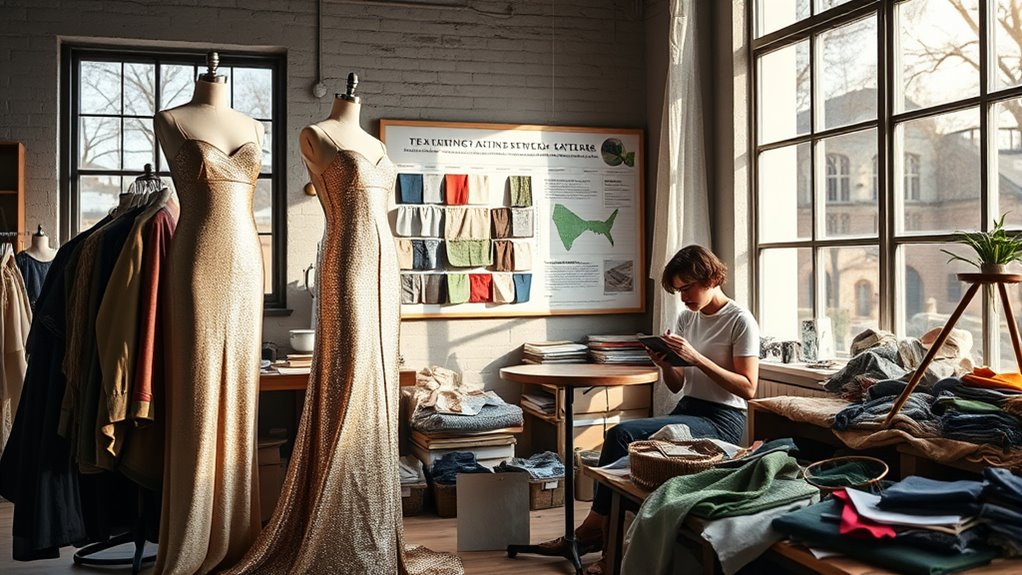

Sustainability challenges in couture include sourcing eco-friendly fabrics that match luxury standards and ensuring fair labor practices. These textiles often lack the texture, durability, or color diversity of traditional materials, making it hard to maintain craftsmanship quality. Additionally, ethical labor conditions are essential but complex to verify, especially across global supply chains. However, innovative solutions like developing new sustainable fibers and fostering responsible partnerships can help, revealing strategies that could transform the future of eco-conscious fashion.
Key Takeaways
- Sourcing eco-friendly textiles often compromises fabric quality, texture, and color diversity, requiring innovation in sustainable material development.
- Ensuring ethical labor practices across complex supply chains remains challenging, necessitating transparent partnerships and fair wages.
- Traditional and exotic fabrics may be environmentally damaging or ethically questionable, prompting a shift toward sustainable alternatives.
- Balancing craftsmanship and artistry with eco-conscious materials demands creative solutions and technological advancements.
- Embracing slow fashion principles and consumer education can reduce waste, promote ethical sourcing, and support sustainable couture.
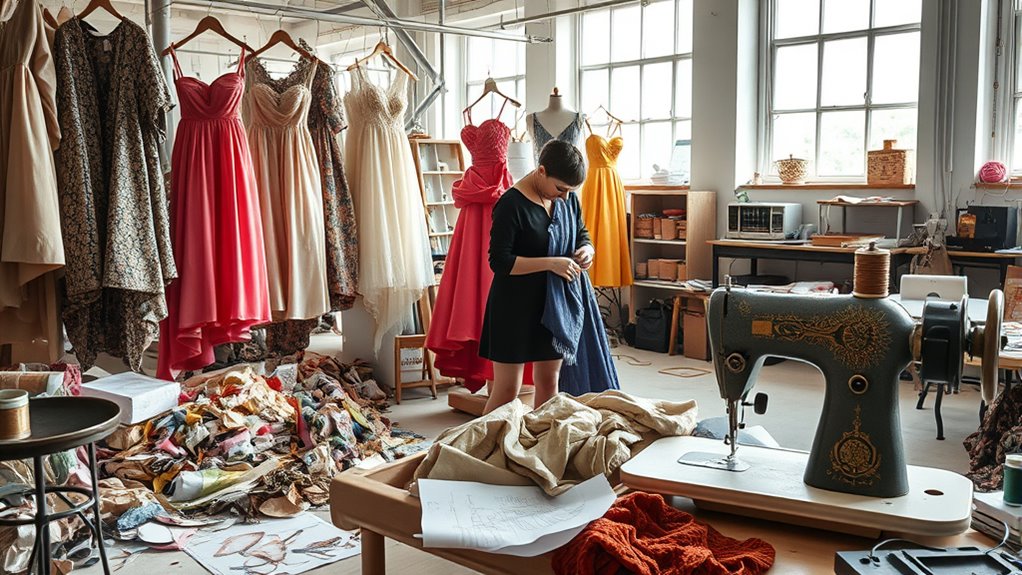
Have you ever wondered how the glamorous world of couture balances its artistry with the urgent need for sustainability? It’s a delicate dance, blending creative expression with responsible practices. One of the biggest challenges is sourcing eco friendly materials that meet the high standards of couture. Designers want fabrics that are luxurious and visually stunning, but also eco-conscious. This means turning to sustainable textiles like organic cotton, hemp, or recycled fibers. However, these materials often lack the same texture, durability, or color versatility as traditional options, making it difficult to achieve the same level of craftsmanship. The industry’s reliance on rare or exotic fabrics further complicates matters, as many of these resources are environmentally damaging or ethically questionable. Finding eco friendly materials that align with couture’s aesthetic and ethical values requires innovation and a willingness to rethink conventional sourcing methods. For example, exploring innovative textile technologies and how they can enhance sustainable fabric development can serve as a metaphor for optimizing material selection in fashion—balancing flexibility and strength. Additionally, advancements in biodegradable fibers are opening new possibilities for designing eco-friendly couture pieces that can be both beautiful and environmentally responsible.
Alongside material concerns, ensuring ethical labor practices remains a significant hurdle. Couture involves intricate craftsmanship and meticulous handwork, often performed by skilled artisans in regions with less stringent labor protections. Many fashion houses are now under increasing pressure to guarantee that everyone involved in making their garments is paid fairly, works in safe conditions, and is not exploited. This isn’t always easy, as verifying supply chains can be complex and costly. Yet, neglecting ethical labor risks tarnishing a brand’s reputation and contradicts the very principles of sustainability. Transparent supply chains and partnerships with certified factories are essential steps, but they require investment and a shift in industry mindset.
To address these issues, many couture houses are exploring innovative solutions. Some are investing in research to develop new eco friendly materials that mimic traditional fabrics’ qualities. Others are establishing direct partnerships with local artisans, promoting fair wages and better working conditions. Additionally, embracing slow fashion principles—focusing on quality over quantity—helps reduce waste and supports ethical labor practices. Education and consumer awareness also play pivotal roles; by informing clients about the importance of sustainability, they can become advocates for change. Ultimately, balancing artistry with sustainability isn’t just about choosing the right fabrics or ensuring fair labor—it’s about transforming the entire creative process to prioritize responsibility without sacrificing elegance. It’s a challenging path, but one that’s necessary for a future where couture remains both beautiful and ethical.
Frequently Asked Questions
How Can Couture Brands Implement Sustainable Sourcing Effectively?
To implement sustainable sourcing effectively, you should prioritize building transparent supply chains and collaborating with suppliers committed to ethical labor practices. Choose partners who adhere to eco-friendly materials and fair wages, and regularly audit their practices. By fostering strong relationships and setting clear sustainability standards, you guarantee responsible sourcing. This approach not only reduces environmental impact but also boosts your brand’s credibility and appeal to conscious consumers.
What Role Do Consumers Play in Promoting Sustainable Couture?
Imagine a world where your choices shape fashion’s future. Your consumer awareness and commitment to ethical purchasing drive brands to adopt sustainable practices. By demanding transparency and supporting eco-conscious couture, you push designers to prioritize sustainability. Your role isn’t passive; it’s a catalyst for change. When you choose responsibly, you empower the industry to innovate, reduce waste, and embrace ethical sourcing, making sustainable couture a reality for everyone.
Are There Certifications That Guarantee Sustainability in Couture?
You might wonder if certifications guarantee sustainability in couture. While some, like the Global Organic Textile Standard (GOTS) or Fair Trade, promote ethical sourcing and transparency initiatives, they don’t cover all aspects of sustainable couture. These certifications help you identify brands committed to responsible practices, but always look for detailed info on sourcing and manufacturing. Remember, transparency and verified standards are key to truly supporting sustainable couture choices.
How Does Couture’s Exclusivity Impact Its Environmental Footprint?
You might not realize it, but couture’s exclusivity markedly impacts its environmental footprint. With only a few pieces produced annually, luxury branding often prioritizes craftsmanship preservation over mass production, reducing waste. However, this limited output can lead to higher resource use per item. While exclusive couture maintains its luxury status, embracing sustainable practices can help balance craftsmanship with environmental responsibility, making the industry more eco-conscious without sacrificing its unique appeal.
Can Innovation in Materials Reduce Couture’s Environmental Impact Significantly?
You can see that innovation in materials, like using innovative fabrics, can significantly cut couture’s environmental impact. By adopting these new fabrics, you promote a more sustainable approach. Additionally, embracing a circular economy encourages recycling and reusing materials, reducing waste. These strategies help you minimize couture’s footprint while maintaining luxury quality. This proactive shift in material innovation is essential for creating a more sustainable future in couture fashion.
Conclusion
To tackle these sustainability challenges, you must see the big picture and act with purpose. Your choices can turn couture from a fleeting trend into a lasting legacy. Like a delicate thread weaving hope into the fabric of fashion, your efforts can inspire change, stitch by stitch. Embrace innovation and mindful practices, because when you commit to sustainability, you’re shaping a future where beauty and responsibility walk hand in hand.