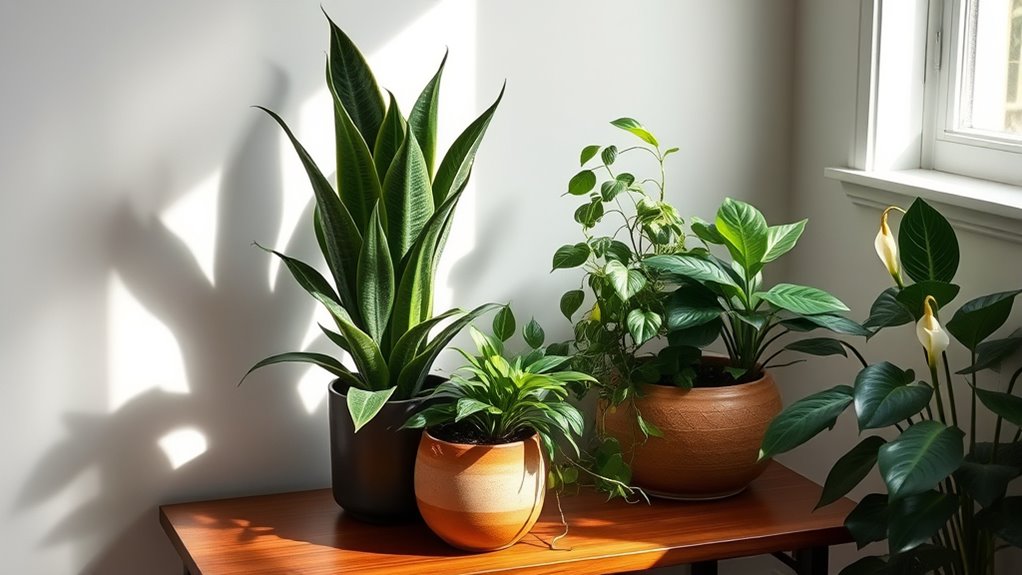

When choosing houseplants for low light, pick resilient varieties like snake plants or pothos that thrive in dim spaces and require minimal care. Position them near shaded windows or use artificial grow lights if natural sunlight is scarce. Regularly dust their leaves and avoid overwatering to keep them healthy. Strategically placing these plants can improve your air quality and add a touch of green to dark corners—discover more tips that help your plants flourish even in low light.
Key Takeaways
- Select resilient plants like snake plants and pothos that thrive in low-light conditions.
- Place plants near north-facing windows or shaded corners for optimal low-light placement.
- Consider using artificial grow lights to supplement natural low-light environments.
- Avoid overwatering and provide minimal maintenance to keep low-light plants healthy.
- Choose plants with air-purifying qualities to enhance indoor air quality effectively.
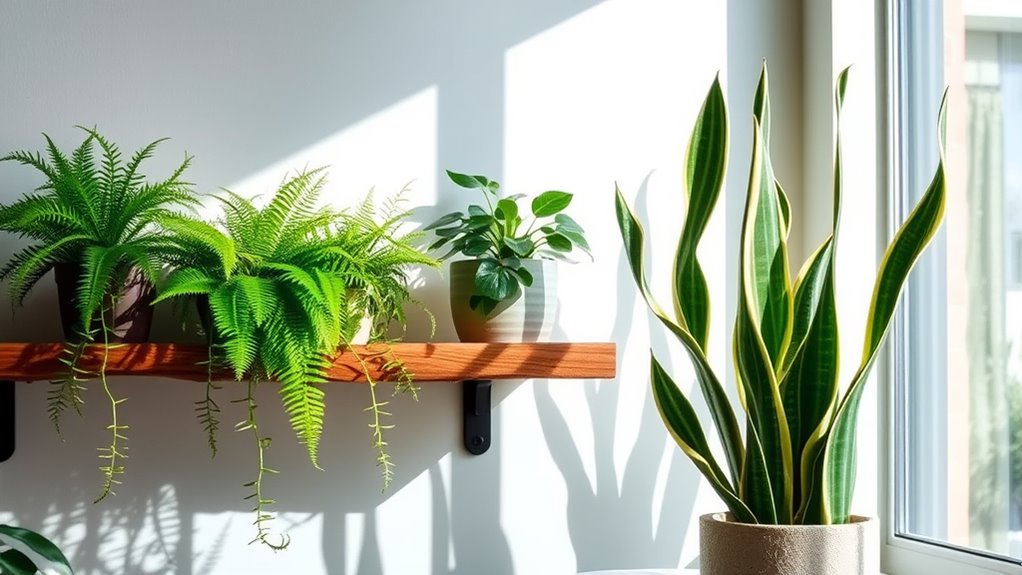
If your home has limited natural light, choosing the right houseplants can still brighten your space and improve your environment. Even in low-light conditions, certain plants excel at filtering toxins and boosting indoor air quality, making them a smart choice for any dim corner. When selecting these plants, consider how much effort they require for plant maintenance. You’ll want options that thrive with minimal fuss, so your space stays healthy and vibrant without becoming a chore.
Many low-light plants are known for their resilience and air-purifying qualities. Snake plants, for example, are nearly indestructible and can survive with very little light and water, all while helping to remove airborne toxins like formaldehyde and benzene. Pothos is another excellent choice; it adapts well to low light and is easy to care for, only needing occasional watering. These plants not only add a touch of greenery but also contribute to better indoor air quality by absorbing pollutants and releasing oxygen, which can make your home feel fresher and more inviting.
Low-light plants like snake plants and pothos purify air and thrive with minimal care.
When it comes to plant maintenance, low-light plants generally require less frequent watering and less direct sunlight, making them ideal for busy or forgetful plant owners. Keep in mind that even the most tolerant plants need some basic care—like occasional watering and dusting their leaves—to stay healthy. Regularly wiping dust off the foliage ensures they can efficiently perform photosynthesis, even in subdued lighting. Also, avoid overwatering; in low-light environments, plants tend to need less water because they grow more slowly.
Position your low-light plants strategically to maximize their benefits and ensure their survival. Place them near north-facing windows or in shaded corners where they won’t be exposed to harsh sunlight. If natural light is scarce, consider supplementing with artificial grow lights designed for indoor plants. These lights help maintain indoor air quality by supporting the plants’ growth and health, ensuring they continue to filter toxins and produce oxygen effectively. Additionally, understanding the contrast ratio of your plants’ environment can help optimize their health and visual appeal.
Frequently Asked Questions
How Often Should I Water Low-Light Houseplants?
You should water your low-light houseplants about once every 1-2 weeks, adjusting based on soil moisture. Check the soil regularly by sticking your finger about an inch deep; if it feels dry, it’s time to water. A consistent watering schedule helps prevent overwatering and root rot. Remember, low-light plants prefer slightly drier soil, so avoid watering too frequently and always allow the topsoil to dry out between watering sessions.
Can Low-Light Plants Survive in Artificial Lighting?
Imagine a Victorian lantern illuminating a humble parlor—your low-light plants can thrive under artificial lighting, too. Yes, they can survive, but their health depends on the light quality and duration. Use grow lights or LED bulbs designed for plant growth, and guarantee your plants get enough light daily. Proper artificial lighting mimics natural conditions, boosting plant survival and keeping your green companions happy and healthy indoors.
What Are the Common Pests for Low-Light Houseplants?
You should watch out for common pests like spider mites, mealybugs, and aphids on your low-light houseplants. To prevent infestations, regularly inspect your plants and maintain good pest prevention practices, such as keeping leaves clean and avoiding overwatering. If you notice signs of pests, act quickly with natural remedies or insecticidal soap. Staying vigilant helps make sure your plants stay healthy and pest-free despite the low-light environment.
Do Low-Light Plants Require Special Fertilizers?
Low-light plants don’t typically require special fertilizers, but their fertilizer needs are usually less demanding. You should use a balanced, diluted fertilizer during the growing season to meet their nutrient requirements without overfeeding. Since these plants grow slowly, avoid over-fertilizing, which can cause root problems. Check the plant’s specific needs and adjust your fertilizing schedule accordingly, ensuring they get enough nutrients to stay healthy and vibrant.
How Do I Prevent Leggy Growth in Low-Light Plants?
To prevent leggy growth in your low-light plants, you should focus on light management by providing as much indirect light as possible. If your plant starts to stretch or plant stretching occurs, consider moving it closer to a brighter spot or supplementing with artificial grow lights. Regularly rotate the plant so all sides receive light, encouraging bushier growth and reducing the tendency to become leggy.
Conclusion
Now that you know which houseplants thrive in low light, you’re all set to create a lush, green space indoors. Did you know that over 60% of houseplants are suitable for low-light conditions? This means you don’t need a sunny window to enjoy greenery. With the right choices, you can easily brighten your home and improve your mood, even without direct sunlight. So go ahead—bring those resilient plants into your space and enjoy their benefits daily!