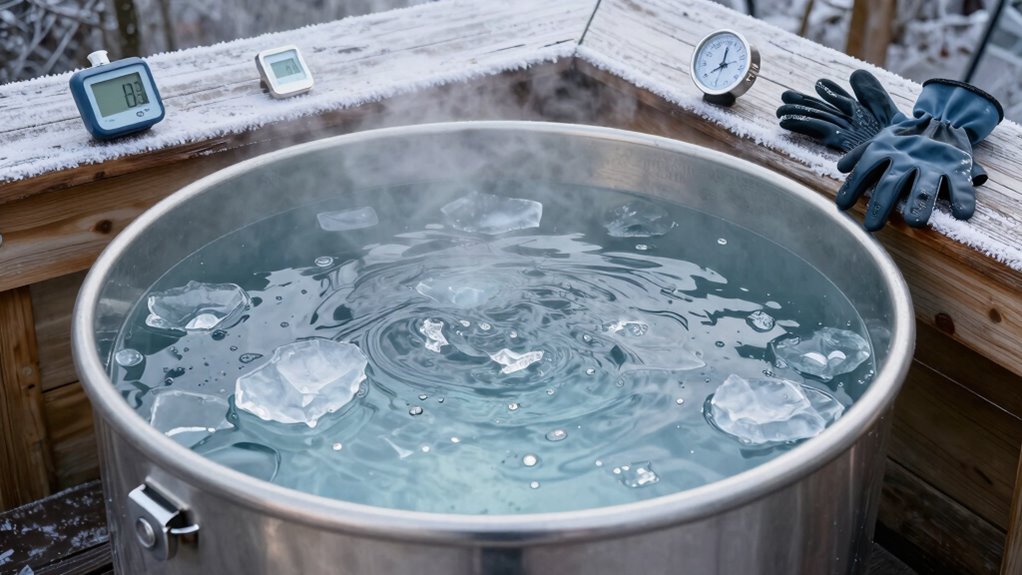

To set up a safe cold plunge, aim for a temperature between 50°F and 59°F (10°C to 15°C). Start at the higher end if you’re new, then gradually lower it as you get comfortable. Always monitor the water with a thermometer, check equipment regularly, and guarantee safety by limiting initial dips to 3-5 minutes. Proper maintenance and safety precautions are key—keep exploring to learn how to optimize your cold plunge setup and stay safe.
Key Takeaways
- Maintain water temperature between 50°F and 59°F (10°C to 15°C) for safe, effective cold plunges.
- Start with shorter sessions (3-5 minutes) and gradually increase as your body adapts.
- Regularly monitor water temperature with a thermometer to prevent unsafe fluctuations.
- Ensure all equipment functions correctly before each use to avoid safety hazards.
- Limit exposure for individuals with health conditions, especially cardiovascular issues, and have warm-up options ready.

Setting up a cold plunge can seem intimidating at first, but with the right steps, it becomes a straightforward process. Knowing how to establish proper temperature ranges and safety basics guarantees you get the most out of your hydrotherapy benefits while keeping your equipment in top shape. The key is understanding that a well-maintained setup not only enhances your experience but also prolongs the life of your plunge.
Start by selecting a suitable container or tub that can handle cold temperatures and regular use. Once installed, you’ll want to focus on maintaining water quality through filtration and regular cleaning. Equipment maintenance is essential here—clean filters, check for leaks, and ensure the pump is functioning properly. Proper maintenance prevents bacteria buildup and keeps your hydrotherapy sessions safe and effective. Regular checks for water quality ensure a healthier environment and better results. Additionally, maintaining proper water chemistry can help prevent corrosion and damage to your equipment, ensuring longevity. Incorporating routine maintenance into your schedule can help you catch potential issues early before they escalate. Regularly inspecting electrical components is also crucial for safety and efficiency. To further safeguard your setup, consider installing a temperature monitoring system that continuously tracks water temperature and alerts you to fluctuations.
Choose a durable tub, maintain water quality with regular cleaning, and ensure equipment functions properly for safe hydrotherapy.
When it comes to temperature ranges, the ideal cold plunge typically sits between 50°F and 59°F (10°C to 15°C). This range offers significant hydrotherapy benefits, such as reducing inflammation, easing sore muscles, and improving circulation. However, it’s important to tailor the temperature to your comfort level and health status. Beginners should start at the higher end of the spectrum and gradually lower the temperature over time as they become more accustomed to the cold. Always have a thermometer on hand to monitor water temperature precisely, and adjust your heater or cooling system accordingly.
Safety is paramount when setting your cold plunge. Never submerge yourself in water that’s too cold, especially if you have underlying health conditions like cardiovascular issues. Limit your time in the plunge to 3-5 minutes initially, and listen to your body’s signals. Overexposure can lead to hypothermia or shock, so always have a way to exit quickly and warm up afterward. Before each use, check that all equipment is functioning correctly—faulty heaters or pumps can cause temperature fluctuations that might be unsafe. Keep the water level consistent and ensure the filtration system is running smoothly to prevent water stagnation or contamination. Regularly testing your setup with testing kits can help catch issues early before they become hazardous. Additionally, consulting with a healthcare professional before starting cold plunge therapy is advisable, especially if you have existing health concerns.
Incorporate regular checks into your routine to confirm that your setup remains safe and effective. This includes inspecting electrical components, cleaning filters, and testing water temperature. Doing so not only maximizes the hydrotherapy benefits—such as improved recovery and reduced soreness—but also helps avoid costly repairs. Properly maintaining your equipment and water quality can also help prevent corrosion and extend the lifespan of your setup. With these safety basics and proper equipment maintenance, your cold plunge becomes a dependable tool for wellness, offering consistent results and a revitalizing, cool experience each time.
cold plunge tub with temperature control
As an affiliate, we earn on qualifying purchases.
As an affiliate, we earn on qualifying purchases.
Frequently Asked Questions
How Long Should I Stay in a Cold Plunge for Benefits?
You should aim for 5 to 10 minutes in a cold plunge, depending on your experience and comfort. During cold immersion techniques, monitor the temperature closely to prevent overexposure, and listen to your body’s signals. Start with shorter sessions, gradually increasing duration as your tolerance builds. Always prioritize temperature monitoring to stay within safe limits, ensuring you enjoy the benefits without risking hypothermia or adverse effects.
Can Beginners Safely Use Cold Plunges Without Prior Experience?
As a beginner, you can safely use cold plunges by starting with short sessions, around 1-3 minutes, to allow water acclimation. This helps your body gradually adapt to cold shock without overwhelming it. Always listen to your body, breathe steadily, and avoid staying in too long initially. Over time, your tolerance improves, but safety always comes first—consult a professional if unsure.
Are There Specific Health Conditions That Contraindicate Cold Plunges?
If you have heart conditions or circulatory issues, cold plunges might not be safe for you. These conditions can worsen with sudden temperature drops, risking complications like arrhythmias or blood vessel constriction. Always consult your healthcare provider before trying cold plunges if you have these health concerns. They can advise whether cold exposure is appropriate and help you develop a safe plan tailored to your health needs.
How Often Should I Incorporate Cold Plunges Into My Routine?
Think of your cold plunge routine as watering a delicate plant—too often can cause stress, too infrequent might hinder growth. You should aim for 2-3 sessions weekly, allowing your body to adapt and benefit from post-immersion recovery and enhanced mental clarity. Regular dips boost resilience without overtaxing your system, so listen to your body’s signals and adjust your frequency to nurture best health.
What Are Signs of Hypothermia During Cold Plunge Sessions?
During a cold plunge, watch for signs of hypothermia, like a shivering response that becomes uncontrollable and a skin pale appearance. If you start shivering intensely or notice your skin turning unusually pale or cold to the touch, it’s a sign to exit immediately. These symptoms indicate your body is struggling to maintain warmth, so listen to your body and prioritize safety to prevent serious health issues.
Conclusion
Setting up your cold plunge carefully guarantees you enjoy its benefits safely. Think of it like tuning a guitar—when everything’s just right, the notes sound perfect. I once saw someone plunge into an improperly set plunge and quickly realize the importance of temperature control; they felt the shock and had to come out immediately. By following safety basics and keeping temperatures in check, you’ll turn your cold plunge into a revitalizing, safe experience—like hitting the perfect note every time.