
To use color meditation for calming through clothing hues, choose colors that reflect or promote serenity like soft blue or green. Visualize these hues as radiant light surrounding you, emphasizing their calming qualities. Wearing clothes in these shades or imagining their energy while meditating reinforces relaxation and emotional balance. By practicing consistently and paying attention to how different colors influence your mood, you’ll discover more effective ways to achieve your calm. Keep exploring to deepen your understanding of color’s powerful influence.
Key Takeaways
- Visualize calming hues like soft blue or green to promote relaxation and reduce anxiety during meditation.
- Wear clothing in serene colors to create a grounding environment that reinforces emotional calmness.
- Use color symbolism to focus on specific emotional qualities, enhancing mental clarity and tranquility.
- Incorporate consistent color visualization and clothing choices to rewire emotional responses over time.
- Align your surroundings with calming hues to deepen the meditative experience and support emotional regulation.

Have you ever wondered how colors can influence your mood and mind? It’s a fascinating idea that the hues you wear or visualize can shape your emotional state. When you focus on specific colors during meditation, you tap into hue symbolism—the meanings and associations tied to each color. For example, green often symbolizes growth and balance, while blue can evoke calmness and clarity. Understanding these associations helps you harness colors intentionally to promote relaxation and mental clarity. This is where color therapy techniques come into play, guiding you to use visualizations of particular hues to soothe or energize your mind. By incorporating color meditation into your routine, you actively engage with these techniques to create a calming mental environment.
Colors influence mood; visualizing soothing hues during meditation promotes relaxation and clarity through hue symbolism and color therapy techniques.
The process begins with choosing a color that resonates with your current mood or desired state. If you’re feeling anxious or overwhelmed, visualizing a peaceful shade like soft blue or gentle green can help ground you. As you sit quietly, picture yourself surrounded by this hue, allowing it to fill your mind and body. This visualization isn’t just about seeing the color in your mind’s eye; it’s about immersing yourself in its energy. You might imagine the hue as a radiant light enveloping you, radiating warmth and tranquility. This practice taps into hue symbolism, reinforcing the emotional qualities associated with the color, and amplifies the calming effects of your meditation. Incorporating color psychology can further enhance your understanding of each hue’s impact on your emotional state.
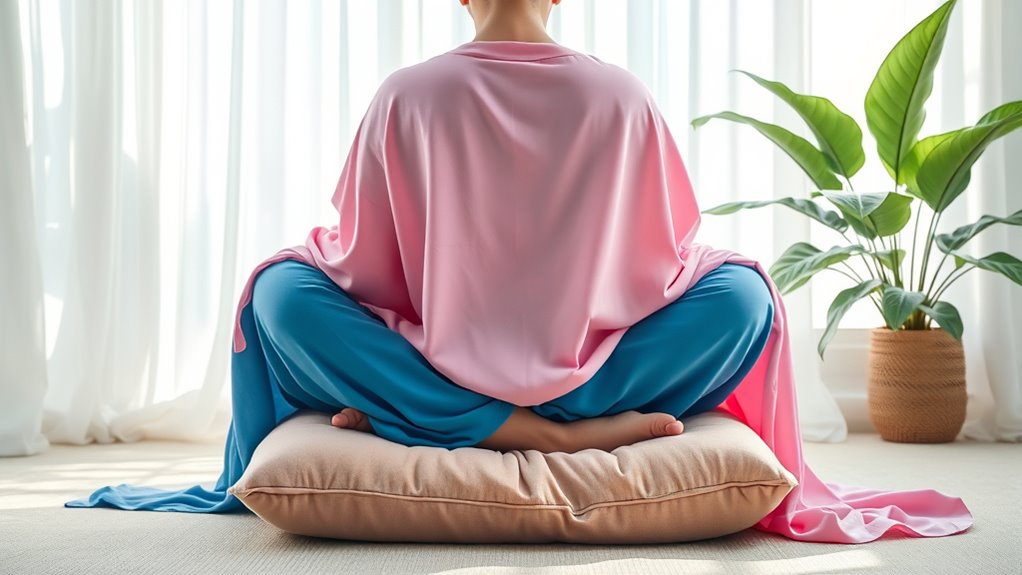
Additionally, incorporating predictive analytics into your understanding of color choices can help tailor your meditative practice by identifying which hues are most effective for your emotional well-being. Using clothing hues during meditation can also enhance this experience. Wearing garments in colors linked to serenity, such as pastel pinks or calming blues, can serve as a physical anchor for your visualization. When your clothing aligns with your mental imagery, you reinforce the color’s effects and deepen your state of relaxation. You can even experiment with color therapy techniques by incorporating specific hues into your clothing or surroundings, creating a more immersive environment that supports your meditation goals.
The key is consistency. Regularly practicing color meditation by visualizing and wearing calming hues can help rewire your emotional responses over time, making it easier to access a peaceful state whenever you need it. Pay attention to how different colors influence your mood and adjust your visualization accordingly. Over time, you’ll develop a personalized palette of colors that promote calm, focus, or energy, depending on your needs. Color meditation becomes more than just a visualization—it’s a practical tool to manage your emotional landscape, using hue symbolism and color therapy techniques to bring balance and serenity into your daily life.
Frequently Asked Questions
Can Color Meditation Improve Emotional Well-Being Long-Term?
Color meditation can boost your emotional resilience over time by leveraging color psychology. When you focus on calming hues, you train your mind to respond more calmly to stress and challenges. Regular practice helps you build emotional resilience, leading to better mental health. So, yes, incorporating color meditation into your routine can improve your emotional well-being long-term by helping you stay centered and balanced through visual cues.
Are Certain Clothing Colors More Effective for Specific Mood Issues?
You wonder if certain clothing colors are more effective for specific mood issues. In color therapy, emotional color associations suggest that wearing calming hues like blue can reduce anxiety, while bright yellows may boost energy. You can use these insights to choose clothing that aligns with your emotional needs, enhancing your mood. By understanding these associations, you actively support your emotional well-being through intentional color choices.
How Do Cultural Differences Influence Color Meditation Practices?
You might think cultural differences complicate color meditation, but understanding cultural symbolism can deepen your practice. Many traditional practices use specific colors to symbolize emotions or energies, enhancing mindfulness. By respecting these cultural nuances, you can personalize your meditation, making it more meaningful. Embrace the diversity of traditional practices, and you’ll find that incorporating cultural symbolism enriches your experience and broadens your perspective on calming through clothing hues.
Is There Scientific Evidence Supporting the Benefits of Color Visualization?
You might wonder if science backs color visualization’s benefits. Neuroscience studies show that our brains respond to colors, influencing emotions and stress levels. Color psychology suggests certain hues can promote calmness or focus. While more research is needed, many find that visualizing calming colors helps improve mood and relaxation. So, yes, there’s growing evidence supporting the positive effects of color visualization, rooted in brain responses and psychological principles.
Can Color Meditation Be Integrated With Other Relaxation Techniques?
Imagine your mind’s a chaotic circus, and you’re the ringmaster. You can totally integrate color meditation with breathing exercises or guided imagery, creating a soothing spectacle instead of a chaotic one. Just picture calming colors blending with deep breaths, guiding your focus. Combining these techniques amplifies relaxation, helping you achieve tranquility faster, like turning a wild clown act into a peaceful lullaby—proof that your relaxation toolbox just got a lot more colorful.
Conclusion
By incorporating color meditation into your routine, you can effortlessly cultivate calm and clarity. Some might think it’s too simple or ineffective, but focusing on hues truly engages your mind and body, creating a powerful sense of tranquility. Don’t dismiss the technique before giving it a try—its subtle yet profound impact can transform your stress into serenity. With consistent practice, you’ll discover that even small shifts in color perception can lead to significant emotional well-being.