

To do a digital detox at home, set clear boundaries like no screens during meals or before bed, and use apps to track your usage. Create routines that include offline activities such as reading or walking, and turn off notifications during certain hours. Designate tech-free zones to reconnect with yourself and others. By making these small changes, you’ll foster healthier habits and enjoy more presence. Keep exploring to discover even more ways to balance your digital life.
Key Takeaways
- Establish designated tech-free zones and times to promote intentional unplugging and reduce digital distractions.
- Implement routines like turning off notifications and leaving devices out of reach during focused or relaxing periods.
- Replace screen time with offline activities such as reading, walking, or hobbies to foster mental well-being.
- Educate yourself on digital privacy and cookies to make informed online choices and reduce unnecessary data sharing.
- Practice regular digital detoxes to reclaim time, improve relationships, and achieve a calmer, more focused lifestyle.
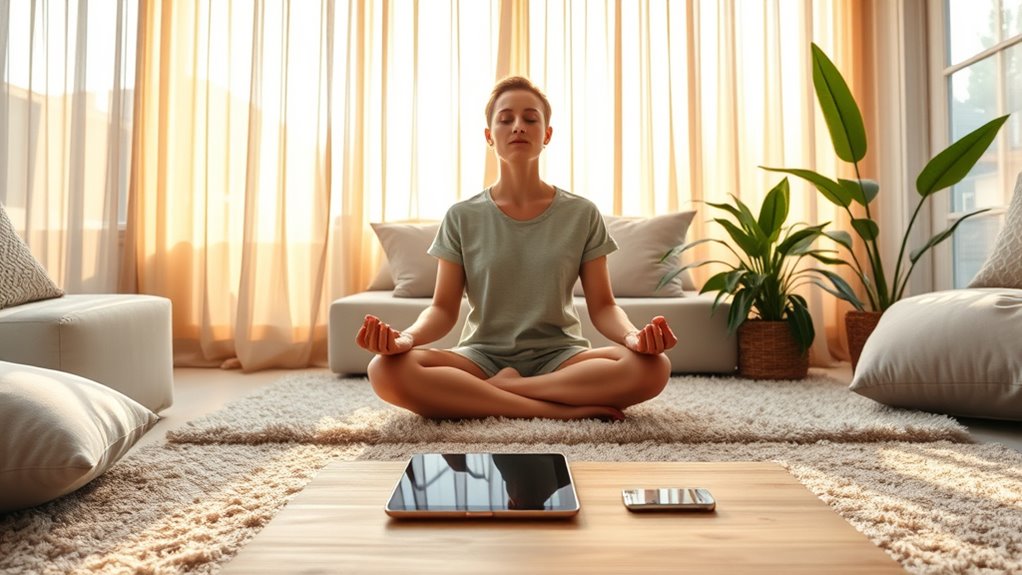
Starting with screen time reduction is essential. You can begin by setting specific boundaries for device use, such as no screens during meals or an hour before bed. Use apps or device settings to monitor and limit your daily screen time, making it easier to stay aware of how much time you’re spending online. When you reduce your screen exposure, you’ll notice less mental fatigue and more space for real-world interactions, hobbies, or simply relaxing without digital distractions. Remember, the goal isn’t to eliminate screens entirely but to gain control over how and when you use them. Additionally, understanding the role of cookies in digital privacy can help you make more informed choices about your online habits. Creating unplugging routines is the next step. These routines serve as intentional pauses in your day, helping you disconnect from the digital world. For example, designate certain times of the day as tech-free zones—perhaps during family dinners or in the hour before bedtime. Use these moments to engage in activities that don’t involve screens, such as reading a book, taking a walk, or practicing mindfulness. Over time, these routines become habits that make unplugging feel natural rather than forced. They also foster a sense of presence and deepen your connection with those around you. Incorporating small habits can make a significant difference. Turn off notifications during certain hours, or leave your phone in another room while working or relaxing. Consider replacing screen time with offline activities you enjoy, like journaling, cooking, or doing puzzles. These activities not only help you disconnect but also promote mental well-being and creativity. It’s about creating a rhythm in your day that values moments of stillness and real-world engagement over constant digital stimulation. Ultimately, a digital detox at home is about reclaiming your time and mental space. It’s not about avoiding technology altogether but about cultivating healthier relationships with your devices. By consciously practicing screen time reduction and establishing unplugging routines, you can find a better balance that nurtures your overall well-being. The more you practice, the more natural it becomes to step away from screens and reconnect with yourself and your surroundings. This intentional approach can lead to a calmer, more focused, and more fulfilling life—right from the comfort of your home.
Frequently Asked Questions
How Long Should a Digital Detox Last for Optimal Benefits?
A digital detox should last at least 24 to 48 hours for ideal benefits, especially if you’re aiming to reset your screen time limits. Longer detox durations, like a weekend or a week, help you reconnect with real-life activities and reduce dependency. Shorter periods can still be effective, but extended detoxes deepen the mental clarity and stress relief, making it easier to maintain healthier digital habits afterward.
Can Children Safely Participate in a Digital Detox at Home?
Yes, children can safely participate in a digital detox at home with proper parental supervision. It’s like guiding a tiny explorer through a new world. Set clear limits on screen time, guarantee activities are engaging, and supervise their interactions with devices. You help them develop healthier habits and reduce screen time, making the detox safe and effective. Your involvement is key to a positive, balanced digital experience for your child.
What Are Effective Activities to Replace Screen Time During Detox?
You can replace screen time with activities like mindful journaling, which helps your child reflect and relax, and nature walks, encouraging physical activity and appreciation for the outdoors. These activities foster creativity, reduce stress, and promote mindfulness. Encourage your child to explore new hobbies or read books together. By engaging in these meaningful activities, you make the detox enjoyable and effective, helping them develop healthier digital habits.
How Do I Handle Work Commitments During a Digital Detox?
You handle work commitments during a digital detox by practicing effective time management and workload balancing. Set specific times for checking emails and completing tasks, so you don’t feel overwhelmed. Communicate your plans to colleagues to manage expectations, and prioritize urgent work first. Use this focused approach to stay productive without constant screen time, allowing you to enjoy the benefits of your detox while meeting your professional responsibilities.
Are There Any Health Risks Associated With a Prolonged Digital Detox?
Sure, a prolonged digital detox might seem like a health risk, but ironically, ignoring screens can actually reduce eye strain and sleep disruption. Without constant notifications and blue light exposure, your eyes get a break, and your sleep quality improves. Just remember, if you avoid screens too long, you might miss urgent messages. Balance is key—so enjoy the benefits without overdoing it to prevent any unintended health hiccups.
Conclusion
So, here you are, unplugged and thriving, all without scrolling or pinging. Ironically, in trying to escape the digital chaos, you’ve found a little peace—by simply turning off your devices. Who knew that the best way to reconnect with yourself is by disconnecting from screens? Now, you can enjoy real moments, not just notifications. Sometimes, the tiniest break from digital life gives you the biggest boost—proof that less really is more.