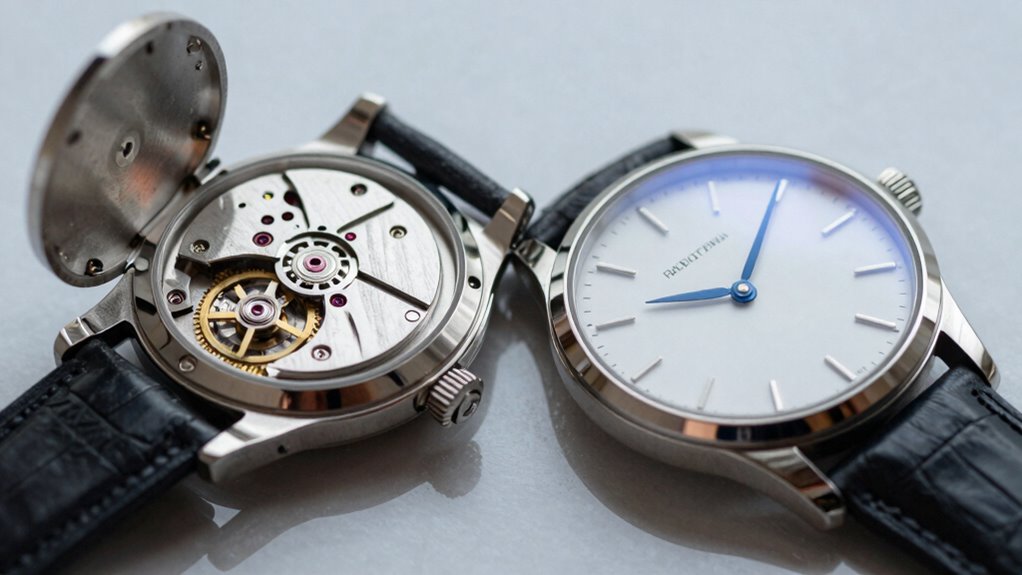

Automatic watches need regular servicing every 3-5 years for cleaning and lubrication, and you’ll have to handle their mechanical parts with care. Quartz watches mainly require battery changes and gasket checks for water resistance. Both types benefit from water resistance maintenance to prevent damage, but automatic watches demand more detailed mechanical upkeep. Staying on top of these differences helps extend your watch’s life. If you want to find out more, there’s much more to discover about proper watch care.

Get your wardrobe favorites delivered free — and shop member deals
- Fast, free delivery on millions of items
- Access to Prime Big Deal Days deals on October 6–7
- Prime Video, Amazon Music and more included
Key Takeaways
- Automatic watches require regular comprehensive servicing every 3-5 years, while quartz watches mainly need battery and seal replacements.
- Quartz watches have quicker, cheaper battery replacements; automatic watches depend on mechanical winding and manual maintenance.
- Both types need water resistance checks and gasket replacements, but automatic watches are more sensitive to water exposure if seals fail.
- Routine maintenance preserves accuracy and prevents internal damage, with automatic watches needing more detailed mechanical care.
- Proper handling and scheduled servicing extend the lifespan and value of both automatic and quartz watches.
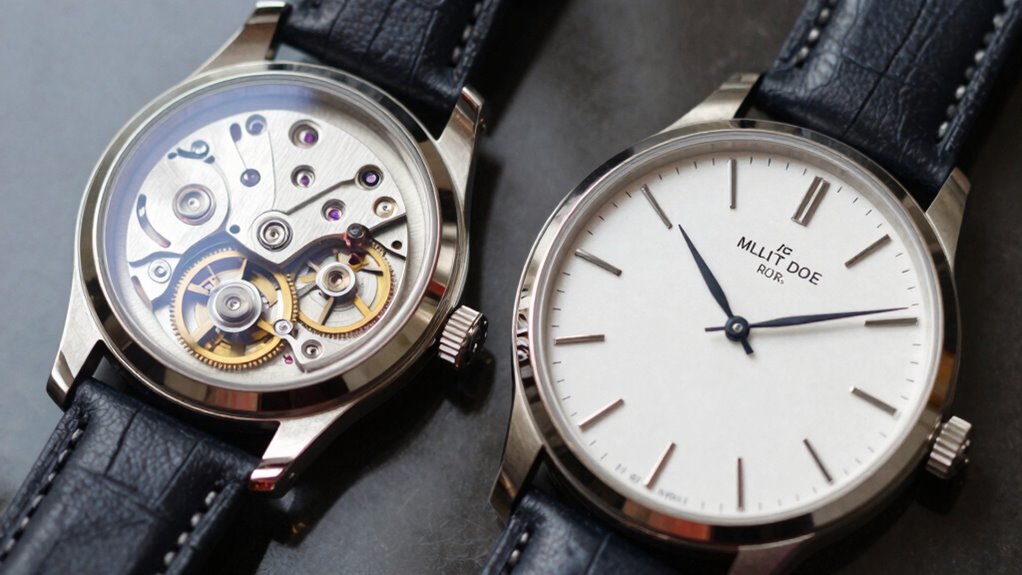
Are you curious about how maintaining automatic and quartz watches differs? Understanding the specific needs of each type can help you keep your timepieces in top shape and guarantee they last for years. One of the key differences lies in their power sources. Quartz watches run on batteries, which need regular replacement, usually every one to two years. When the battery dies, you’ll notice your watch stops, and replacing it is generally quick and affordable. Conversely, automatic watches are powered by the movement of your wrist, so they don’t require batteries. Instead, they rely on a complex system of gears and a rotor that winds the mainspring as you wear the watch. If you wear an automatic regularly, it stays wound, but if you don’t, you’ll need to manually wind or shake it to keep it running.
Water resistance is another critical aspect to consider in maintenance. Both automatic and quartz watches can be designed to withstand water exposure, but their water resistance ratings should always be checked and maintained properly. Over time, the gaskets that seal the watch case can degrade, which might compromise water resistance. For watches used in water, regular checks—usually during servicing—are essential to verify the seals are intact and functioning. This can involve replacing gaskets or re-sealing the case, which is especially important if you’ve been exposed to water or have noticed condensation under the crystal. For automatic watches, water resistance maintenance is particularly crucial because moisture can damage delicate mechanical parts. Quartz watches, being less complex mechanically, are often more resistant to water ingress, but they still require gasket replacement to maintain their water resistance. Regular water resistance checks are vital to prevent damage and ensure ongoing protection.
Routine servicing also differs between the two. Automatic watches generally need more thorough servicing, typically every 3 to 5 years, to clean and lubricate the intricate movement. Quartz watches, on the other hand, usually need less maintenance—mainly battery replacement and occasional checks on the seals. While replacing the battery, it’s a good idea to have the water resistance checked and restored if needed. Neglecting these upkeep steps can lead to corrosion, reduced accuracy, or complete failure of the watch. To sum up, maintaining automatic and quartz watches involves understanding their unique needs: automatic watches require more detailed mechanical care, and both types benefit from regular water resistance checks and battery replacements when applicable. Proper maintenance assures your watch remains reliable and preserves its value over time. Additionally, knowing the water resistance ratings of your watch can help you avoid unnecessary damage during water activities. Regular maintenance practices contribute significantly to the longevity of your timepiece, especially in challenging environments. Being aware of the specific maintenance needs for your watch type can also help you plan better care routines and avoid costly repairs. Proper handling and timely servicing can also extend the lifespan of the internal components, ensuring your watch continues to function accurately for years to come.
As an affiliate, we earn on qualifying purchases.
Frequently Asked Questions
How Long Does Automatic Watch Lubrication Last Before Needing a Service?
Automatic watch lubrication typically lasts about 3 to 5 years before needing a service. You should keep an eye on lubrication longevity, as dried or displaced oil can affect performance. Regular servicing ensures your watch stays accurate and smooth. It’s best to follow the recommended service interval from the manufacturer, but if your watch shows signs of irregular timekeeping or stops frequently, it might be time for a professional checkup sooner.
Are There Specific Brands Better Suited for Automatic or Quartz Maintenance?
You’ll find certain brands like Rolex and Omega excel with automatic watches, offering better brand compatibility and often higher maintenance costs, but they promise longevity. For quartz watches, brands like Seiko and Citizen are more budget-friendly and easier to maintain. Imagine a sleek, shimmering dial—your choice hinges on your style and budget. Prioritize brand reputation and maintenance costs to keep your timepiece ticking perfectly through the years.
Can I Switch My Watch From Automatic to Quartz or Vice Versa?
You can’t switch your watch directly from automatic to quartz or vice versa because of movement compatibility. Automatic and quartz watches have different mechanisms, so changing one to the other isn’t feasible without replacing the entire movement. If you want a quartz watch, you’ll need to get a new one with a battery replacement designed for that movement. Consult a professional watchmaker to explore your options and avoid damaging your timepiece.
What Are Common Signs My Watch Needs Professional Maintenance?
You’ll notice your watch needs professional maintenance if it starts losing or gaining time, or if it stops unexpectedly. Reduced accuracy, unusual noises, or difficulty winding are signs. A professional servicing includes watch lubrication to guarantee smooth movement and prevent wear. If you notice any of these issues, it’s best to take your watch to a specialist who can perform proper maintenance and keep it running perfectly.
How Does Maintenance Affect the Resale Value of My Watch?
Regular maintenance can boost your watch’s resale value by preserving its brand durability and ensuring it functions perfectly. When you keep your watch well-maintained, it appears more desirable and trustworthy to buyers, aligning with current market trends favoring well-cared-for timepieces. Neglecting upkeep, however, can diminish its condition, making it less appealing and lowering its resale price. Proper care demonstrates your commitment, increasing the watch’s overall value when selling.
Conclusion
Understanding the maintenance differences between automatic and quartz watches helps you make informed choices. Did you know that automatic watches require about 20-30% more servicing due to their intricate mechanical parts? This extra care guarantees longevity and precision, but also means more attention over time. By staying aware of these needs, you can keep your watch running smoothly for years. Ultimately, your choice depends on your lifestyle and how much upkeep you’re willing to commit to your timepiece.
Fall Picks
fall essentials
As an affiliate, we earn on qualifying purchases.