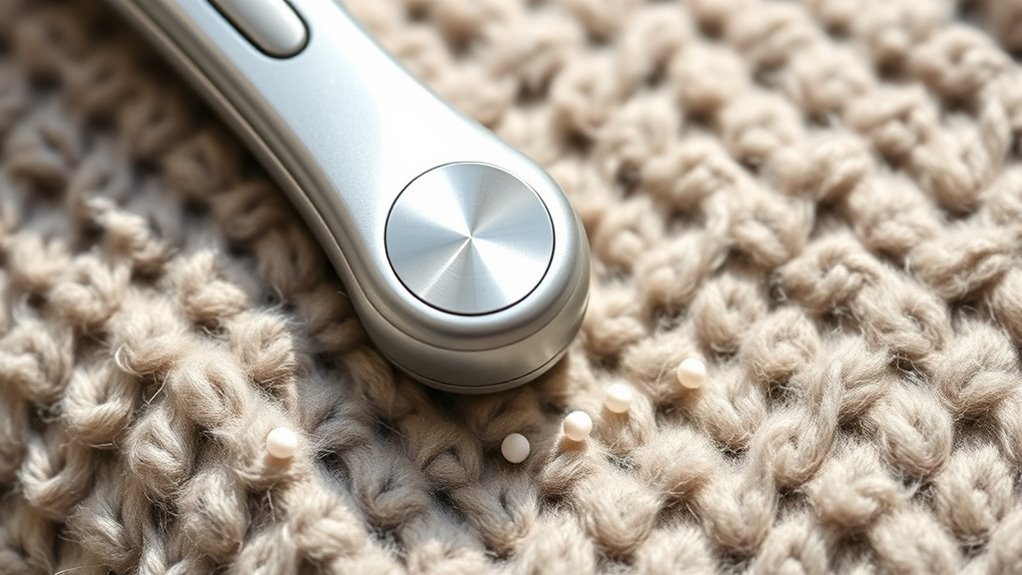

Both electric and manual de-pilling devices can work well, but choosing the right one depends on your fabric and pilling severity. Electric models are powerful and ideal for thick, heavy fabrics like sweaters or fleece, removing pills quickly and evenly. Manual options are quieter, portable, and better for delicate fabrics like wool or cashmere. Knowing your needs helps pick the best device. Keep going to discover more tips to keep your clothes looking their best.
Key Takeaways
- Electric de‑pillers are more effective on thick, heavily pilled fabrics, removing pills quickly and uniformly.
- Manual de‑pillers work well for delicate fabrics like wool or cashmere, offering gentle, precise pill removal.
- Proper device selection based on fabric type and pilling severity ensures better results and garment preservation.
- Both electric and manual options can be effective if used correctly, but electric models are better for large, bulky items.
- Technological advances, like AI integration, enhance device performance and user experience across both manual and electric de‑pillers.

De‑pilling devices are essential tools for keeping your clothes looking fresh and new. When it comes to fabric care, removing those unsightly pills can make a significant difference in how your garments appear and feel. You might wonder whether to choose an electric or manual de‑pilling device, as both options claim to restore your clothes’ smoothness. Understanding the differences can help you make an informed decision that fits your needs and budget.
Electric de‑pillers are generally more powerful, making them ideal for tackling thicker fabrics like sweaters, fleece, or heavy cotton. They typically feature motorized blades that rotate or oscillate, allowing you to cover larger areas quickly and efficiently. Because of their strength, electric devices tend to remove pills faster and more uniformly, which is especially helpful if you’re dealing with heavily pilled items. However, they often come at a higher price point and require a power source, which could be inconvenient in certain settings or if you’re traveling.
Electric de-pillers are powerful, ideal for thick fabrics, and remove pills quickly but need a power source.
Manual de‑pilling devices, on the other hand, are usually more affordable and portable. They work by using a handheld blade or lint shaver that you manually glide over the fabric’s surface. While they may take a bit more effort and time to achieve the same results as an electric model, they are perfectly effective for light to moderate pilling on delicate fabrics like wool, cashmere, or synthetics. Manual options are also quieter and don’t require batteries or electricity, making them a convenient choice for quick touch-ups or when you’re on the go. Choosing the right device depends on the fabric types you most often care for and how frequently you need to de-pill your wardrobe.
In terms of fabric care, both electric and manual de‑pillers can be effective if used correctly. The key is to select the right device for your typical clothing materials. For instance, if you frequently deal with bulky, heavily pilled items, investing in an electric model might save you time and effort. Conversely, if most of your wardrobe consists of delicate or lightweight fabrics, a manual device may be sufficient and gentler on your clothes. Considering your usual fabric care needs will help you decide which type aligns best with your lifestyle.
Additionally, incorporating AI-powered tools or sentiment analysis can help brands better understand customer preferences and improve de‑pilling device features based on user feedback. Modern fabric technology continually advances, enabling devices to work more effectively and safely on various textiles. Ultimately, both electric and manual de‑pilling devices have their advantages. Electric models are powerful and efficient but cost more and require a power source. Manual devices are budget-friendly, portable, and gentle, suitable for lighter fabrics and quick fixes. Whichever you choose, using the right tool will keep your clothes looking their best, prolonging their lifespan and maintaining their appearance.
Frequently Asked Questions
Are De-Pilling Devices Safe for All Fabric Types?
You wonder if de-pilling devices are safe for all fabric types. While many devices work well, fabric compatibility varies—delicate fabrics like silk or fine wool may get damaged or develop safety concerns if mishandled. Always check the manufacturer’s instructions and test on a small area first. Using the right device for your fabric guarantees safety and effective pilling removal, preventing accidental damage or safety worries.
How Long Does It Take to See Results With De-Pilling Devices?
Did you know that most users see visible improvement within just 5 to 10 minutes of using a de-pilling device? Timing expectations vary depending on fabric severity, but typically, you’ll notice fewer pills after a few sessions. For the best results, use the device consistently, and don’t expect instant perfection. With regular use, you’ll see a gradual, satisfying improvement in your clothing’s appearance over time.
Can De-Pilling Devices Damage Delicate or Fragile Clothing?
You might wonder if de-pilling devices can harm delicate or fragile clothing. Generally, if you choose a device with good fabric safety features and use it carefully, it shouldn’t damage your clothing. However, always check the device durability and follow the instructions to avoid pulling or snagging. Being gentle and testing on an inconspicuous area first helps protect your favorite fabrics from potential harm.
Do De-Pilling Devices Work on All Types of Pilling?
Think of pilling like stubborn weeds on your favorite shirt’s garden. You wonder if de-pilling devices can handle all types of pilling. The answer depends on fabric compatibility and pilling severity. Light pilling on delicate fabrics may not respond well, while heavier pilling on sturdy materials gets easier. So, yes, these devices can work on many types, but their effectiveness varies based on fabric and how bad the pilling is.
Are Battery-Operated De-Pilling Devices More Effective Than Corded Ones?
You might wonder if battery-operated de-pilling devices are more effective than corded ones. Generally, battery-powered models offer better portability and convenience, letting you move around easily without cords. However, their battery life can limit continuous use, so you’ll want a device with long-lasting power. While they’re great for quick touch-ups, corded options often provide consistent power for larger jobs. Your choice depends on your needs and how much portability matters to you.
Conclusion
So, if you want to transform your worn-out sweaters into brand-new masterpieces, these de-pilling devices are your ultimate secret weapon. They’ll obliterate fuzz balls faster than you can blink, making your clothes look like they just came off the runway. Don’t settle for dull, pill-ridden fabrics—these tools will revolutionize your wardrobe, turning tired threads into stunning, flawless pieces. Get ready to wow everyone with your perfectly pristine clothes—your wardrobe’s new best friends are just a click away!