
For best results, fold delicate or wrinkled-prone items like sweaters, T-shirts, and jeans to prevent stretching and save space in drawers. Reserve hanging for garments like dress shirts, blouses, and dresses that wrinkle easily and need to stay crisp. Use space-efficient hangers to maximize closet capacity. Choosing the right method keeps your clothes in top shape and organized. Keep exploring for more expert tips on ideal garment care practices.
Key Takeaways
- Fold delicate fabrics like sweaters and T-shirts to prevent stretching and minimize wrinkles.
- Hang wrinkle-prone garments such as dress shirts and blouses to maintain a crisp, smooth appearance.
- Use space-efficient folding for items stored in drawers, especially lightweight or easily wrinkled fabrics.
- Opt for hanging when preserving garment shape and reducing deep creases is a priority.
- Combine both methods: fold casual wear for organization and hang special or delicate pieces for better preservation.
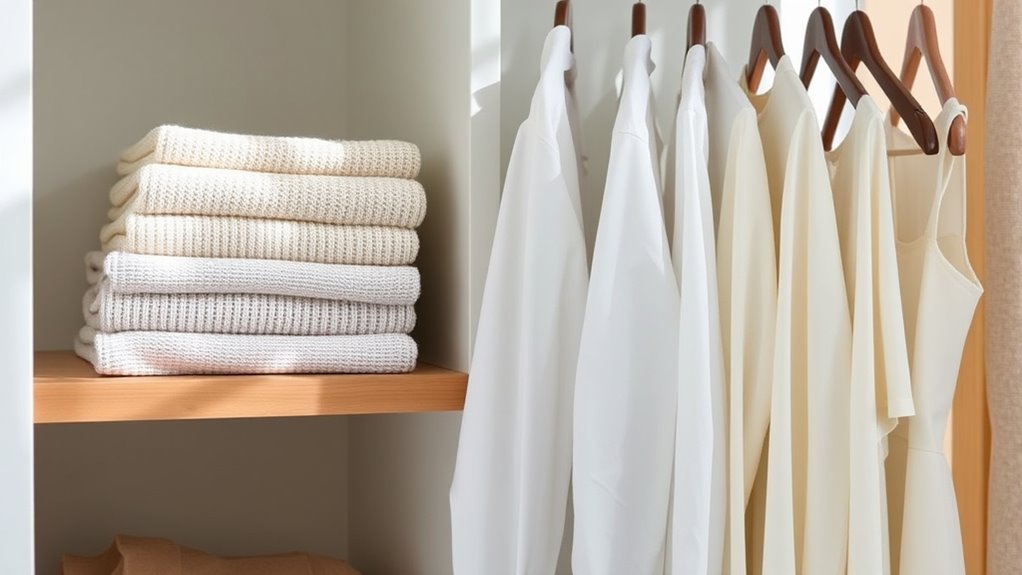
When it comes to organizing your wardrobe, deciding whether to fold or hang your garments can make a significant difference in their longevity and appearance. Your choice impacts fabric preservation and space optimization, helping you keep clothes in top shape while making the most of limited storage. Understanding which method works best for different types of clothing ensures your wardrobe stays tidy and your clothes last longer.
Folding is ideal for many garments, especially those made from delicate or easily wrinkled fabrics like sweaters, T-shirts, and jeans. When you fold properly, you reduce the risk of stretching or distortion that hanging can sometimes cause, particularly for heavier or more fragile fabrics. Folding also plays a key role in fabric preservation because it minimizes unnecessary stress on seams and fibers. Plus, folding can save space, allowing you to stack garments neatly and efficiently, especially in drawers or on shelves. If you have limited closet space, folding can help maximize your storage, keeping everything accessible and organized. Be sure to fold clothes uniformly to prevent creases and use storage solutions like boxes or dividers to maintain order. Additionally, proper storage techniques can further extend the lifespan of your clothing by reducing wear and tear. Using clothing organization methods can help keep your wardrobe tidy and prolong the life of your garments.
Hanging, on the other hand, is best suited for garments that tend to wrinkle easily or need to retain their shape, such as dress shirts, blouses, suits, and dresses. When you hang these items, you allow gravity to keep them smooth and wrinkle-free, reducing the need for ironing and maintaining their crisp appearance. Hanging also prevents fabric from developing deep creases that can be difficult to remove later. However, hanging requires more space, so it’s essential to choose quality hangers that support the garment’s shape without causing stretching, especially for heavier fabrics or shoulder structures. Proper hanging also helps with fabric preservation because it reduces the friction and compression that can sometimes occur when clothing is folded and stacked repeatedly. If you’re tight on space, consider using slim, non-slip hangers or vertical storage options to optimize your closet’s capacity without sacrificing garment quality. Additionally, understanding the benefits of projector contrast ratio can help you create a visual environment that complements your organized wardrobe, especially when viewing clothing catalogs or style videos in a home cinema setting.
Frequently Asked Questions
Which Garments Are Best Stored in Drawers Instead of Folding or Hanging?
You should store delicate items like underwear and socks in drawers rather than folding or hanging. Drawer organization helps keep these small garments tidy and accessible. For sock storage, consider using dividers or small compartments to keep pairs paired and neat. This method prevents stretching or damage and makes it easier to find what you need quickly, ensuring your underwear and socks stay in good condition and well-organized.
How Can I Prevent Wrinkles When Folding Delicate Fabrics?
Ever wonder how to keep delicate fabrics wrinkle-free after folding? To prevent wrinkles, gently smooth out your garments using fabric folding techniques, avoiding sharp creases. Before folding, use ironing tips like lightly steaming the fabric or pressing with a cool iron to loosen fibers. Always fold delicate fabrics loosely and avoid heavy stacking. This way, you maintain your garments’ smoothness and extend their lifespan, saving you time on ironing later.
Are There Specific Storage Tips for Seasonal Clothing?
When storing your seasonal wardrobe, you should consider climate considerations to keep clothes in top shape. Use breathable storage containers for off-season items, and keep fabrics away from direct sunlight or moisture. For delicate fabrics, folding with tissue paper helps prevent wrinkles. If space allows, hanging your seasonal clothes, especially lightweight or structured pieces, can maintain their shape. Adjust storage methods based on climate to prolong your garments’ lifespan and freshness.
How Does Storage Method Affect Garment Longevity?
Storing your clothes properly can literally make your wardrobe last a lifetime! If you neglect the storage environment or choose the wrong method for your garment material, you risk irreversible damage—think of fading, stretching, or fabric deterioration. Hanging delicate fabrics can cause stretching, while folding heavy items might lead to creases. By matching storage methods to garment material and creating a controlled storage environment, you protect your clothes and extend their life dramatically.
Can Improper Hanging Cause Stretching or Damage?
Yes, improper hanging can cause garment stretching or fabric damage. When you hang clothes on flimsy or tight hangers, the weight may stretch the fabric, especially at the shoulders or neckline. Over time, this can lead to misshapen garments and weakened fibers. To prevent this, use sturdy, properly-sized hangers and avoid hanging heavy items for extended periods. Proper hanging helps maintain your clothes’ shape and prolongs their lifespan.
Conclusion
So, whether you fold or hang, it seems there’s no perfect way to keep your clothes pristine—just like life, right? Ironically, the method you choose might not matter as much as your attitude about it. After all, in the end, your wardrobe’s fate is in your hands, and maybe, just maybe, the real secret is not how you store your clothes but how you handle life’s little wrinkles. Happy organizing!